
Growing Fashion Brand: The Lessons Behind Titch Clothing & Accessories

Growing Fashion Brand: The Lessons Behind Titch Clothing & Accessories. Some businesses begin with a business plan and a carefully mapped growth strategy. Titch Clothing & Accessories took a more organic route. The brand began as a passion project and hobby for Aimee, its designer and owner. Her interest in making things started much earlier, shaped by a creative family environment. She grew up with a mother and grandmother who were both influential in teaching her the sewing and crafting skills she still uses today.
What began with leather accessories eventually moved in a new direction. After selling leather accessories for several years, Aimee started developing a small linen clothing range. It was a material that immediately captured her attention because of its natural appearance, texture and sustainability.
That decision became an important turning point.
From selling creations at markets and stores around Cape Town, Titch has grown slowly and steadily into a brand available through physical stores as well as online. Yet despite that growth, the business has retained a remarkably personal foundation. Manufacturing still takes place from Aimee’s mother’s garage in Cape Town, supported by a small team, with some members having worked alongside her for almost 10 years.
The Titch journey offers practical lessons about organic growth, sustainability, product consistency and building a business without losing its original character.
Turning a Hobby Into a Business
The first lesson behind Titch is that a business opportunity can develop gradually.
Aimee describes Titch as a passion project and hobby that grew organically over the years. Her early interest in sewing and crafting eventually became a way to create products that other people wanted to buy.
The transition was not immediate. The brand first focused on leather accessories before moving into linen clothing.
For aspiring entrepreneurs, this illustrates the value of allowing a business to develop through experimentation. A first product does not necessarily have to become the permanent centre of the brand.
Entrepreneurs can pay attention to what resonates with customers, what they enjoy making and where their strongest opportunities appear.
Finding a Material That Fits the Brand
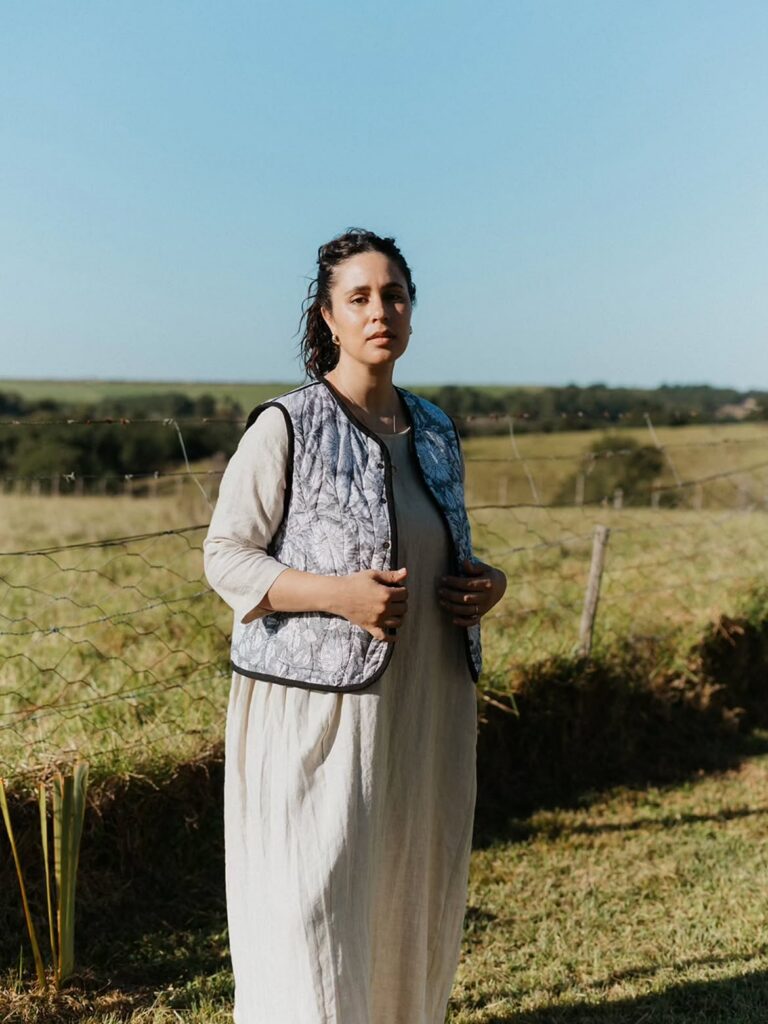
Linen became a significant turning point for Titch.
Aimee says she fell in love with the textile because of its beautiful natural appearance, texture and sustainability.
That connection helped shape more than the products themselves. Linen became part of the philosophy behind the brand.
For entrepreneurs, there is a useful lesson here: the materials, ingredients or processes behind a product can become part of its identity when they genuinely reflect the founder’s values.
Rather than treating material choice as a purely technical decision, Titch demonstrates how it can contribute to the story customers encounter.
Growing Through Markets and Independent Retailers
Titch’s development also shows the importance of starting close to home.
Aimee began selling her creations at markets and stores around Cape Town. From there, the brand expanded slowly and steadily into physical stores and online sales.
That progression is particularly relevant to small businesses. Markets and independent stores can provide opportunities to put products directly in front of customers and learn from how people respond to them.
The lesson is not that every entrepreneur should follow exactly the same route. Instead, it is about using accessible channels to test an offering and build awareness before pursuing broader growth.
Growth can happen one customer, one market and one retail relationship at a time.

Keeping the Business Close to Its Roots
Perhaps one of Titch’s most distinctive features is where its clothing is still produced.
The brand continues to manufacture from Aimee’s mother’s garage in Cape Town with a small team. Some team members have been with the business for almost 10 years.
That detail tells an important story about continuity.
For a growing company, expansion does not automatically mean moving away from the environment in which the business began. In Titch’s case, the garage remains part of its manufacturing story.
The long-standing relationships within the team also point to the value of retaining knowledge and experience.
For entrepreneurs, the lesson is to recognise which aspects of the original business model are strengths rather than limitations. Growth should solve genuine constraints, not simply happen because expansion appears more impressive.
Making Sustainability a Practical Business Decision
Sustainability is central to Titch’s production philosophy.
Aimee aims to use only the finest natural fibres in production as part of an effort to reduce the brand’s environmental footprint and pressure on limited resources.
The business also looks for ways to reduce and up-cycle production waste into other products.
This is significant because sustainability is not presented as a separate marketing campaign. It is connected directly to production decisions.
For entrepreneurs, this offers a practical lesson. If sustainability is part of a brand’s identity, look for ways to build it into everyday operations.
That might mean reconsidering materials, production quantities, packaging, waste or the lifespan of products.
Small Batches as a Strategic Choice
Titch also takes a deliberate approach to production volumes.
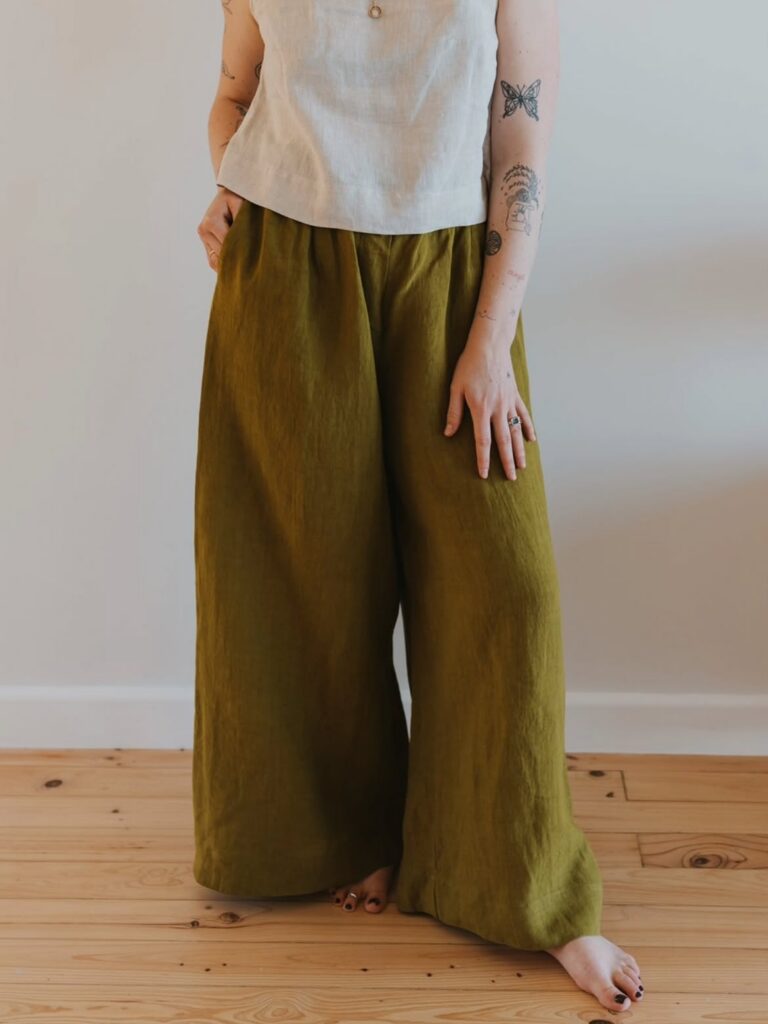
The business produces small batches, while many orders are made to order. The stated objective is to avoid ending up with a large amount of dead stock at the end of a season.
This approach connects sustainability with inventory management.
Producing only what is needed can help a small fashion business avoid committing excessive resources to products that may not sell.
For entrepreneurs, the lesson is especially relevant when operating with limited resources. Bigger production runs are not automatically better. Businesses need to consider demand, cash flow, storage and the consequences of unsold inventory.
A smaller, more controlled approach can sometimes be better aligned with both the business model and its values.
Building a Wardrobe Instead of Chasing Every Trend
Titch does not introduce a completely new range every season.
Instead, the brand maintains a core collection of wardrobe staples in neutrals and limited colours that can be mixed and matched. Limited-run seasonal pieces are introduced from time to time.
This creates consistency for the customer while allowing the business room to introduce something new.
It is also a strong example of how product strategy can reinforce brand identity.
For entrepreneurs, the lesson is to distinguish between novelty and value. Customers do not always need something completely new. Sometimes they want reliable products that work with what they already own.
A core collection can provide that foundation while limited seasonal products create opportunities for freshness without changing the entire offering.
The Bigger Lesson Behind Titch
Titch Clothing & Accessories offers a compelling example of what organic business growth can look like.
Aimee’s early interest in sewing and crafting provided the foundation. Leather accessories became an initial commercial offering before linen clothing emerged as a stronger creative direction. Markets and stores around Cape Town provided early routes to customers, followed by physical retail and online availability.
Through that growth, the business has retained its small-scale manufacturing roots, its focus on natural fibres and its deliberate approach to production.
The broader lesson is that successful entrepreneurship does not always require abandoning the characteristics of a small business.
Titch has built its identity around choices that reinforce one another: natural materials, small batches, made-to-order production, up-cycling, a core wardrobe and a gradual approach to growth.




