
Epitology: How a Clinic Skincare Problem Became a Brand Built on Simplicity
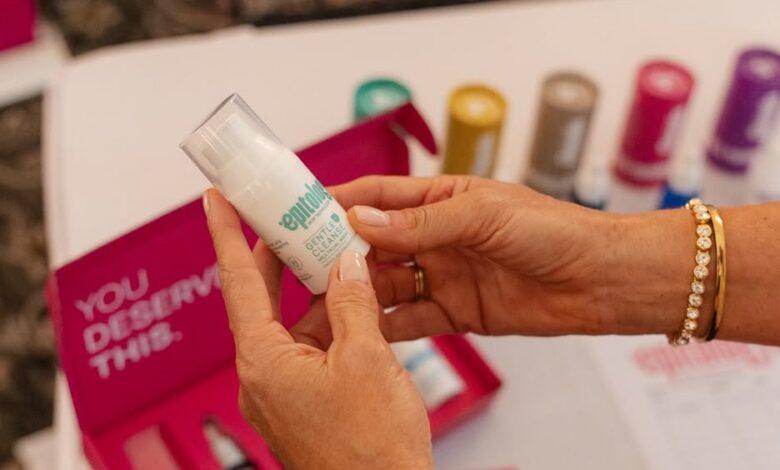
Epitology: How a Clinic Skincare Problem Became a Brand Built on Simplicity. The idea behind Epitology Skincare Technology did not begin with a plan to create another skincare range. It began with a problem inside a clinic. When Dr Nicolina Bardou joined Dr Orrey Derma Clinic as its Aesthetic Specialist, she noticed that there was no single skincare range that properly addressed her patients’ needs. Instead, people were faced with too many choices and were often unsure about what would actually work for their skin.
The first response was not to create a brand. Dr Bardou and Debora Gorton, the clinic’s medical skin therapist, began creating custom treatment plans using products from different brands. Each product was selected according to its ingredients and intended purpose.
But the approach quickly exposed another problem.
Patients were leaving with five or six products. Their routines were difficult to follow, expensive to maintain and producing inconsistent results.
That failure became the starting point for a different approach.
Start by solving a real customer problem
One of the clearest lessons behind Epitology is that its product development began with a specific problem experienced by real patients.
Rather than starting with a product and searching for a problem to solve, the team observed where existing solutions were falling short.
The issue was not simply that patients needed more skincare. They needed a routine that was easier to understand and follow.
For entrepreneurs, this distinction matters. A useful starting point for product development is to identify the friction customers experience with existing solutions.
What makes the current process difficult? Where do people become confused? What makes a product expensive, inconvenient or difficult to maintain?
Epitology’s origin came from asking those questions within a clinical setting.

Simplify instead of adding more
The team’s next step was to formulate its own products with the help of a trusted pharmaceutical company.
Each product was developed around a specific outcome, with the goal of creating something simple and effective.
This represented a significant change in philosophy. Instead of giving patients more products to manage, the team began working towards a more focused range.
That provides a practical lesson for entrepreneurs: complexity is not automatically a sign of greater value.
Sometimes customers need fewer choices and clearer guidance. A product can become more useful when a business removes unnecessary elements rather than continually adding new ones.
Treat early results as information
The first formulations were not immediately perfect.
Some patients saw real improvement while others did not. Instead of treating those mixed results as the end of the process, the team continued refining the products.
It listened, adjusted and simplified. What worked was retained, while what did not work was removed.
Over time, the team says the results became consistent.
This is an important lesson for entrepreneurs developing new products. Early feedback should not simply be collected for reassurance. It should influence what happens next.
A business can use real-world responses to identify what needs to change, provided it is willing to make those changes.
For Epitology, refinement became part of the development process.

Let customer response reveal the opportunity
As patients continued returning and recommending the products to friends, what had started as an in-clinic solution began becoming something people trusted.
That was an important transition.
The product was no longer only being used to solve a problem within the clinic. Its response among patients suggested that the approach could have relevance beyond the original setting.
Simon Orrey, a founder of Derma Clinic, then became involved. He saw the product range outperform established international brands on the shelf at the clinic.
But the team did not immediately assume that the products would work for a wider audience.
Instead, it asked a more important question: would this work for more people?
Test before scaling
To answer that question, the team tested the products with more than 300 patients aged 17 to 70.
Participants used the products, provided feedback and returned to share their results. According to the supplied account, more than 97% were happy, including with the results and the simplicity of using the products.
For entrepreneurs, this is a valuable lesson about validation.
Interest from an existing customer base can indicate an opportunity, but testing with a broader group can provide additional information before a business commits to scaling.
The testing also revealed something important about the people who did not continue.

Learn from the customers who hesitate
The 3% who did not continue gave the team another perspective.
Some had spent years trying different skincare products and getting disappointing results. Others had finally found something that worked and were unwilling to risk changing their routine.
This changed how the team understood Epitology.
The challenge was not only to create products that worked. It was to create something people could trust.
That insight helped shape the brand’s focus on refining, simplifying and removing anything that did not need to be there.
Answer the questions customers already ask
The resulting philosophy is centred around three practical questions: What should I use? When should I use it? What will this actually do for me?
Those questions give Epitology a clear way to communicate its purpose.
For entrepreneurs, this is one of the most useful lessons from the brand’s journey. Customers often do not need complicated explanations. They need clear answers to the questions preventing them from making a confident decision.
Epitology’s story shows how a problem inside a clinic led to experimentation, refinement and testing. More importantly, it demonstrates how listening to customers can change not only a product, but the purpose behind a brand.




