
10 Hard Truths From 12 Years of Building an African Business
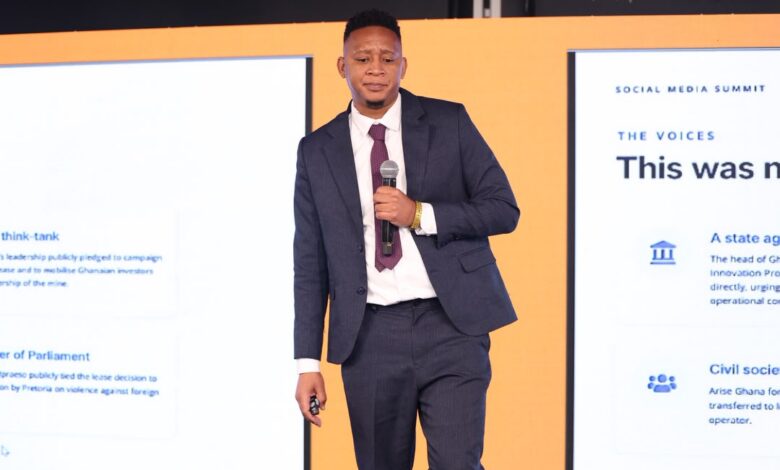
By Tony Mautsu, Founder and Managing Director, SocialLight
Awards, conferences and motivational posts will tell you one version of entrepreneurship. Twelve years of building SocialLight across Africa taught me another. These are the truths I wish someone had told me on day one.
For the first three years of my business, I struggled to answer one simple question: “So what exactly do you do?”
Social media management, livestreaming, holograms, media monitoring. None of it was mainstream in Botswana at the time. I was trying to sell the future in a market of 2.5 million people, where the government is the biggest buyer and most decision-makers had never needed what I was offering.
I’ve since been named on the Forbes 30 Under 30 Africa list, and SocialLight now tracks more than 1,300 publications and 158 broadcast stations. But the lessons that shaped me didn’t come from the highlights. They came from the moments nobody posts about.
Here are 10 hard truths from 12 years of building an African business.
1. Not Everyone Will Understand Your Vision, and That’s Not Your Problem to Fix
When you build something that isn’t “normal” yet, you will spend years explaining yourself. I did. Family, friends and potential clients nodded politely, then went back to buying what they already knew.
In a small economy where government is the biggest buyer, that is doubly hard. Procurement systems are built to buy the familiar. If your product doesn’t fit an existing category, it often doesn’t fit the budget either.
I learned to stop waiting for understanding and start building evidence. People rarely buy a vision. They buy results they can see.
“People don’t buy your vision. They buy the proof you build while they’re still confused.”
2. No One Is Coming to Save You, So Take Every Hand That’s Offered
When I started, I genuinely believed the environment would welcome me with open arms. It didn’t. When you’re new to an industry, you have to earn your place. Sometimes that means volunteering your work just to show what you can do, which is exactly how I started, running social media for the Diacore marathon.
But “no one is coming to save you” doesn’t mean you must do it all alone. You don’t have to bootstrap forever. If there are funding programmes, accelerators and grants designed for people like you, use them. Walking into the Botswana Innovation Hub led me to the First Steps Venture Programme. Pride would have kept me outside.
“No one is coming to save you. But when someone opens a door, walk through it.”
3. A King Has No Glory in His Homeland
This one hurt to learn. Some of my strongest support, my best partnerships and my warmest welcomes have come from outside Botswana. At home, people knew me before they knew my work, and that familiarity made them slower to back me.
Once I started networking across borders, everything changed. People in other markets judged SocialLight on what it could do, not on who they remembered me to be. Today, we have done business across SADC and reached most countries on the continent.
If your home market isn’t buying, don’t take it personally. Take your work somewhere it will be seen with fresh eyes.
“Sometimes your hometown will be the last to clap. Don’t wait for them to start.”
4. Applause Is Not Revenue
In the first days of the COVID-19 lockdown, the President of Botswana mentioned my Forbes 30 Under 30 Africa listing as a moment of national celebration. It was one of the proudest moments of my life.
Within days, I learned something uncomfortable. Recognition opens doors, but it doesn’t pay invoices. Worse, a podium can work against you. Since then, I have been left out of opportunities because people assumed we were already fine. I became “the list guy”, and some decided I didn’t need their business.
The same goes for conferences. You can spend months flying between summits, shaking hands and collecting business cards. If none of it turns into business, it’s a very expensive hobby.
“An award gets you into the room. It doesn’t get you the contract.”
“A conference is not money in the bank. If it doesn’t lead to business, leave it alone.”
5. You Are Not a Bank
Late payments will crush your business faster than any competitor. Large institutions and corporates will happily take 90 days, 120 days or longer to pay a small supplier. Meanwhile, your salaries, rent and data costs are due every month.
I’ve learned that it’s sometimes better to walk away from a relationship than to keep financing a client who treats your invoice as optional.
Banks, on the other hand, are not your friends either. They lend to businesses that look like they don’t need the money. If you understand how the system works and keep your cash flow healthy, every conversation with a bank becomes easier.
“You are not a bank for big institutions. Stop lending them your cash flow for free.”
6. Leave Politics to the Politicians
In much of Africa, government touches almost every part of business, whether as a buyer, a regulator or a partner. That makes political opinions dangerous for a founder. One post, one comment or one visible alignment can close doors that took years to open.
I’m not in any camp. My job is to build a business that serves clients whoever is in power, and that requires discipline about what I say in public.
“Money has no political party. Neither should your business.”
7. Build First, Apologise Later
Let me be clear: I’m not telling you to break the law. But Africa has a habit of over-regulating innovation before it understands it. If you wait for the perfect policy environment, you’ll be waiting forever.
The law usually follows the trend. Mobile money, ride-hailing and digital media all grew faster than the rules written for them. Stay within the law, but don’t let the absence of a rulebook stop you from creating value. Africa is playing catch-up, and founders are the ones setting the pace.
“Don’t wait for the environment to be perfect. Create the value, and the rules will catch up.”
8. The Tuck Shop Might Beat Your App
Sometimes people aren’t buying because you aren’t listening. You can build a beautiful app, but if your customers can’t afford data or don’t have reliable internet, it doesn’t matter how good it is. In some communities, the tuck shop on the corner is a better distribution channel than any download link.
Listen to the pulse on the ground. Your customers’ reality matters more than your product roadmap.
“You can have an amazing app, but if your customer has no data, the tuck shop wins.”
9. You Are Not the Business, So Build Structure Around It
From day one, separate yourself from your company: your money, your identity and your decisions. When the founder and the business are the same thing, every personal crisis becomes a business crisis.
Structure is what lets you grow. If people management isn’t your strength, hire an HR manager. Good systems will carry you through moments your instincts can’t.
The same applies to advice. Choose mentors who have built something, not those who have only read about it. Theory is cheap. Scars are expensive, and they’re worth listening to.
“Listen to people who have built something, not people who have only read about it.”
10. Losses Are Part of the Game, So Get Back Up
Entrepreneurship will knock you down more times than you can count. Deals will collapse, projects will fail, and the unexpected will arrive at the worst possible time. The founders who last are not the ones who never fall. They’re the ones who adjust quickly and refuse to cling to a losing idea out of pride.
To keep getting back up, you have to look after yourself. You can’t pour from an empty cup. Give yourself time, rest and new experiences, because your creativity and confidence depend on it.
“You will get knocked down. That’s not the end of the story. Staying down is.”
The Truth Behind the Truths
None of these lessons came cheap. Each one cost me time, money, pride or sleep. But together they’ve taught me that building in Africa isn’t about waiting for the perfect conditions.
It’s about building anyway, listening harder, protecting your cash and getting back up one more time than you fall.
If you’re in the hard middle years right now, keep going. The continent needs what you’re building.
About Tony Mautsu
Tony Mautsu is the Founder and Managing Director of SocialLight, a media monitoring and market intelligence company that has done business across SADC and the wider continent. He is a Forbes 30 Under 30 Africa honouree and was named one of the Top 10 Men in PR in Botswana in 2026.
Learn more at SocialLight.africa.