Sans Souci: How Craftsmanship Turn Jewellery Packaging Into a Keepsake
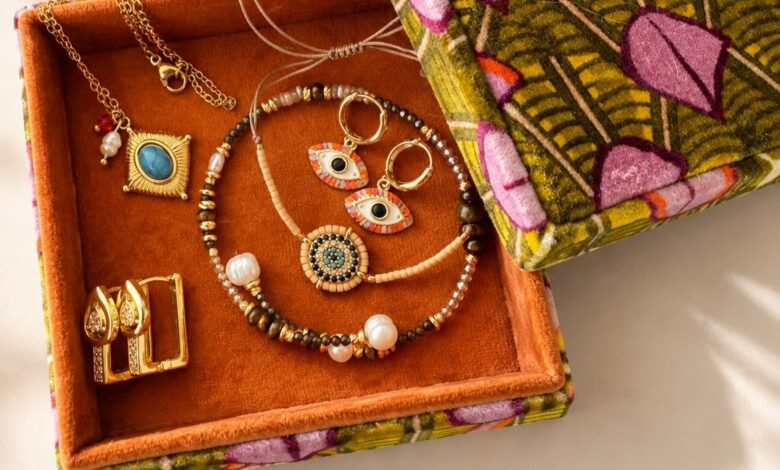
Sans Souci: How Craftsmanship Turn Jewellery Packaging Into a Keepsake. At the foot of the Kogelberg Mountains, a family business has built its identity around an object that is often overlooked: the jewellery box. For Sans Souci, however, a ring box is not simply packaging. It is part of the moment. The studio and workshop creates tailor-made jewellery packaging designed to protect and present pieces while becoming a keepsake in its own right.
That perspective sits at the centre of Sans Souci’s story. The business combines craftsmanship, creativity and practical expertise to create boxes that are intended to be visually captivating while remaining functional. Its approach offers valuable lessons for entrepreneurs about finding opportunity in overlooked details, making personalisation central to a product and allowing a brand’s history to shape its identity.
Finding opportunity in the details
Sans Souci operates in a specialised space, designing and crafting jewellery packaging for brands and designers. Rather than treating the box as something secondary to the jewellery inside it, the business gives the packaging its own creative importance.
That creates a clear point of difference. The jewellery may be the central purchase, but the box is part of how that jewellery is presented and remembered.
Sans Souci describes its boxes as keepsakes that mark treasured occasions. This shifts the focus from packaging as a functional necessity to packaging as part of the experience surrounding an important moment.
For entrepreneurs, there is a useful lesson in that approach. Opportunities can exist in the supporting products and experiences surrounding a major purchase. A business does not always have to compete for the centre of attention. Sometimes there is value in improving an overlooked part of the customer experience.
A family story at the heart of the name
The name Sans Souci carries a personal history.
“Sans Souci” means “without worries or concerns”. The name was first coined by Frederick the Great in 1745 for the palace he built as an escape from court life and later became associated with a life without care.
For Sans Souci’s co-founder Liesel, however, the name has an additional meaning. She spent part of her childhood on a farm in Zimbabwe called Sans Souci, which influenced the decision to carry the name into the business.
That connection gives the brand an origin story grounded in personal experience rather than an invented marketing concept. The name links the company’s present work with a meaningful part of its co-founder’s past.
For entrepreneurs, this offers a practical branding lesson: personal history can provide a distinctive foundation for a business when it genuinely connects to the brand.
Treating packaging as a blank canvas
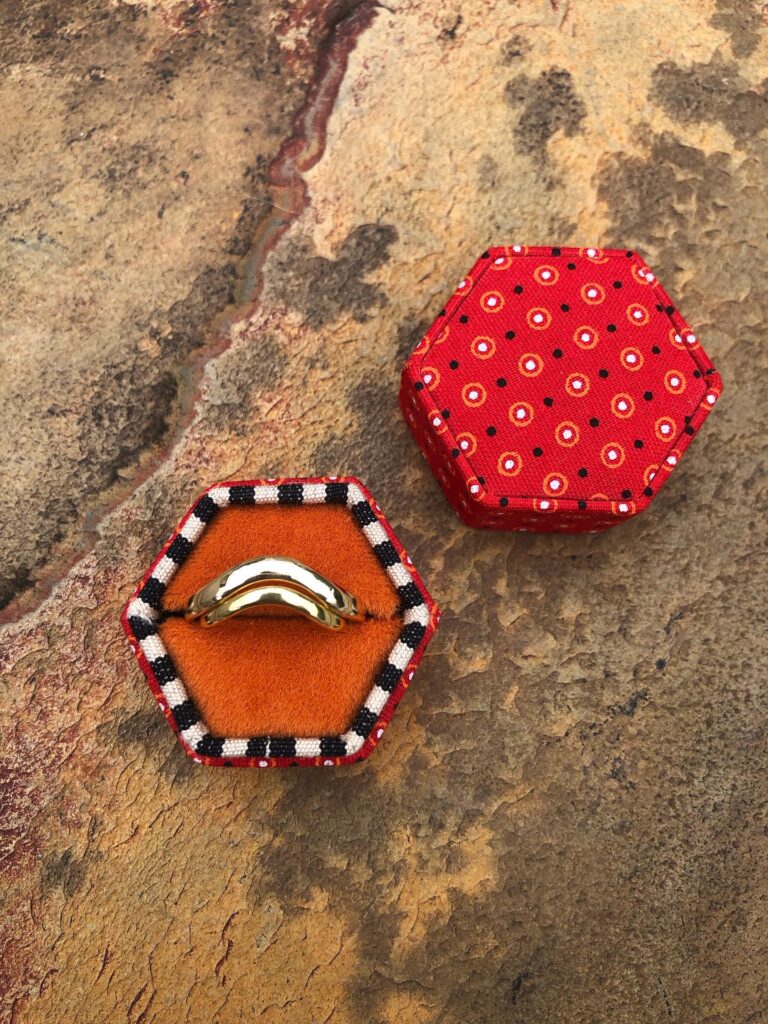
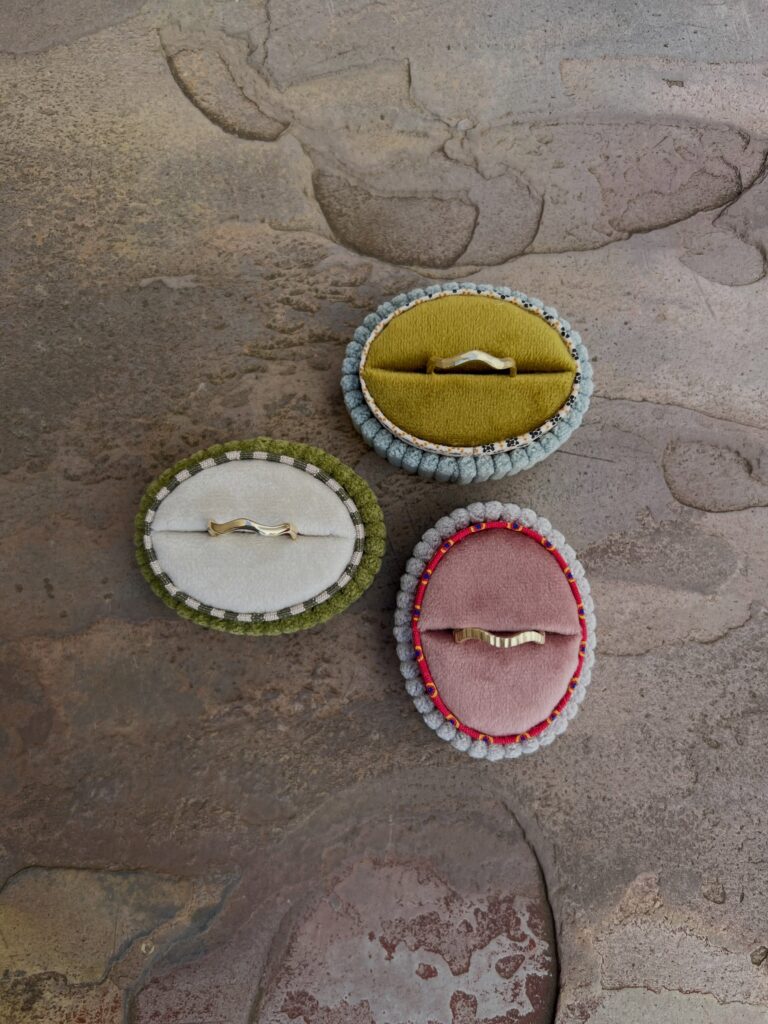
One of Sans Souci’s clearest ideas is its treatment of the ring box as a “blank canvas”.
Jewellers are invited to co-design the product that will showcase their creations. This places personalisation at the centre of the offering rather than treating it as an optional finishing touch.
The approach recognises that jewellery designers have their own identities and that packaging can become an extension of those identities.
For a B2B brand, this is particularly useful. Instead of producing a single standardised product and asking every client to fit their brand around it, Sans Souci positions the packaging as something that can be developed with the jeweller.
Entrepreneurs can apply the same principle by asking where customers need flexibility. Personalisation can create value when it solves a genuine need for customers to express their own identity.
Balancing beauty with practical expertise
A beautiful box is not enough if it fails its purpose.
Sans Souci emphasises the combination of skilled craftsmanship and creative flair with practical expertise. Liesel’s craftsmanship and creativity are complemented by Sias’s practical expertise, with each box meticulously planned and executed.
That balance is important to the brand’s proposition. The packaging needs to capture attention, but it also needs to function properly.
This provides another useful lesson for entrepreneurs. Design and practicality should not be treated as competing priorities. The strongest products can bring both together.
A visually distinctive product that performs its intended function well has a stronger foundation than one that prioritises appearance alone.
Making keepsakes, not just containers
The emotional dimension of Sans Souci’s offering ultimately comes back to its understanding of important occasions.
The business describes its work as a way of celebrating life’s treasured moments. The jewellery box therefore becomes connected to the memory surrounding the jewellery itself.
That idea gives the product meaning beyond its physical materials. A well-crafted box can be retained as a reminder of the occasion it helped mark.
For entrepreneurs, the broader lesson is to understand what a product represents to the customer. Products often become meaningful because of the moments, relationships or experiences attached to them.
Building a distinctive niche through craftsmanship
Sans Souci’s story is not built around claims of mass production or rapid expansion. The supplied information provides no sales figures, customer numbers or expansion milestones, so those cannot be assumed.
What is clear is the deliberate nature of its positioning. It is a family business with a studio and workshop at the foot of the Kogelberg Mountains, focused on tailor-made jewellery packaging and personalisation for designers and their brands.
Its strength comes from bringing several elements together: a meaningful name, family craftsmanship, practical expertise, creative design and a clear understanding of the emotional significance of jewellery.
For aspiring entrepreneurs, Sans Souci offers a compelling example of how a specialised business can create value by looking closely at an overlooked part of an established experience. The box may surround the jewellery, but Sans Souci has made the box part of the story.