UCT Marine Scientist Lynne Shannon Wins 2026 WWF Living Planet Award
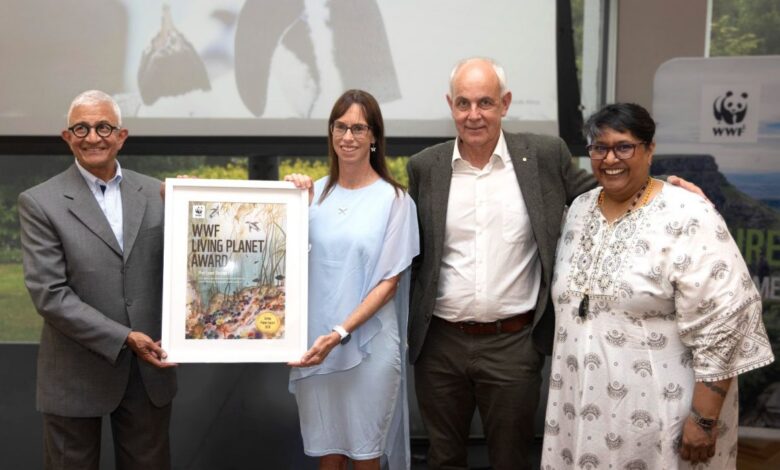
UCT Marine Scientist Lynne Shannon Wins 2026 WWF Living Planet Award. Professor Lynne Shannon, a marine biologist at the University of Cape Town (UCT), has received WWF South Africa’s 2026 Living Planet Award in recognition of her contributions to marine science and sustainable ocean management.
Shannon is based in UCT’s Department of Biological Sciences and is deputy director of the university’s Marine and Antarctic Research for Innovation and Sustainability (UCT-MARiS) Centre. Her research has contributed to ecological models of the Benguela marine ecosystem and informed approaches to managing fisheries and marine wildlife.
Her ecosystem modelling has been particularly important in informing the management of the pelagic fishery and African penguin populations. The research examines the relationships between species and their food sources, helping to explain how changes in marine resources can affect the wider ecosystem.
In its award citation, WWF South Africa recognised Shannon’s work amid growing concerns about biodiversity loss and environmental degradation. The organisation said her contributions were helping to advance transformative change and reshape discussions around sustainable development, with relevance beyond South Africa.
Shannon has also played a significant role in WWF’s Southern African Sustainable Seafood Initiative (WWF-Sassi). Much of her research supports the scientific foundation of the programme, and she has served on its fishery assessment panel.
WWF described her as a committed supporter and contributor to its marine programmes, highlighting her work to advance ecosystem-based approaches to fisheries management. The citation also noted that she had continued this work in male-dominated environments and sometimes in the face of strong opposition.
A further area of Shannon’s research focuses on African penguins and their position in the Benguela marine food web. Her work considers the birds’ reliance on sardine and anchovy populations, connecting their conservation needs to the condition of the wider marine ecosystem.
The research highlights the relationship between the survival of African penguins, the health of South Africa’s oceans and the management of fisheries. It also provides scientific evidence relevant to balancing conservation priorities with the sustainable use of marine resources. Her research informs practical decisions about fisheries, wildlife and the marine environment.
The Living Planet Award adds to international recognition of Shannon’s work. In 2025, she became the first South African to receive the Prince Albert Grand Medal in Oceanography, presented at a ceremony in Paris, for her lifetime contributions to marine science.
Her latest award recognises a body of work spanning ecosystem modelling, fisheries management and marine conservation. Through her research and involvement in WWF’s programmes, Shannon has contributed scientific knowledge to discussions and decisions concerning the sustainable management of Southern Africa’s marine resources.
The award places further attention on the role of marine science in understanding connections between fisheries, wildlife populations and ocean ecosystems, particularly as conservation and resource management remain closely linked.