
Ridgeback Wines: Building a Wine Estate on Shiraz and Distinctive Varietals

Ridgeback Wines: Building a Wine Estate on Shiraz and Distinctive Varietals. Ridgeback Wines began its winemaking journey in 2000 with a first white wine produced off-site. It was a modest beginning in terms of infrastructure, but the early vintages would establish the foundation for a wine business that has continued to earn recognition in South Africa and internationally.
In 2001, Ridgeback produced its first red wine, a Shiraz that would become one of the defining wines in the estate’s history. The 2001 Ridgeback Shiraz received a five-star Platter’s rating in 2003, an early achievement that helped establish the brand’s reputation for quality.
For a wine business, the first few vintages are more than production milestones. They begin to define what the estate can offer and the standards it wants to uphold. Ridgeback’s early recognition illustrates the value of developing a strong product from the outset. Awards can strengthen credibility, but the foundation remains the quality of the wine itself.
Investing in the Infrastructure to Grow
Ridgeback’s development moved beyond its initial production when the estate established its cellar in 2002. A year later, it constructed a modern winery with a capacity of 300 tons.
The investment was an important step in building the infrastructure required for winemaking on the estate. Ridgeback’s current production stands at 16,000 cases, with significant potential for further growth.
The winery was complemented by a wine tasting facility overlooking a large duck pond. This added another dimension to the estate, creating a setting where visitors could experience its wines in person.
There is a practical business lesson in this development. Growth requires more than increasing output. Businesses need infrastructure that supports production while also considering how customers encounter the brand. Ridgeback’s winery and tasting facility serve different purposes, but both contribute to the broader operation.
Developing a Portfolio Beyond Shiraz
Although the early Shiraz success gave Ridgeback an important foundation, the estate’s development also involved exploring other varieties.
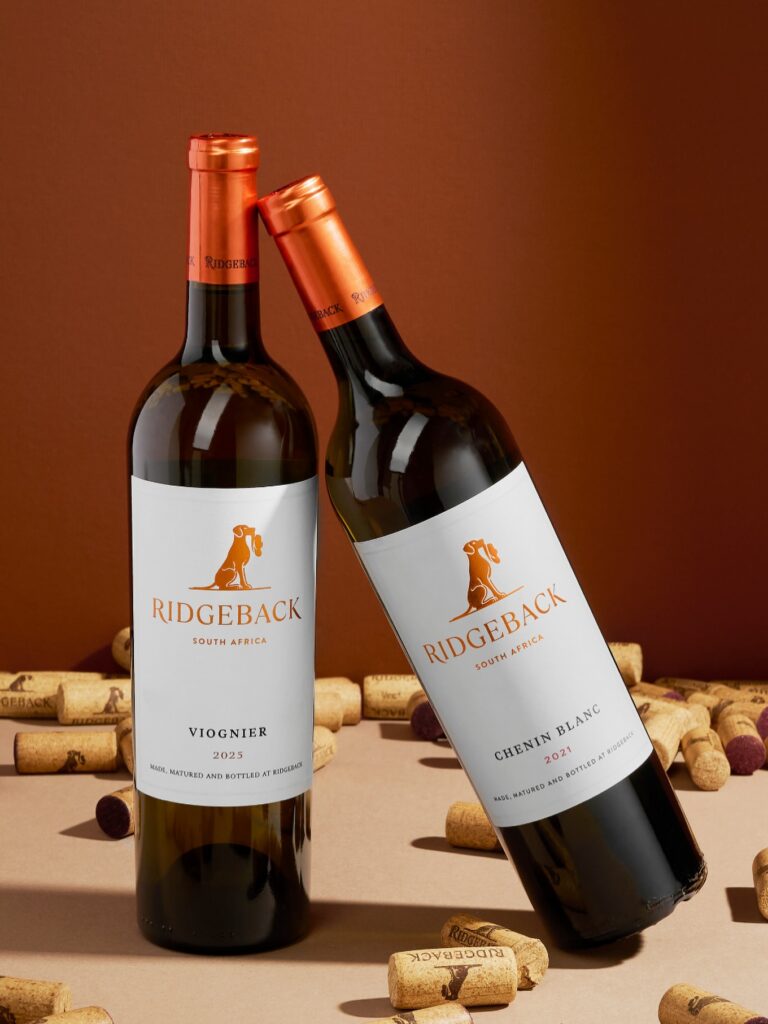
In 2001, the initial plantings of Viognier and Cabernet Franc began their journey as potential blending components. Over time, both varieties became important parts of Ridgeback’s wine offering and earned recognition in their own right.
The 2015 vintage proved particularly significant. Ridgeback’s Viognier and Cabernet Franc stood out for their characteristics, marking an important point in the development of these varieties within the estate’s portfolio.
The wines subsequently received notable industry recognition. Ridgeback Viognier 2018 earned five Platter’s stars in 2020, followed by another five-star rating for the 2019 vintage in 2021. In 2022, the 2020 Ridgeback Cabernet Franc won the trophy for Best Cabernet Franc at the Michelangelo Wine & Spirits Awards.
These achievements demonstrate the value of building a portfolio with distinct strengths. Rather than relying exclusively on the success of one established wine, Ridgeback continued developing varieties that could give the estate additional recognition.
For entrepreneurs, this offers a useful lesson: diversification can create new opportunities when it builds on existing expertise. Expanding an offering is most meaningful when each product has a clear role and can establish its own reputation.
Signature Wines and the Value of Consistency
Another important part of Ridgeback’s portfolio is Signature C, a wine that has repeatedly attracted industry attention.
The 2015 Signature C received Platter’s five stars when it was released in 2018. The wine was crafted from selected Bordeaux barrels, reflecting the estate’s focus on producing wines that represent its winemaking ambitions.
In 2024, the 2019 Signature C also received a five-star Platter’s rating. Ridgeback described this as the fourth time its dedication to winemaking had been recognised with the accolade.
This record highlights the importance of consistency in building a premium product identity. A single award can generate attention, but repeated recognition across different vintages gives customers and the wider industry more reasons to take notice.
The lesson for businesses is to treat quality as an ongoing commitment rather than a once-off achievement. Reputation develops through repeated delivery, not simply through a successful launch.
Recent Awards Strengthen the Estate’s Reputation
Ridgeback’s more recent results show that its portfolio continues to attract recognition across different categories.
At the 2025 Michelangelo Awards, The Journey 2021 received Double Platinum. Cabernet Sauvignon 2020, Cabernet Franc 2023 and The Journey 2022 each received Double Gold.
The estate also reported strong results for its Platter’s 2026 ratings, including five stars for Shiraz 2021 and Cabernet Franc 2022. Signature C 2021, Signature S 2021, The Journey 2022 and Viognier 2024 each received 94 points and 4.5 stars.
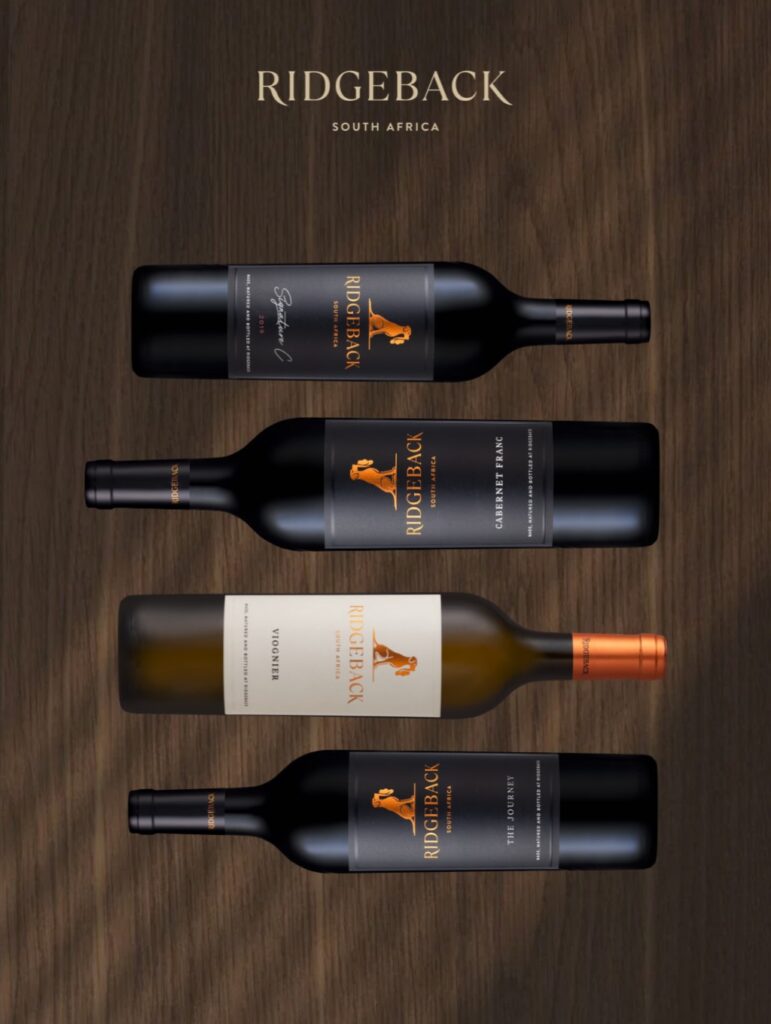
These results reinforce the breadth of Ridgeback’s wine offering. Recognition across Shiraz, Cabernet Franc, Viognier and its Signature and Journey wines gives the estate several products through which to communicate its strengths.
For a brand, awards are most useful when they become part of a wider story about the product. They provide independent recognition that can support marketing and customer confidence, while the wines themselves remain central to the experience.
A New Cellar Master for the Next Chapter
In 2025, Ridgeback welcomed Renier van Deventer as its new Cellar Master. His appointment brings global experience and technical expertise to the estate, alongside a stated respect for terroir.
The appointment represents another development in Ridgeback’s winemaking journey. After building its production infrastructure, developing a broader portfolio and earning recognition across multiple vintages, the estate is entering a new chapter under fresh cellar leadership.
For entrepreneurs, this is a reminder that protecting a brand’s identity does not mean keeping everything unchanged. Bringing new expertise into a business can support its next stage while respecting the foundations on which it was built.
What Ridgeback Wines Teaches About Building a Lasting Brand
Ridgeback Wines’ journey is shaped by a series of identifiable milestones: its first vintage in 2000, the early success of its Shiraz, investment in a dedicated winery, the development of Viognier and Cabernet Franc, repeated awards and the appointment of a new Cellar Master.
The broader lesson is that a strong brand develops through connected decisions. Product quality establishes credibility. Investment in infrastructure supports production. A distinctive portfolio creates opportunities for recognition, while experienced leadership helps guide the business into its next chapter.
From its first white wine to its recent international and local accolades, Ridgeback has continued to build on the foundations established in its early years. Its story demonstrates that in the wine industry, reputation is not created by one vintage alone. It is built through years of craftsmanship, development and a commitment to producing wines that stand on their own merits.