
From Loan-to-Legacy: How Tumi Mokwene Built a Poultry Empire
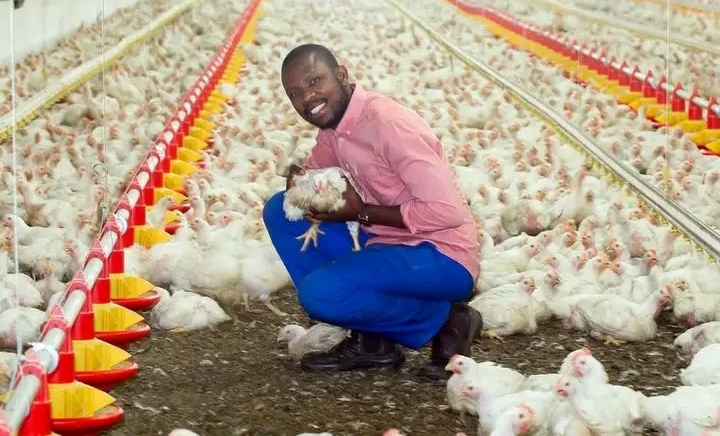
From Loan-to-Legacy: How Tumi Mokwene Built a Poultry Empire. When Tumi Mokwene took out his first loan in 2006 to start a poultry farm in the North West, he planted more than just poultry houses, he planted a vision. Over time that vision grew into a business with two farms and a flock of 353 000 chickens, supplying broilers to major abattoirs and creating meaningful youth employment. His journey reveals how strategy, perseverance and thoughtful growth create more than an enterprise, they create a legacy.
Starting smart and focusing on contract growth
From the outset Mokwene chose to work with contract buyers, partnering with leading firms such as Kroon’s Abattoir and Astral Foods. Records indicate he produces approximately 98 000 broiler chickens per six-week cycle for Kroon’s and 255 000 for Astral on two farms.
By aligning with established buyers, Mokwene secured demand before scaling up, reducing much of the market risk that many primary producers face. That’s a key lesson: before scaling your output, find dependable customers.
Turning points in expansion and ownership
One major milestone came when Mokwene paid off his loan by 2017, only eleven years after starting. From loan to full ownership he reached a turning point in financial freedom and operational control. With the debt cleared he was free to reinvest profits without the pressure of interest or fixed repayment schedules, a powerful position for any entrepreneur.
Another turning point was ramping up production capacity to two farms housing over 353 000 chickens in total. This growth allowed him to meet the scale required by major buyers and transition from a small‐scale farmer into a contract grower, essential for long-term stability.
Strengths and operational discipline
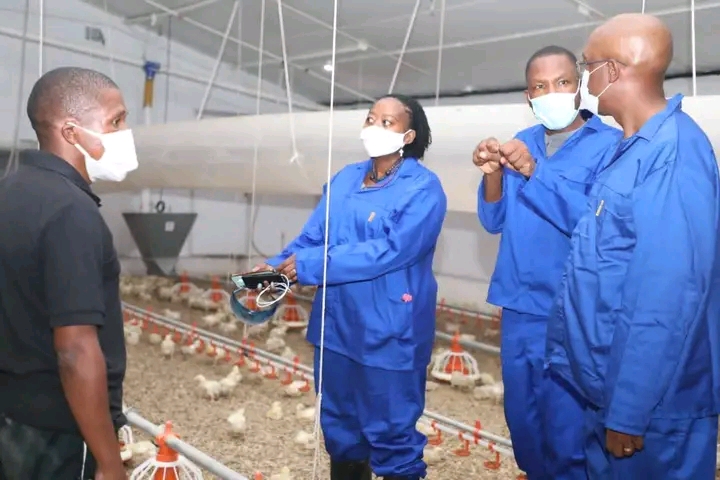
Mokwene’s success rests on two interconnected strengths: consistent production and operational discipline. Producing over 300 000 broilers per cycle requires rigorous management of feed, housing conditions, growth cycles, health control and logistics. His story shows that disciplined operations, often less visible than marketing, are what keep the business alive and growing.
Entrepreneurs should note: No matter how strong your brand or purpose, without operational excellence your business can collapse under scale.

Strategic marketing and reputation
While Mokwene’s business is largely B2B, his reputation among buyers, lenders and regulatory bodies became a strategic asset. Local media coverage of his milestone, “two farms 353 000 chickens”, helped build recognition.
For any entrepreneur the takeaway is this: Seek recognition not for vanity but for credibility. When you serve institutional clients you must be able to demonstrate scale, reliability and compliance, public stories help validate that.
Challenges overcome and value chain awareness
The poultry industry in South Africa faces significant challenges: feed costs, power reliability, load-shedding, import pressures and regulatory compliance. Mokwene’s evolution from startup to contract grower indicates he overcame many of these hurdles. His early years were marked by learning on the job and gradually building systems, as referenced in industry profiles.
For entrepreneurs, this means you should expect slow growth, reinvest wisely and build resilience rather than chase rapid expansion. Secure your base before pushing further.
Innovation and growth strategy
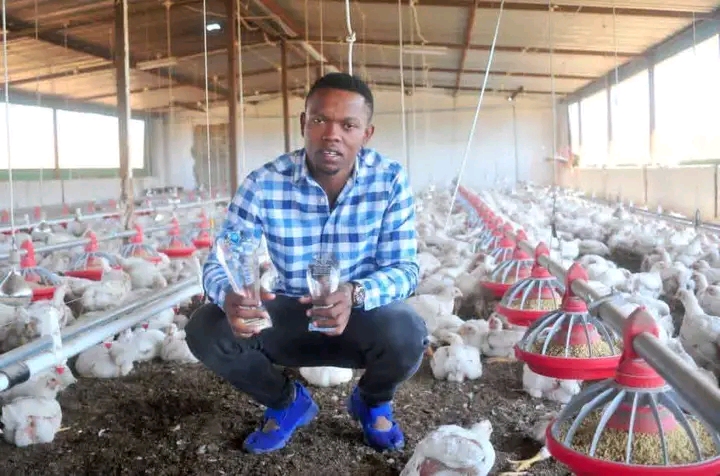
Mokwene’s choice of contract growing is itself an innovation in approach: instead of selling chickens retail or local markets, he locked in large scale buyers. Contract farming offers predictable demand, support from integrators and more favourable financing terms.
Another strategic choice: clearing the initial debt quickly so the business could expand unfettered. Entrepreneurs often underestimate the value of debt freedom, it gives flexibility, lowers risk and allows reinvestment rather than interest payments.
Actionable lessons for aspiring entrepreneurs
- Begin with secured demand: Before you scale output or production invest in clients or customers who commit to your product.
- Pay off early debts where possible: Reduce financial burden to free resources for growth.
- Focus on operational excellence: As a contract grower Mokwene manages hundreds of thousands of chickens per cycle, discipline at scale is non-negotiable.
- Build reputation through results: Media recognition, successful contracts and credible partnerships become marketing tools in B2B arenas.
- Understand the value chain: Mokwene did not just raise chickens, he understood how to integrate into abattoirs, buying cycles and scale requirements.
- Use growth to scale capacity: From one farm to two, from hundreds of chickens to hundreds of thousands, each step served a larger operational goal.
Why this story matters
Tumi Mokwene’s journey from a small farm startup with a loan to a fully-owned dual-farm operation supplying major players shows that strategic patience, client alignment and operational focus can build meaningful businesses even in commodity-heavy sectors. His narrative is not about overnight wealth, it is about disciplined growth, market insight and systems that work at scale.