The Sewing Club: How Making Sewing Cool Again Became a South African Creative Community

The Sewing Club: How Making Sewing Cool Again Became a South African Creative Community. In 2020, The Sewing Club set out to challenge an assumption that had followed sewing for years. Sewing was often viewed as an old-fashioned skill, something associated with generations before today’s young creatives. The Sewing Club wanted to change that perception.
Founded by Cindy Maree, the South African brand was built around a simple idea: sewing could be creative, social, practical and, most importantly, cool again. What began as a sewing business developed around a broader ambition to create a community of creatives who could learn, make and connect.
The journey behind The Sewing Club offers valuable lessons for entrepreneurs about positioning, community building, customer experience and turning a traditional skill into something relevant to a modern audience.
Finding an Opportunity in an Old Perception
The Sewing Club’s positioning starts with the desire to break the stigma that sewing is only for older people.
Rather than treating sewing purely as a practical household skill, the brand presents it as a form of self-expression. Its message is deliberately energetic: make sewing cool again.
That positioning gives The Sewing Club a clear identity. It is not simply offering sewing lessons. It is creating an environment where people can learn a skill while exploring their creativity.
For entrepreneurs, the lesson is powerful. Sometimes an opportunity exists not because a product or skill has disappeared, but because the way people perceive it has become outdated. Changing that perception can create space for a new brand.
Making Beginners Feel Capable
The Sewing Club’s courses are structured around helping participants leave with a positive experience and a sense that they are equipped to continue creating.
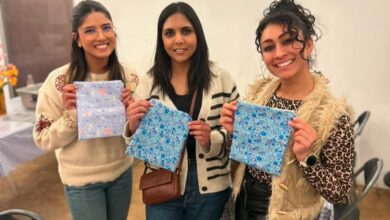
The learning journey includes practical skills such as sewing buttons, putting in hems, making items and developing the confidence to create clothing suitable for everyday wear.
That focus on confidence is an important part of the offering. Learning a new skill can be intimidating, particularly for someone who has never threaded a needle. The Sewing Club addresses this by welcoming complete beginners alongside people who want to refine existing techniques.
For entrepreneurs, this highlights the importance of designing an experience around the customer’s starting point. A beginner does not simply need information. They need to feel that progress is possible.
Small Groups Create a Stronger Experience
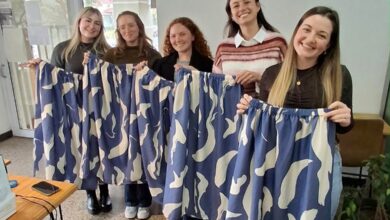
One of The Sewing Club’s defining features is its small-group approach. Classes are limited to six people, allowing participants to receive personalised attention while experiencing the camaraderie of learning alongside other sewing enthusiasts.
This creates two benefits at once. Students receive support while the class environment encourages connection.
That community element is central to the brand’s identity. The Sewing Club believes sewing is more than a practical skill. It is an opportunity for self-expression, creating something unique and connecting with like-minded crafters.
For a growing business, this is an important strategic lesson. A service can become more valuable when customers feel they are joining something rather than simply purchasing something.

Turning a Skill Into an Escape From Everyday Life
For founder Cindy Maree, the appeal of sewing extends beyond the finished product.
She describes seeing girls learn to sew, form friendships in class, push their creative boundaries and escape the pressures of everyday life. She also sees sewing personally as a stress reliever because it shifts attention towards the process of creating something.
This philosophy gives The Sewing Club a broader emotional proposition. The focus is not only on what someone makes at the end of a class, but also on what they experience while making it.
That distinction can be valuable for entrepreneurs. Products and services often have a functional outcome, but customers may remember the feeling associated with achieving it even more strongly.
Building a Network Across South Africa
The Sewing Club is currently located in various locations across South Africa, with plans to expand to many more locations.
Its ability to operate across different locations is supported by a team of teachers around South Africa who help deliver classes. According to Maree, these teachers share the same passion and excitement for sewing and creating.
This team-based approach is important to the brand’s expansion. Instead of relying entirely on one person to deliver every class, The Sewing Club has developed a network of teachers who can help bring the experience to different communities.
For entrepreneurs looking to expand, the lesson is to identify which parts of the customer experience must remain consistent and which can be delivered by a wider team. A strong brand becomes easier to grow when its values can be carried by other people.

Making Enthusiasm Part of the Brand
Maree’s enthusiasm has become closely connected to The Sewing Club’s identity.
She recalls receiving a compliment from the CEO of a major sewing machine company, who told her, “Your enthusiasm is quite remarkable.” For Maree, that enthusiasm represents exactly the energy she wants to bring into the classes.
This reveals another important element of the brand’s strategy. The Sewing Club is not trying to make sewing relevant through technical instruction alone. It is bringing energy, creativity and excitement into the experience.
For entrepreneurs, enthusiasm cannot replace a strong business model, but it can make a brand more memorable when it is consistently reflected in the customer experience.
The Bigger Lesson Behind The Sewing Club
The Sewing Club’s story demonstrates how a traditional skill can be repositioned without losing what makes it valuable.
Since its establishment in 2020, the brand has focused on creating a sewing and creative community, welcoming beginners, keeping classes small, supporting teachers across South Africa and presenting sewing as a form of creativity and connection.
Its ambition to expand to more locations points to a business built around an experience that can reach new communities while maintaining its central philosophy.
The biggest lesson for aspiring entrepreneurs is not simply to find something people want to buy. It is to understand why they might want to experience it, how they want to feel while doing it and what could make them want to return.