
Rewriting School Essentials: How Levi Mnguni Turned Thuto Stationery into a Cultural Phenomenon

Rewriting School Essentials: How Levi Mnguni Turned Thuto Stationery into a Cultural Phenomenon. In Pretoria and beyond, Thuto Stationery has emerged as more than just another school supplies brand, it’s a testament to South African ingenuity, rooted in cultural connection and quality. Founded by Levi Mnguni in late 2020 and officially launched in February 2021, this stationery business has grown by tapping into unmet needs and bold storytelling.
Personal Origins Fuel Purpose
Levi Mnguni’s journey began far from corporate boardrooms. Born in Soshanguve and raised in Troya, a private farm in Mpumalanga, he experienced firsthand the frustration of using low‑quality school materials. Broken pencils and smudged ink interrupted lessons and dented self‑esteem in both students and parents. That childhood insight planted a seed: stationery brands could and should do better.
From Supplier to Creator
Before launching Thuto Stationery, Levi ran Compubooks, supplying schools with textbooks, laptops, and stationery. As he supplied other brands, he grew uneasy about promoting low‑quality products. Facebook and Sowetan Live feature his decision to build his own brand, drawing from African heritage in design and quality in function.
Launching Locally, Scaling with Intent
Thuto Stationery hit the market in early 2021. Customer reception was electric, within weeks, a single tweet reached a million impressions. In the first two months, they sold over 100 000 exercise books and school supplies. Schools and retailers quickly adopted the slogan “Thuto, KeYaRona” in support.

Designing for Real Needs
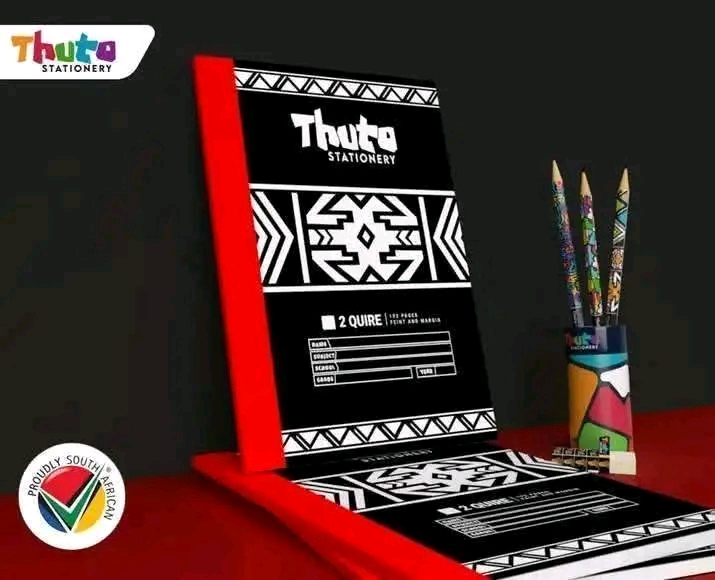
What sets Thuto apart? Culturally inspired aesthetics and thoughtful features. Research and school visits led to distinctive Ndebele and classic designs, sturdy binding, and glue that held up during heavy use, no covering needed. These features solved real classroom pain points.
Securing Retail Success
Instead of staying niche, Levi secured national distribution. Today, Thuto items are available through CNA, Takealot, Shoprite, Checkers, and even local spaza shops in township areas. Being visible where students and parents shop was essential to scaling awareness.

Navigating Growth Pains
Rapid demand came with growing pains. Inventories ran low, and initial production quality suffered. Levi paused to regroup, spending three months on deeper material research, supply chain vetting, and better production workflows. The result was more consistent quality whenever Thuto products hit the schools again.
Structuring for Scale and Sustainability
Self‑funded from day one, Levi started by reducing the product range to what he could support financially without loans. To scale, in 2022 he partnered with Standard Bank to access vetted manufacturers. He also implemented a warehouse management system to keep stock reliable during back‑to‑school peaks.

Lessons from Thuto Stationery’s Story
Start With Real Pain Points
Levi’s first-hand experience inspired a brand that genuinely addressed user frustrations. Real problems create authentic brands.
Design with Purpose
Thuto’s culturally inspired designs and workbook durability made the products stand out and resonate.
Grow Organically
Instead of overextending, Levi focused on two powerful months of research and quality control before resuming growth.
Align Funding with Strategy
Self-funding kept control; securing banking support for vetted manufacturers boosted scale responsibly.
Widen Retail Channels Early
Strong distribution partnerships with national chains and community-level spaza shops expanded reach and accessibility.
Monitor Stock and Systems
Investing early in warehouse systems ensured that spikes in demand did not break the supply chain.
Conclusion
Thuto Stationery is a story of transforming personal memory into national momentum. Through cultural relevance, quality focus, and disciplined scaling, Levi Mnguni built a brand that meets educational needs while celebrating identity. For any entrepreneur, this journey affirms that purpose, design, and systems, not shortcuts, fuel lasting success.