
Welo’s Quiet Revolution: How Zanele Abraham Matome Turned Access Into a Scalable Health Service

Welo’s Quiet Revolution: How Zanele Abraham Matome Turned Access Into a Scalable Health Service. When Zanele Abraham Matome founded Welo Health in 2020, she was not trying to build another telehealth app. She set out to close a stubborn gap in South Africa’s health system by blending human touch with smart technology and taking services to where people actually are. Welo’s promise was practical and bold at the same time: hospital at home care, virtual doctor consults, and on site occupational health for businesses, all coordinated through a digital backbone.
Listening first, then designing the service stack
Welo began by listening to three groups with overlapping needs. Corporates wanted compliant wellness and occupational health without derailing operations. Insurers needed reliable last mile partners to support members at home and at work. Clinicians wanted flexible work and streamlined processes. Welo stitched these threads into a platform that schedules clinicians, captures data, and delivers care in homes and workplaces while giving clients a clear dashboard. The model benefits nurses and doctors too, offering flexible shifts and diverse cases across a national footprint.
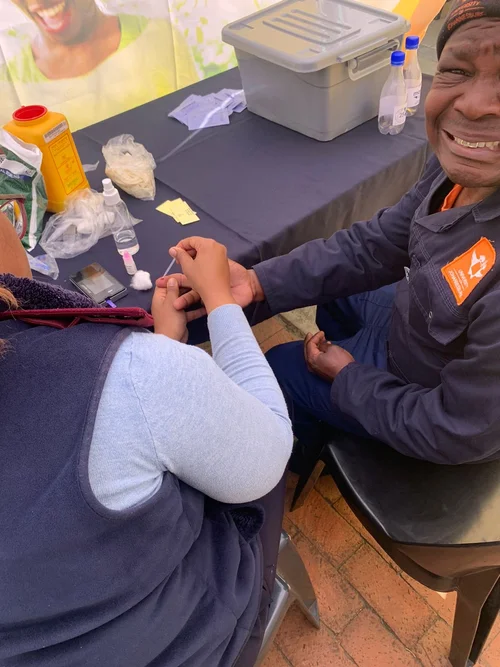
A frontline built on people, not only pixels
From day one, Zanele framed technology as an enabler rather than the hero. Welo recruited a distributed network of clinicians so that digital triage could lead to real care at a front door when needed. Within its first years the company scaled a sizable gig workforce of nurses and doctors, proving that human led access can be organized at national level when the software is simple and the workflows are clear.
The turning point: productizing access for SMEs and teams
A key leap came when Welo packaged its services for smaller employers and teams. The Hello Welo offering put a predictable bundle in the hands of SMEs: monthly virtual doctor visits, quarterly at home health screening for blood pressure, glucose, cholesterol and oxygen, a simple mental health check, and medicine delivery. It turned health access into a subscription like utility that leaders could budget for and employees could actually use.

Expansion with discipline, not hype
Welo’s footprint grew from Johannesburg across South Africa with an eye on SADC reach, supported by insurer partnerships and in hospital case management capability. The company did the unglamorous work of compliance, occupational health reporting, and post discharge coordination so that payers and employers saw outcomes rather than hopeful dashboards. That quiet operational credibility underpins Welo’s move into regional markets.
What Welo teaches builders about service scale
Be the last mile, not just the interface. Welo did not stop at video calls. It organized home visits, case management, and workplace clinics. Owning the last mile makes value visible to clients and payers.
Productize around real buyer problems. The SME bundle is not a feature list. It matches how small teams buy: fixed price, clear frequency, predictable value that covers physical and mental health and ends with medicine in hand.
Recruit clinicians like customers. Flexible scheduling and straightforward processes make Welo attractive to nurses and doctors. Treating clinicians as a core user group keeps quality high and supply reliable.
Let data do the trust building. Corporate dashboards and case management records turn care into measurable business outcomes. That is how a health service wins renewals and insurer referrals.
Tell a purpose led story that is still operational. Zanele’s narrative is access through people and tech. The proof is a nurse at the door, not a glossy app screen. Purpose opens doors, operations keep them open.

Milestones that mapped the journey
2020 – Welo Health is founded in Johannesburg with a human plus tech model for access to care.
2021 to 2023 – National service build out serving corporates and insurers with hospital at home, virtual consults, and occupational health.
2024 – Public profiles highlight a nationwide gig network of nurses and doctors delivering on demand care.
2025 – Hello Welo waitlist opens, bundling SME friendly screenings, virtual care, and medicine delivery.
A closing note to founders
Welo’s advantage is not a single breakthrough. It is the compounding effect of many grounded choices: serve payers and employers with outcomes, respect clinicians as users, keep technology simple enough to disappear, and never lose sight of the home as a legitimate point of care. Zanele Abraham Matome shows that access is built, not proclaimed, and that the businesses which do the hard yards of last mile health will be the ones that last.