
Turning Plastic Waste Into Purpose: Lessons From Minenhle Simelane’s Recycling Journey
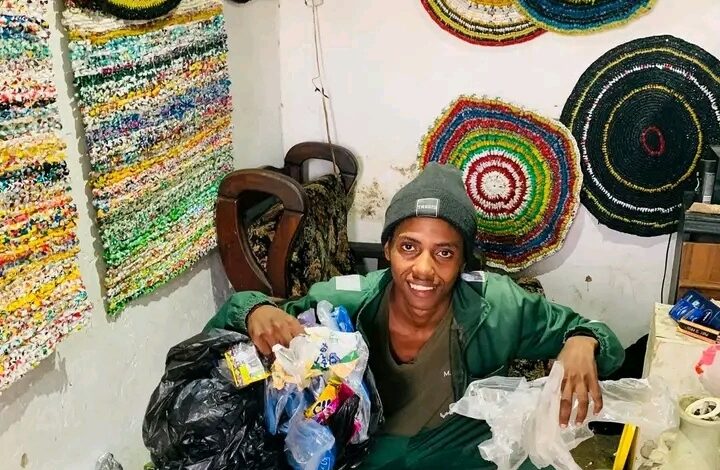
Turning Plastic Waste Into Purpose: Lessons From Minenhle Simelane’s Recycling Journey. Some business journeys begin with funding or formal offices. Others begin with a problem that can no longer be ignored. Minenhle Simelane’s journey belongs firmly in the second category. Built around action rather than talk, his work transforms plastic waste into functional, decorative mats while addressing one of the most pressing environmental challenges of our time.
At its core, Simelane’s business journey is about seeing value where others see waste. By collecting discarded plastic and repurposing it into usable products, he has created a venture that blends environmental responsibility with practical design. His story offers clear lessons for entrepreneurs who want to build businesses rooted in purpose, discipline, and measurable impact.
Identifying a Problem Worth Solving
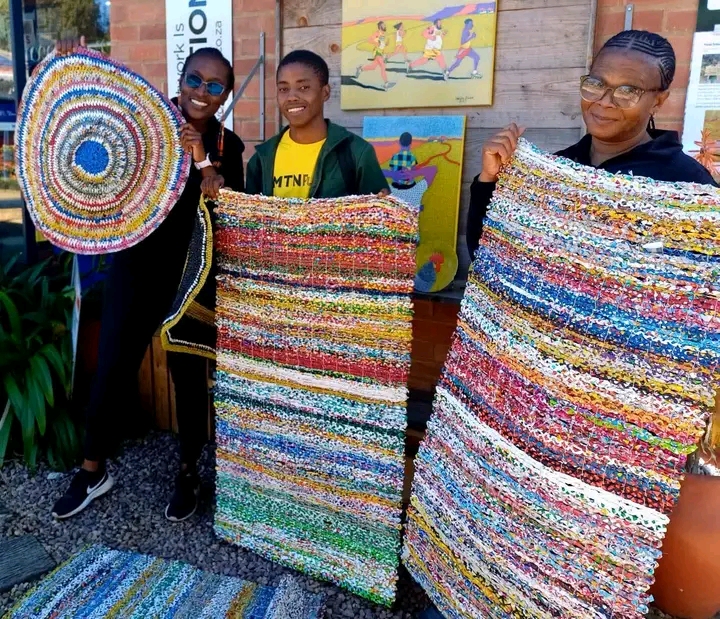
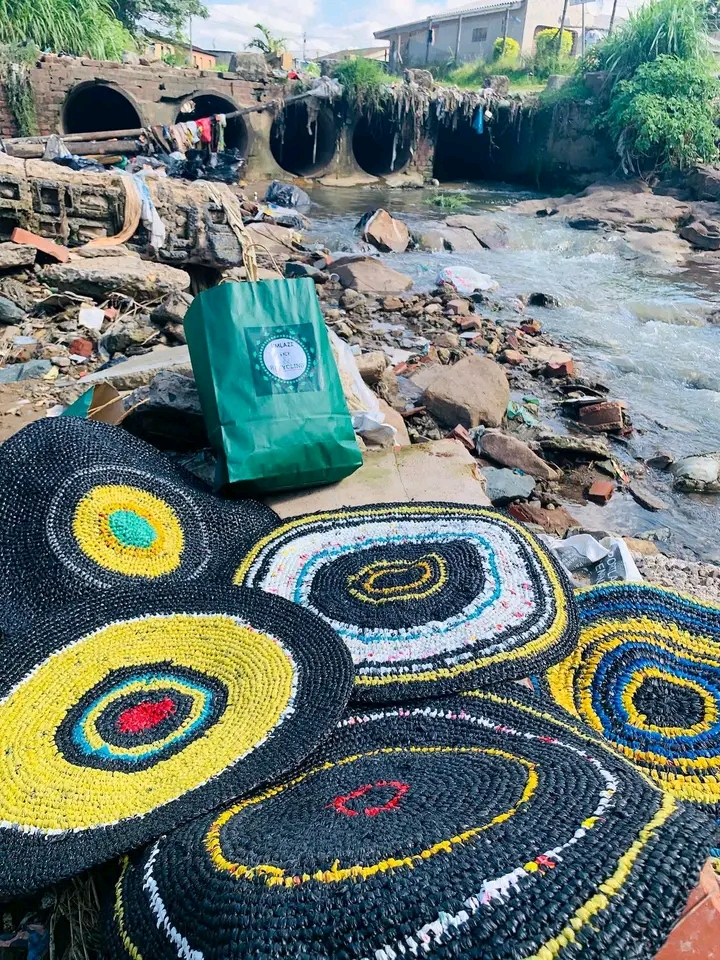
Minenhle Simelane collects plastic waste and transforms it into mats suitable for decorating both interior and exterior surfaces, including walls. Each mat is made using approximately 1000 pieces of plastic waste that might otherwise end up in rivers or oceans. This fact alone defines the foundation of his business. It is specific, tangible, and measurable.
Rather than approaching recycling as an abstract idea, Simelane focused on a concrete output. The mats are not symbolic products. They are functional items with a clear use case. For aspiring entrepreneurs, this highlights an important lesson. A strong business idea often starts by narrowing focus, not expanding it. Solving one clear problem well can be more powerful than trying to solve many at once.
Turning Environmental Action Into a Product
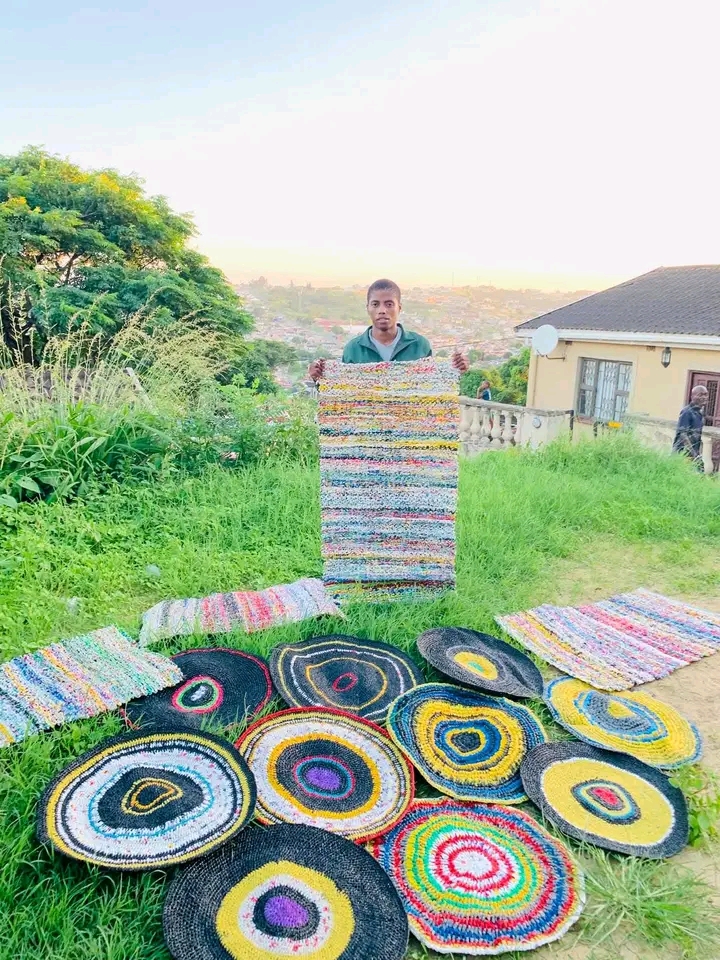
One of the key strengths in Simelane’s journey is product clarity. The mats serve a defined purpose and can be used across different spaces. Interior and exterior application broadens relevance without changing the core product. This approach allows the business to speak to both design and sustainability without overcomplicating the offering.
The transformation process itself becomes part of the value proposition. Customers are not only buying a mat. They are buying a product with a visible environmental impact. Each unit represents plastic diverted from natural ecosystems. This kind of transparency builds trust and gives customers a reason to care beyond aesthetics.
For entrepreneurs, the lesson is clear. When your product has an impact, communicate it in real numbers. Specifics are more powerful than slogans.
Building With Available Resources
Simelane’s work demonstrates how resourcefulness can replace large startup capital. The raw material for his products is plastic waste, a resource that exists in abundance. By focusing on collection and transformation rather than expensive inputs, he built a model that aligns cost control with environmental benefit.
This approach challenges a common misconception that innovation always requires new materials or advanced technology. Sometimes innovation lies in rethinking what already exists. Entrepreneurs can learn from this by asking a simple question. What resources are already around me that others are ignoring?
Practical Marketing Through Story and Access
The marketing of Simelane’s work is rooted in simplicity and accessibility. Customers can place orders directly via WhatsApp, creating a low barrier to entry for engagement. This direct communication model keeps the business personal and efficient.
More importantly, the story behind the product acts as a natural marketing driver. The environmental impact is not a campaign. It is embedded in the product itself. When customers understand that each mat represents 1000 pieces of plastic waste removed from circulation, the story markets itself.
The lesson for entrepreneurs is that marketing does not always require large budgets. Clear messaging, accessibility, and authenticity can carry a brand far when the product delivers real value.
Growth Through Purpose, Not Hype
Simelane’s journey shows that growth does not always begin with scale. It begins with consistency. Collecting plastic waste, transforming it into mats, and delivering a reliable product creates a foundation that can be built upon over time.
By focusing on quality and impact rather than rapid expansion, the business maintains integrity. This approach is especially relevant for entrepreneurs in sustainability driven spaces, where trust and credibility matter deeply.
Actionable Lessons for Aspiring Entrepreneurs
The lessons from Minenhle Simelane’s business journey are grounded and practical. Start with a real problem. Build a product that solves it clearly. Use measurable impact to communicate value. Leverage accessible tools like WhatsApp to reach customers. Above all, let purpose guide execution rather than replacing it.
Simelane’s work proves that meaningful businesses can emerge from everyday challenges. By transforming waste into something useful and purposeful, he offers a blueprint for entrepreneurs who want to build ventures that matter, not just sell.