
Loop Makes the Google for Startups Accelerator Africa: Interview With Founder, Imtiyaaz Riley
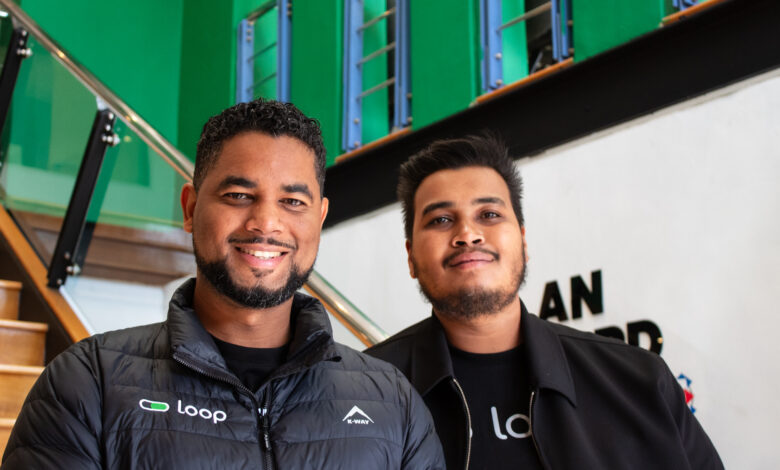
Loop Makes the Google for Startups Accelerator Africa: Interview With Founder, Imtiyaaz Riley. Fresh off its selection into the highly competitive Google for Startups Accelerator Africa, Loop is stepping into a new phase of growth with a clear focus on solving everyday mobility and payment challenges across the continent. Founded by Imtiyaaz Riley, the startup operates at the intersection of transport, access, and financial inclusion, building solutions shaped by real-world user experiences rather than abstract models. In this interview, Riley unpacks what set Loop apart from thousands of applicants, the gaps it is addressing in Africa’s transport systems, and how the accelerator programme could shape the company’s next chapter. Check it out below!
Being selected for the Google for Startups Accelerator Africa is highly competitive, with less than a 1% acceptance rate. What do you think set your startup apart from nearly 2,600 applicants?
I believe what set Loop apart is that we are solving a very real and deeply rooted problem in a large and essential part of African daily life: how people move and how they pay. Our work sits at the intersection of mobility, access and financial inclusion, which makes it both highly practical and highly scalable. What also makes Loop different is that our business is grounded in lived realities. We are not building for abstract users. We are building in response to the everyday transport and payment challenges faced by ordinary people, operators and businesses. I think that combination of relevance, ambition and practical execution is what made us stand out.
Can you break down how your technology directly impacts everyday users in Africa?
Our technology is designed to make transport more accessible, more efficient and easier to navigate. For everyday users, that means reducing friction in the way they move through their city and engage with transport systems. In practical terms, we are building solutions that help commuters, drivers, operators and businesses interact more seamlessly. The impact is not only convenience. It is also about saving time, improving coordination, increasing trust and creating a better overall transport experience for people who rely on these systems every day.
Loop focuses on mobility and payments. What are the biggest gaps in Africa’s transport and payment systems that you aim to solve?
One of the biggest gaps is fragmentation. In many African markets, transport and payment systems are still highly informal, disconnected and inefficient. People often deal with uncertainty, poor coordination, limited visibility and inconsistent payment experiences. Loop aims to address those gaps by creating more integrated, user-friendly systems that bring structure, reliability and accessibility into the mobility experience. We see a major opportunity in improving how transport services are organised and how payments are embedded into those journeys in a way that works for real African contexts.
The African tech ecosystem raised $3.9 billion in 2025. Despite this growth, what are the biggest barriers startups still face when trying to scale?
Access to funding is still important, but funding alone is not enough. Many startups face barriers around execution, regulatory complexity, market fragmentation, infrastructure gaps, customer trust and access to the right strategic networks. Scaling in Africa often means solving for multiple realities at once. Different markets have different operating conditions, behaviours and system constraints. So the challenge is not only how to grow fast, but how to grow sustainably and intelligently across complexity.
How important are programs like the Google for Startups Accelerator Africa in bridging the gap between funding and sustainable growth?
They are extremely important. Many startups do not only need capital. They need the right support, technical guidance, strategic thinking and access to networks that can help them mature into sustainable businesses. Media Question Draft Response Programs like this help founders strengthen the parts of the business that are often hardest to build alone. They create space for learning, sharpening execution, improving products and thinking more clearly about scale. That kind of support can make a meaningful difference in moving a startup from promise to long-term impact.
What specific skills or resources are you hoping to gain from the accelerator’s mentorship and technical workshops?
We are looking forward to deepening our thinking in areas such as product scale, technical architecture, growth strategy and operational excellence. We are also excited about the opportunity to engage with experienced mentors who understand how to build resilient, high-impact businesses in emerging markets. From a technical perspective, we are particularly interested in insights that can help us strengthen our systems, improve adaptability and think more strategically about the future of intelligent mobility and payments.
Collaboration is often key in scaling innovation. Are there opportunities within this cohort to partner with other African startups, and how valuable is that network?
Absolutely. One of the most valuable parts of any accelerator is the network it creates. Being in a cohort with other ambitious African founders opens up opportunities for shared learning, partnerships, knowledge exchange and mutual support. That kind of network is incredibly valuable because scaling can often feel isolating. Being able to learn from others who are solving difficult problems in different markets across the continent creates both perspective and opportunity.
With AI and machine learning evolving rapidly, how do you ensure your solutions remain relevant and adaptable to future challenges?
For us, relevance starts with staying close to the problem. Technology evolves quickly, but the real question is whether what you are building remains useful, practical and responsive to user needs. We try to remain adaptable by focusing on strong fundamentals, listening to the market and building with enough flexibility to evolve as the environment changes. AI and machine learning are powerful tools, but they are most valuable when applied in ways that improve real-world outcomes rather than simply follow trends.
Looking ahead, what does success look like for your startup after completing the accelerator program, both in terms of impact and growth?
Success for us would mean emerging from the program with a stronger business, a sharper strategy and a more scalable product. In terms of impact, success means creating solutions that improve mobility and access for more people in more communities. In terms of growth, success means building a company that is not only expanding, but doing so in a way that is sustainable, relevant and rooted in real value. We want Loop to be a business that grows in reach while staying true to the everyday needs that inspired it in the first place.