Wiggle Scrubs: How a Veterinarian Turned a Workwear Problem Into a Brand
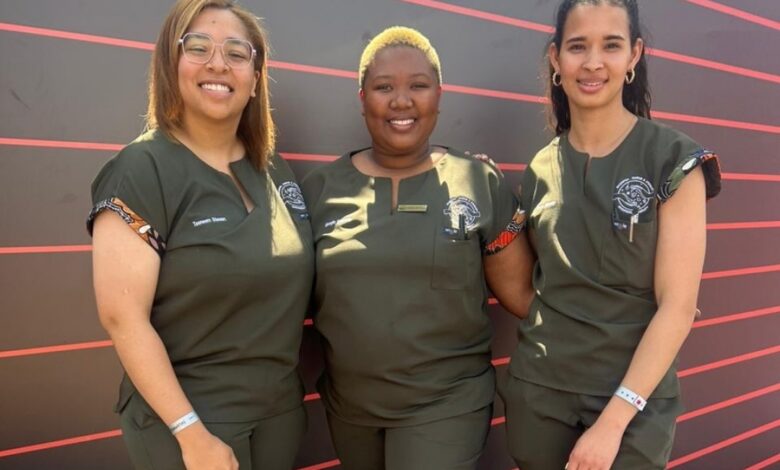
Wiggle Scrubs: How a Veterinarian Turned a Workwear Problem Into a Brand. In 2019, the idea behind Wiggle Scrubs began with a problem that was close to home. As a practicing veterinarian, the founder needed workwear that could keep up with long, active days while still looking stylish and professional. The problem was that nothing quite delivered the balance she was looking for.
Instead of settling for an imperfect solution, she decided to create her own. That decision became the starting point for Wiggle Scrubs, a proudly home-grown South African brand built around a straightforward idea: workwear should work as hard as the people wearing it.
Today, that principle remains central to the brand. Wiggle Scrubs focuses on garments designed for movement and comfort, while maintaining a pared-down, polished appearance. Its story offers useful lessons for entrepreneurs about identifying an everyday problem, solving it from personal experience and allowing the realities of customers’ working lives to shape the product.
Finding the opportunity in a real problem
The origins of Wiggle Scrubs are particularly instructive because the business was born from the founder’s own experience.
As a veterinarian, she understood what demanding working days required from clothing. She was not simply looking for something that looked good. The scrubs needed to be comfortable enough for long and active days while still allowing her to feel confident and professional.
When existing options did not provide the balance she wanted, she created her own.
For entrepreneurs, this is a powerful starting point. Problems encountered personally can reveal genuine opportunities, particularly when the founder understands the environment in which the product will be used.
The important lesson is not simply to create something because it solves a personal frustration. It is to understand the problem deeply enough to identify what an effective solution should actually deliver.
Putting function before decoration
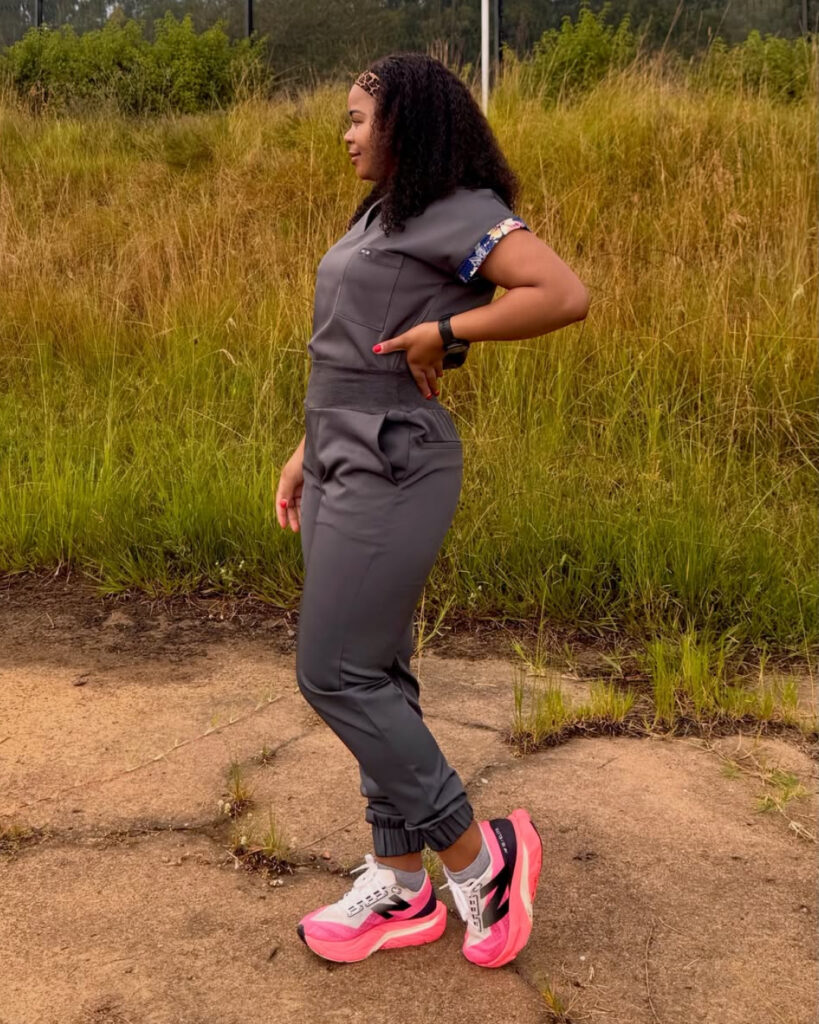
Wiggle Scrubs makes its priorities clear: function comes first.
But the brand does not believe functionality requires personality or polish to disappear. Its designs are described as pared down, intentional and practical while still communicating reliability and professionalism.
That balance is central to the brand’s identity.
The scrubs need to perform as workwear, but the person wearing them still wants to feel confident in what they are wearing. Wiggle Scrubs connects these two needs rather than treating them as separate.
This provides an important lesson for product businesses. Solving a functional problem does not mean ignoring how customers want to feel. A product can perform a practical role while also contributing to confidence and personal presentation.
Designing for people who are always moving
The brand’s understanding of its customer is reflected in its emphasis on movement and comfort.
Wiggle Scrubs describes its garments as being built for movement and made for comfort. That language connects directly to the working environments in which professional workwear is used.
The founder’s experience as a veterinarian provides a specific foundation for this approach. The original problem involved finding scrubs suitable for long, active working days, so movement and comfort became central rather than secondary considerations.
For entrepreneurs, there is a useful product development lesson here. The environment in which a product is used should influence how it is designed. Understanding the physical demands placed on a product can help determine which features matter most.
Keeping production local
South African production is another defining part of the Wiggle Scrubs proposition.
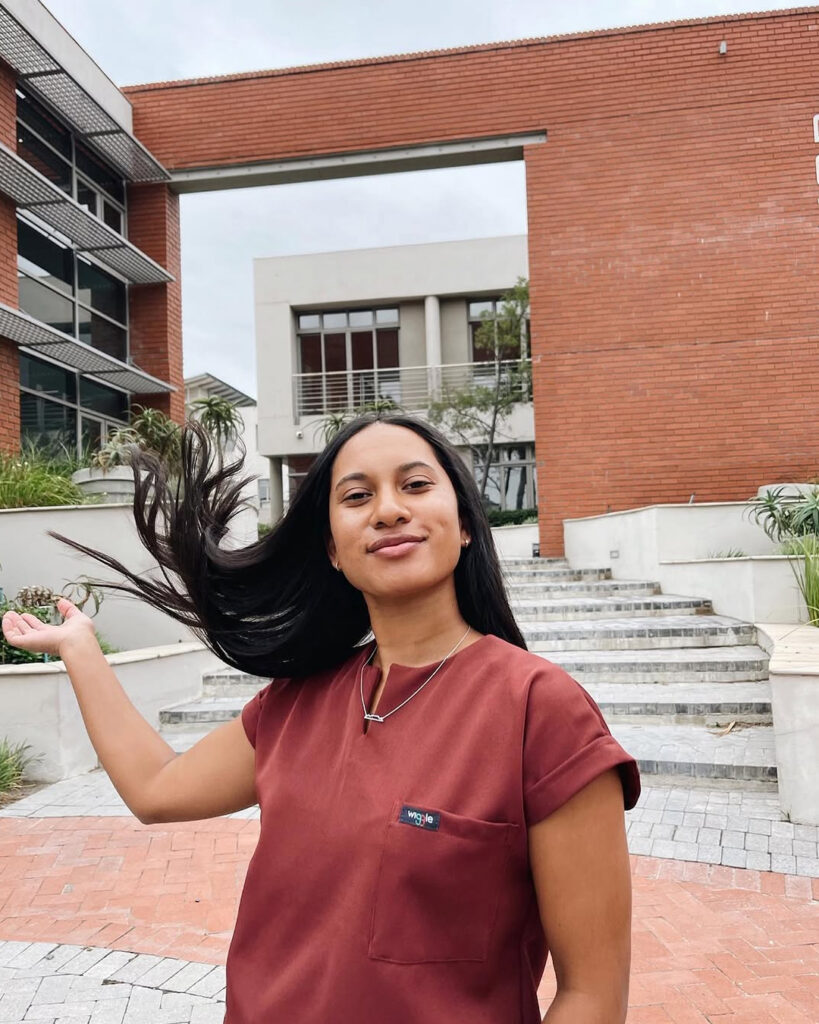
The brand says its scrubs are handmade in South Africa through a skilled local supplier, with a focus on craftsmanship and ethical production.
Local manufacturing also supports the brand’s emphasis on flexibility, quality and personal service. Wiggle Scrubs specifically contrasts this approach with the limitations it associates with larger brands.
For an entrepreneur, the lesson is that production choices can become part of a brand’s identity when they are genuinely connected to the business model. In Wiggle Scrubs’ case, local production is not simply mentioned as a geographic detail. It is linked to the company’s broader promise around craftsmanship and service.
Turning confidence into part of the product
There is another idea running through Wiggle Scrubs that goes beyond fabric and construction: confidence.
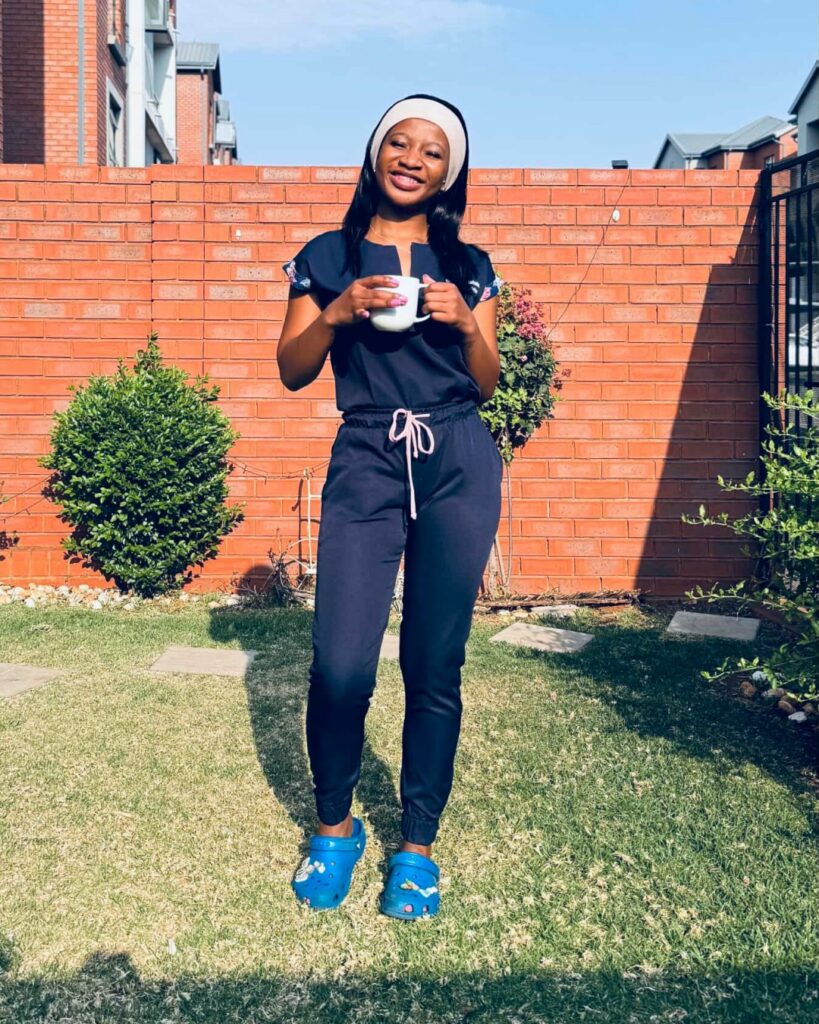
The brand believes that when professionals look good, they feel confident, and that confidence carries into how they show up, the care they provide and the pride they take in their work.
That gives the product an emotional role alongside its practical one.
For entrepreneurs, this is a useful reminder that customers rarely buy purely functional products. Even when the primary purpose is practical, the product can influence how someone feels while using it.
Wiggle Scrubs therefore connects comfort and functionality with professionalism and confidence, creating a proposition that speaks to both the working day and the person experiencing it.
Extending the mission beyond scrubs
The brand is also launching a line of Wiggle Pet beds, with a portion of every sale intended to be donated to local animal charities.
The initiative extends naturally from the world in which Wiggle Scrubs began. The founder is a practicing veterinarian, and the brand says the animals and communities that inspire its work are part of the reason for giving back.
The supplied information does not provide figures for the new range or the donations, so those details cannot be assumed. What is clear is the intention to connect a new product line with support for local animal charities.
For entrepreneurs, this demonstrates the value of ensuring that new initiatives have a genuine relationship with the brand’s existing identity.
Building from experience, not assumptions
Wiggle Scrubs’ story begins with a specific problem and remains closely connected to the environment that created it.
Founded in 2019, the brand emerged because its founder could not find workwear that offered the combination of comfort, activity-friendly design, style and professionalism she wanted. The response was to create it herself.
From there, the brand’s identity has been shaped by local production, practical design and an emphasis on confidence.
There are no supplied sales figures, customer numbers or major expansion milestones, so those achievements cannot be claimed. What can be established is a clear product philosophy and a defined reason for the brand’s existence.
For aspiring entrepreneurs, perhaps the most useful lesson is the simplest one: pay attention to problems you genuinely understand. Wiggle Scrubs did not begin with a vague ambition to enter fashion. It began with a veterinarian looking for better workwear.
That personal problem became a product, the product became a brand, and the brand continues to build its identity around the people it was created to serve.