
Leroy Merlin’s Alberton Expansion Signals a Shift Toward Community-Led Retail in South Africa
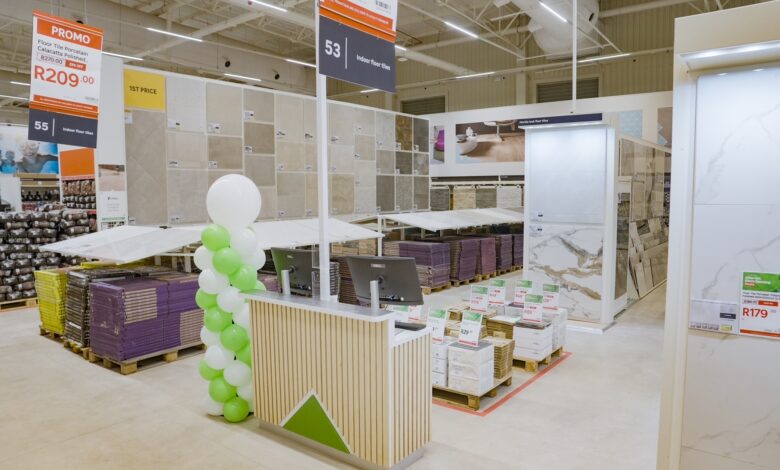
Leroy Merlin has opened its sixth South African store in Alberton, but the move goes beyond footprint expansion. It reflects a deeper strategic pivot toward community-led retail, shaped by local realities, affordability pressures, and the growing demand for resilient home solutions.
As South Africa continues to grapple with inflation, unemployment, and ongoing energy and water instability, household spending priorities are shifting. Consumers are increasingly focused on practical upgrades that improve efficiency, reduce long-term costs, and increase home resilience.
Against this backdrop, Alberton has emerged as a strategic growth node.
“Every new store is more than a retail space for us,” says Frank DUFOURQ, CEO of Leroy Merlin South Africa. “It’s an opportunity to improve everyday living conditions and support communities in building better homes.”
Why Alberton Matters in the Bigger Retail Picture
Located in the south of Johannesburg, Alberton reflects a microcosm of South African middle-income households — from first-time homeowners to established families — all navigating rising living costs and infrastructure constraints.
For Leroy Merlin, the expansion is both commercially logical and socially aligned.
“South Africans are not just looking for home improvement products anymore,” DUFOURQ explains. “They are looking for solutions that respond to real challenges like power reliability, water access, and household efficiency.”
This positions Alberton not just as another retail launch, but as part of a broader strategy to embed the brand within communities where practical home improvement has become a necessity rather than a lifestyle choice.
From DIY Retailer to Everyday Living Solutions Provider
Rather than operating purely as a traditional DIY hardware chain, Leroy Merlin is repositioning itself around problem-solving for modern households.
The company’s evolving model focuses on enabling:
- More reliable access to water and electricity solutions
- Improved household energy efficiency
- Safer, more comfortable, and more sustainable living environments
This reflects a broader shift in retail strategy: moving from product-centric retail to need-based ecosystem building.
“We made a deliberate decision not to compete as just another DIY retailer,” says DUFOURQ. “Our focus is on relevance — what people actually need in their homes right now.”
A Long-Term Play on Localised Growth
Since entering South Africa in 2016, Leroy Merlin has gradually expanded while adapting its global retail model to local economic realities.
The Alberton store continues that trajectory, with an emphasis on local partnerships, accessible pricing, and deeper integration into surrounding communities.
In an increasingly competitive home improvement market, differentiation is shifting away from product range alone toward purpose, accessibility, and social impact.
“Sustainable retail growth is not only about opening new stores,” DUFOURQ adds. “It’s about creating long-term value in the communities we serve.”
By the Numbers: Alberton Store Impact
The Alberton opening has already delivered measurable economic and operational impact:
- Over 100 jobs created, prioritising local hiring
- Strong integration of local suppliers and service providers
- More than 1,500 customers on opening day, signalling strong demand
- Over 10,000 sqm retail footprint offering end-to-end home solutions
- 65% of products locally sourced, supporting domestic manufacturing and SMEs
These indicators point to a store designed not only for sales performance, but for regional economic stimulation.
Beyond Retail: Building Community Infrastructure
The Alberton launch reinforces a broader theme emerging in South African retail: stores as infrastructure.
For Leroy Merlin, each new location is increasingly being positioned as a hybrid space — part retail hub, part solutions centre, and part economic catalyst.
As DUFOURQ concludes:
“When we invest in the right communities with the right approach, retail becomes more than commerce. It becomes a driver of everyday progress.”