BARE Built a Skincare Brand by Asking One Simple Question: Does It Actually Work?
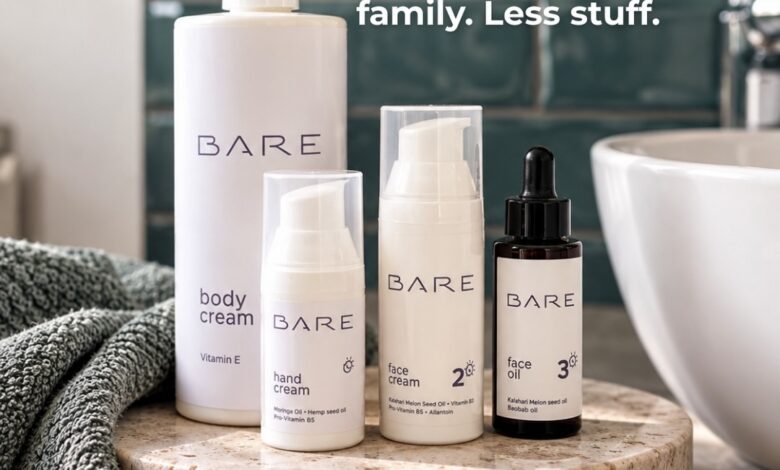
BARE Built a Skincare Brand by Asking One Simple Question: Does It Actually Work?. BARE did not begin with an elaborate beauty industry strategy. It began with frustration. The problem was straightforward: expensive skincare products were promising a lot while, in the founder’s experience, delivering very little. Instead of accepting that as part of the market, Lara and her brother-in-law decided to try something different.
Her brother-in-law, an engineer with what Lara describes as an “I can do anything” attitude, got the process started. Lara joined him, and together they began developing skincare built around a deliberately simple principle: use fewer ingredients, make sure each one serves a purpose and avoid adding anything simply because it looks good on a label.
That idea eventually became BARE.
But the brand did not immediately open its doors to the public. Lara and her brother-in-law used the products themselves for years before giving them to friends and family. When those people repeatedly asked for more, the personal experiment began to look like a business opportunity.
In April 2025, BARE opened its products up to South Africa.
The journey offers an important lesson for entrepreneurs: sometimes a strong brand begins with solving a problem close to home and testing the solution long before attempting to scale it.
Starting with a problem instead of a trend
BARE’s foundation was not a desire to follow the latest skincare trend. It was a dissatisfaction with products that appeared expensive but did not seem to justify what they promised.
That frustration gave the founders a specific problem to solve.
Their response was to strip the proposition back. Instead of building formulas around long ingredient lists, BARE focused on using fewer ingredients and ensuring that each one had a purpose.
For entrepreneurs, there is value in this approach. A business does not always need to create demand for an entirely new category. It can identify something customers already find frustrating and build a better response.
The first question is simple: what is not working well enough for people already?
BARE’s answer became the foundation of its identity.
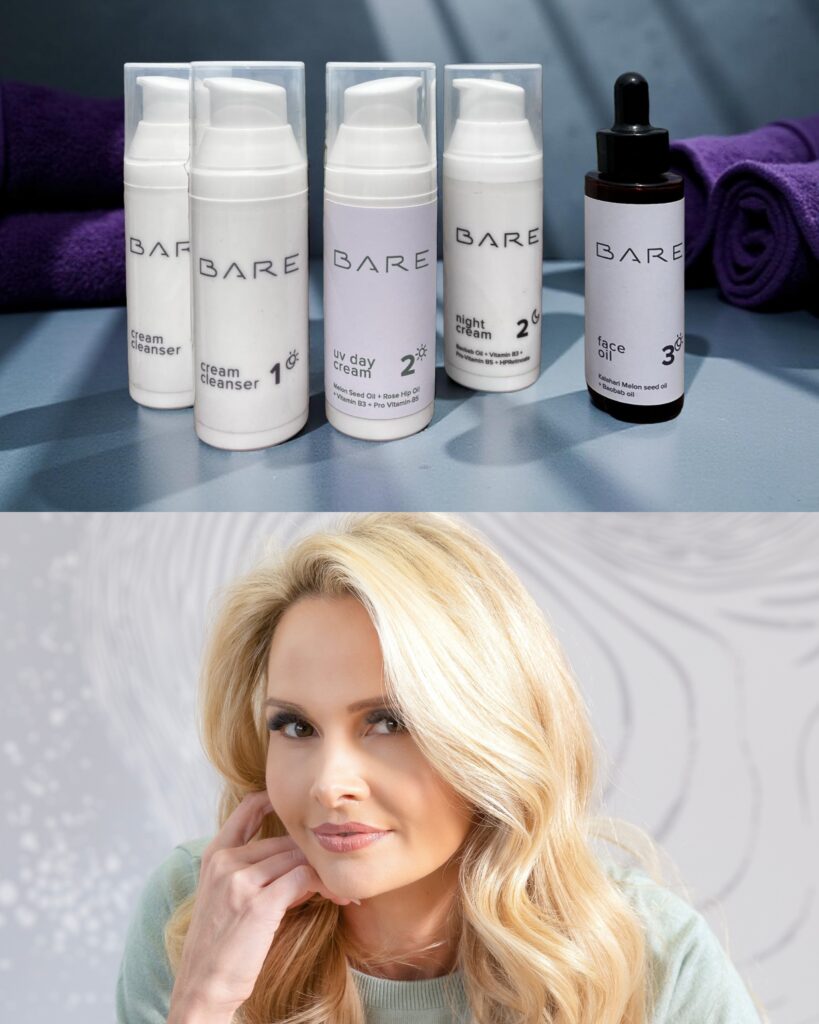
Making every ingredient earn its place
The philosophy behind BARE is deliberately uncompromising.
Every formula is subjected to the same question that shaped the business from the beginning: does this actually help the skin, or is it filler?
If the answer is filler, it does not go into the bottle.
That principle gives the brand a clear filter for product development. It also creates a simple way to explain what BARE stands for without relying on complicated marketing language.
This is a useful lesson for entrepreneurs. A strong brand philosophy can become more powerful when it is expressed through a practical decision-making rule.
BARE’s philosophy is not simply that its products should be simple. It is that every ingredient should have a reason for being there.
Testing the idea before building the brand
One of the most revealing parts of BARE’s story is that the founders used the products themselves for years before introducing them to other people.
The process then expanded to friends and family.
That gave the founders an opportunity to see how people responded to the products before turning the concept into a public brand. When those people kept asking for more, the founders had a clear signal that the products had potential beyond their own use.
For aspiring entrepreneurs, this is a valuable reminder that validation does not always have to begin with a major launch.
Testing a product with a relevant group of people can reveal whether the problem is real, whether the solution is useful and whether people want more of it.
BARE’s journey from personal use to friends and family and eventually to a wider South African market shows how an idea can develop organically before becoming a formal business.
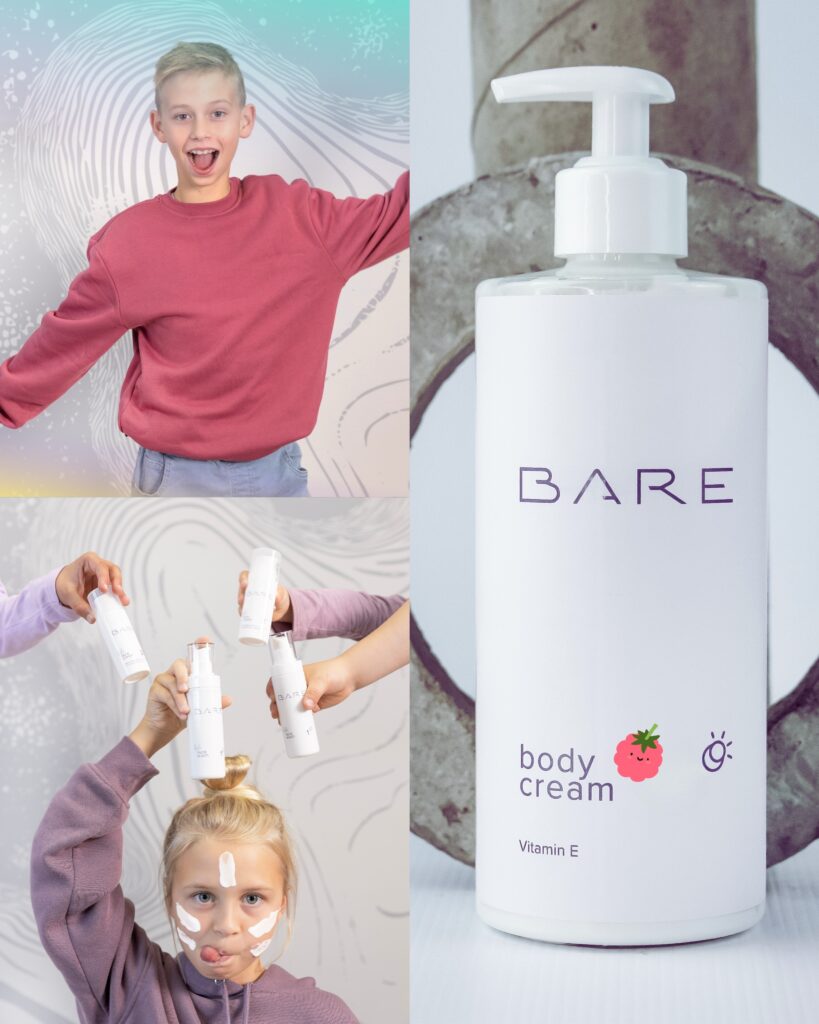
Growing without losing the original philosophy
BARE opened up to South Africa in April 2025, but the brand remains deliberately small.
That choice is important because growth has not replaced the original philosophy. The same question that guided the founders at the beginning continues to guide the formulas today.
Does the ingredient actually help the skin?
If not, it does not belong in the bottle.
For entrepreneurs, consistency can become a competitive strength. As a company grows, there can be pressure to add products, expand the offering or change the proposition. Having a clear principle can help a brand decide what fits and what does not.
BARE’s decision to remain small also reinforces the sense that the business is focused on its philosophy rather than simply pursuing scale for its own sake.
Turning simplicity into a point of difference
In a skincare market where products can be surrounded by elaborate claims and long ingredient lists, BARE has chosen a more stripped-back position.
Its proposition is built around fewer ingredients, purposeful formulation and rejecting additions that are only there to make a label look impressive.
That simplicity becomes the brand’s point of difference.
The lesson for entrepreneurs is that differentiation does not always come from adding more. Sometimes it comes from deciding what to remove.
A business can become clearer when it knows what it refuses to do.
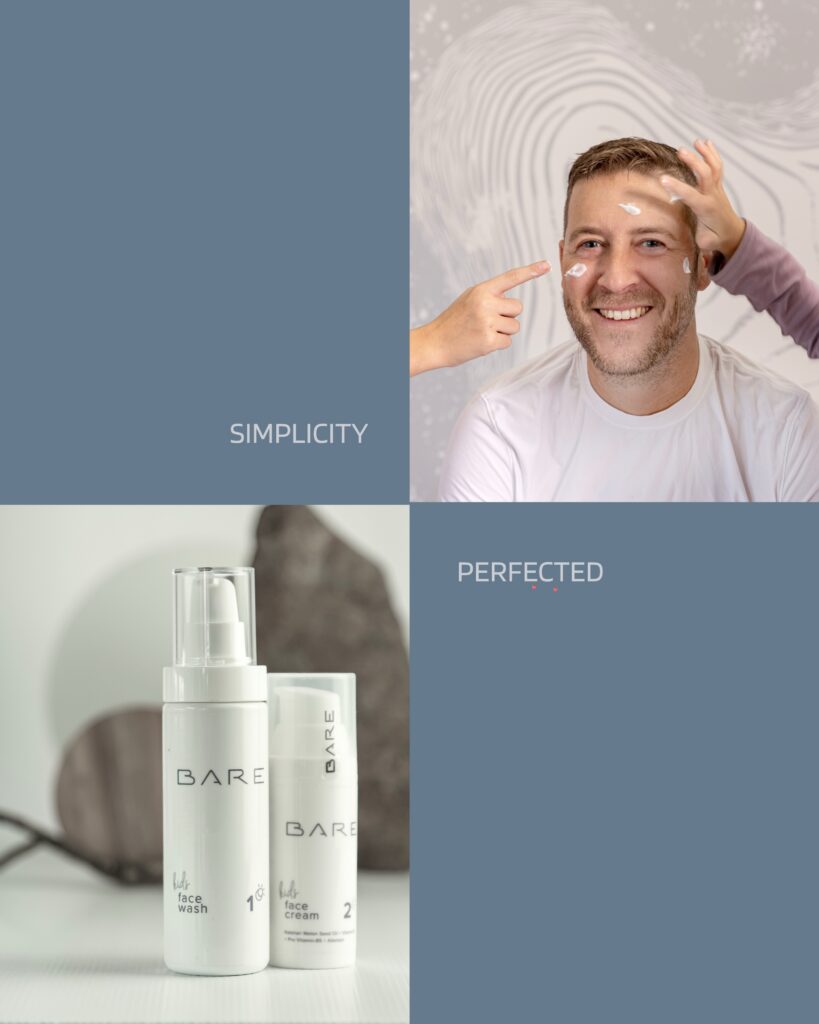
Keeping the original question alive
BARE’s story is ultimately one of disciplined simplicity.
It began with Lara and her brother-in-law questioning expensive skincare that did not seem to deliver enough. They developed products for themselves, used them for years, shared them with friends and family, listened when people asked for more and eventually opened the brand to South Africa in April 2025.
The business remains small, but its central philosophy has stayed intact.
For aspiring entrepreneurs, that may be the most useful lesson. A brand does not necessarily need a complicated origin story or an endless list of promises. It needs a genuine problem, a thoughtful solution and a clear reason for making decisions the way it does.