Tackling Inequality From Inside Communities: Interview with Impact Hub Cape Winelands

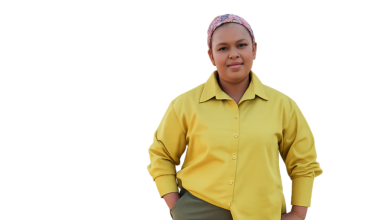
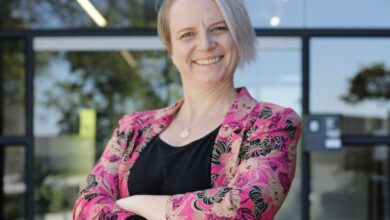
Tackling Inequality From Inside Communities: Interview with Impact Hub Cape Winelands. Impact Hub Cape Winelands has officially launched as the Western Cape’s first and South Africa’s second Impact Hub, bringing a global network of innovation into the heart of the province’s entrepreneurial ecosystem. At the helm is CEO Marli Goussard, whose leadership is shaping a new platform for community-driven, inclusive entrepreneurship. Co-founded by Goussard, Danie Jacobs and Jasmine Jacob, the Hub champions “massive-small” businesses, locally rooted enterprises tackling real challenges rather than chasing unicorn status. Early initiatives already reflect this mission, including a partnership with Stellenbosch University and Fix Forward to convert construction waste into sustainable building materials. With a collaborative incubation space opening soon in Stellenbosch, Impact Hub Cape Winelands aims to support ventures focused on livelihoods, healthcare access and circular economic models. In this interview, Marli Goussard discusses the Hub’s purpose, the opportunities it creates for local entrepreneurs, and the impact model it is building for the region. Read about it below!
What inspired the creation of Impact Hub Cape Winelands, and what gap in South Africa’s entrepreneurship landscape does it aim to fill?
Impact Hub Cape Winelands was created to build an enabling ecosystem where local people who live with social challenges can design and own practical solutions. It addresses a gap in locally-rooted, community-owned impact ventures, not high-growth start-ups, by supporting small, place-based businesses that create economic opportunity and tackle local problems.
As part of a global network, what does the Impact Hub model bring to the local context of the Cape Winelands?
The global Impact Hub network brings proven community-building methodologies, connections to international partners and funders, and a tested model for incubation and co-creation – while enabling those resources to be applied with local knowledge and ownership in the Winelands. This combines global best practice with local legitimacy.
You’ve said, “those closest to the societal challenges are also closest to the solutions.” How does this belief shape the way you work with local entrepreneurs?
It shapes practice by prioritising co-creation: programmes are community-led, solutions are designed with local stakeholders and support is focused on enabling local ownership (skills, market access, and business models) rather than imposing external solutions. The Hub’s role is to equip, connect and support rather than to direct.
What does it mean, in practice, for communities to “own” their solutions – economically as well as socially?
Ownership means local people hold equity, manage operations, and capture revenue streams so benefits flow back into the community (jobs, livelihoods, local supply chains). Social ownership means solutions reflect local priorities, build trust and are sustained because the community is invested in their success.
Many incubators focus on scaling the next unicorn startup. Why did Impact Hub choose instead to support smaller, community-led ventures?
Impact Hub prioritises depth of impact and equitable value creation. Small, locally-owned ventures create distributed economic benefit and are more likely to solve everyday problems sustainably. The Hub deliberately supports ventures that create dignity and livelihoods in underserved communities rather than chasing rare, high-valuation outcomes.
How does your model bridge the gap between academia, policy, and grassroots entrepreneurship?
The Hub acts as a convenor: it connects universities and research capability to on-the-ground entrepreneurs, invites government to co-design enabling policies, and supports NGOs and funders to translate research and policy into scalable, community-owned ventures. The aim is iterative collaboration – research informs pilots, pilots inform policy.
What kinds of entrepreneurs or businesses are you looking to attract or support in this first phase?
The Hub will support locally-owned, impact-driven ventures – for example: small suppliers, community health micro-enterprises, circular economy builders (e.g., construction waste reuse), and social entrepreneurs who combine livelihood creation with environmental or social benefit.
The Cape Winelands region is one of the most unequal areas in South Africa. How do you see Impact Hub contributing to narrowing that gap?
By enabling local enterprise, linking communities to procurement and markets, and supporting small-scale ventures that generate income and skills, the Hub targets economic inclusion. Over time this creates local jobs, strengthens supply chains and channels private and public resources to underserved areas – directly addressing spatial and income inequality.
Can you expand on why the Winelands – particularly Stellenbosch and surrounding areas – provide the right environment to test inclusive economic models?
The Winelands combine stark inequality with strong assets: world-class universities, established businesses, and adjacent under-resourced communities. That mix creates a living lab where research, private sector capacity and community need are co-located – ideal for testing practical, scalable inclusive models.
How can the lessons from this region help inform national conversations about inequality, growth, and innovation?
Lessons about community ownership, locally rooted value-chains and how to link universities and business to grassroots solutions are directly transferable. If the Hub’s model proves that locally led enterprises can generate measurable livelihoods and reduce vulnerability, it provides a playbook for replication in other unequal regions nationally.
Beyond construction and waste recycling, what other sectors or focus areas are on your radar for the next few years?
Priority areas include community healthcare micro-enterprises (training health workers with simple diagnostic tools), local supply-chain development, sustainable agriculture/value-add, and other climate-smart livelihoods that combine social benefit with market viability.
Can you share more about your vision for the upcoming physical Impact Hub space in Stellenbosch and what role it will play in the ecosystem?
The Stellenbosch space will be a physical home for incubation, collaboration and community-building – a place for training, prototyping, convening stakeholders, hosting pilots and enabling access to mentors, investors and buyers. It will act as both an operational base and a public signal of commitment to local entrepreneurship.
How can corporates, investors, and policymakers support what you’re building — not just through funding, but through meaningful collaboration?
Beyond funding, stakeholders can open procurement pipelines to local suppliers, co-design training and research partnerships, provide non-financial support (mentoring, market access, technical assistance), and adapt policies to remove barriers for community enterprises. Patient, long-term funding plus practical market access are both critical.
Looking five years ahead, what does success look like for Impact Hub Cape Winelands? How will you know the model is truly working for local entrepreneurs and communities?
In five years, Impact Hub Cape Winelands is a thriving, community-rooted engine of inclusive innovation; linking academia, government, corporates, NGOs, funders, entrepreneurs, and students into a cohesive ecosystem that grows local impact ventures, unlocks patient capital, and keeps economic value circulating in underserved communities. Universities integrate impact innovation into curricula and research; government co-creates civic innovation and inclusive procurement models; NGOs transition into sustainable social enterprises; corporates build resilient local supply chains; funders rely on IHCW for evidence-based impact management; and hundreds of entrepreneurs and students move from idea to investment readiness through a clear support pathway. The result is a region where social and economic value grow together, local problems are solved with and not for communities, and IHCW stands as the leading catalyst for impact-led transformation in the Cape Winelands.