
Woodlam: The Craftsmanship Behind a South African Furniture Brand
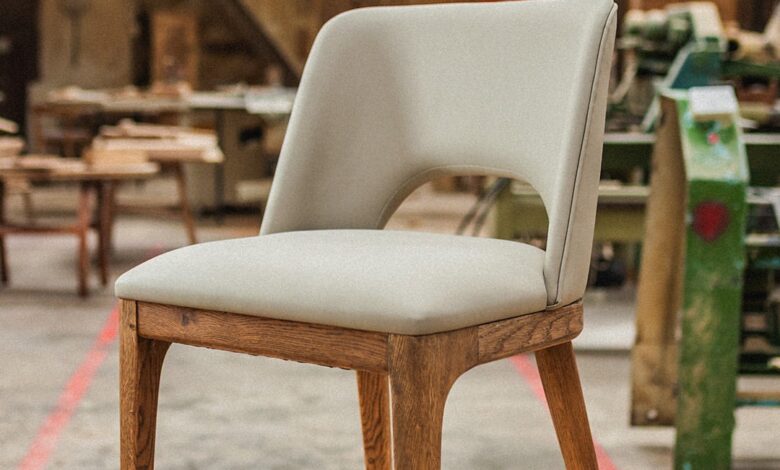
Woodlam: The Craftsmanship Behind a South African Furniture Brand. A chair can be judged by how it looks, but for Woodlam, appearance is only part of the equation. For more than three decades, the South African furniture specialist has focused on creating specialised furniture for restaurant, hospitality, contract and office environments, where durability is as important as design.
Led by Søren Henrik Bang Lassen, Woodlam has built its approach around a combination of moulded plywood manufacturing, solid wood and steel frames, detailed finishing and close collaboration with clients. The result is a business whose story is less about producing furniture at scale and more about understanding how furniture needs to perform in demanding environments.
Its journey offers practical lessons for entrepreneurs about developing technical expertise, protecting quality and turning specialised manufacturing into a competitive advantage.
Building a Business Around Specialised Customer Needs
Woodlam’s story begins with a clearly defined market.
For more than 34 years, the company has focused on designing and creating specialised furniture for the restaurant and hospitality space. Its team has also developed products intended for contract and office applications, where furniture can face considerably greater use than ordinary household seating.
That focus gives Woodlam a clear understanding of what its customers require.
The company places strength and durability alongside aesthetics and innovative design, recognising that furniture used in commercial environments needs to withstand demanding conditions.
For entrepreneurs, the lesson is valuable: specialising can create an advantage when it allows a business to understand a customer’s operating environment more deeply than a general supplier.
Making Manufacturing Expertise a Competitive Advantage
A major part of Woodlam’s differentiation lies in how its products are manufactured.
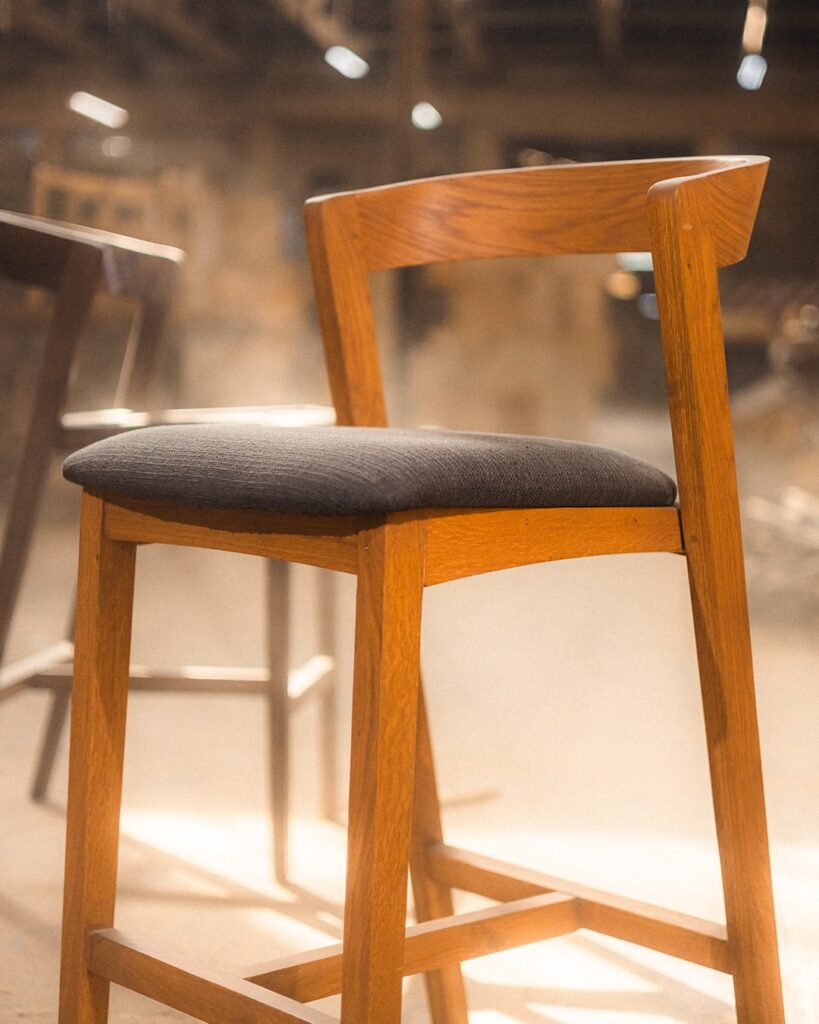
The company primarily uses moulded plywood components produced in-house, alongside solid wood and steel frames. Moulded plywood is created by bonding layers of thin wood veneers before forming them in moulds under hydraulic pressure. Radio-frequency and other heating methods are used during curing.
The process allows curves and bends to be incorporated into components, reducing the number of joints required during conventional furniture assembly. According to Woodlam, this substantially increases the strength of the finished product.
After curing, components are cut and drilled using modern machinery, including a CNC machining centre designed to provide high levels of accuracy.
For entrepreneurs, this illustrates a fundamental principle of manufacturing: the production process itself can become part of the value proposition.
Combining Technology With Traditional Craft
Woodlam’s approach is not built around technology replacing craftsmanship.
Søren Lassen has spent more than 40 years manufacturing furniture and moulded plywood. Born in Denmark in 1957, he moved to South Africa in 1980 and has brought decades of experience into the business.
His reflection on the company’s work highlights an unusual combination of heritage and modern production. Furniture is still made by hand, supported by technology and laminating presses, while the business has incorporated a distinctly South African influence into its styling and production.
That combination is an important lesson for entrepreneurs.
Innovation does not always require abandoning traditional methods. Businesses can preserve techniques that contribute to quality while using modern equipment to improve accuracy, consistency and efficiency.
Turning Client Collaboration Into Better Design
Woodlam also works closely with clients during the design process.
The objective is to ensure that the final product remains aesthetically pleasing within its natural surroundings while meeting the exacting standards required by the customer.
This collaborative approach creates another source of value. Instead of treating furniture as a standard product that customers simply select from a catalogue, the company works with clients to address specific requirements.
For entrepreneurs, collaboration can provide a practical route to differentiation. Listening closely to customers can reveal requirements that a standard product range may overlook.
It can also create stronger relationships because the customer becomes part of the development process.
Engineering Durability Into Every Detail
Woodlam’s focus on durability extends to the smallest construction details.
Most joints are secured using three methods: dowelling, glue and mechanical fixing with machine screws into threaded metal cross dowels. Where screw fixings into wood are considered inadequate for show-wood seats or shells, rivets can be used.
Finishing is also treated as part of the construction process. Show-wood components undergo multiple sanding stages before receiving a tough reaction-type lacquer. Steel frames go through a seven-stage cleaning and preparation process before receiving baked epoxy powder coating.
These details demonstrate why product quality cannot be reduced to a marketing statement.
For entrepreneurs, the lesson is to build quality into processes rather than trying to add it at the end. Consistent procedures provide a stronger foundation for a premium reputation.
Giving Customers Room to Create
Woodlam also provides considerable choice in finishes and upholstery.
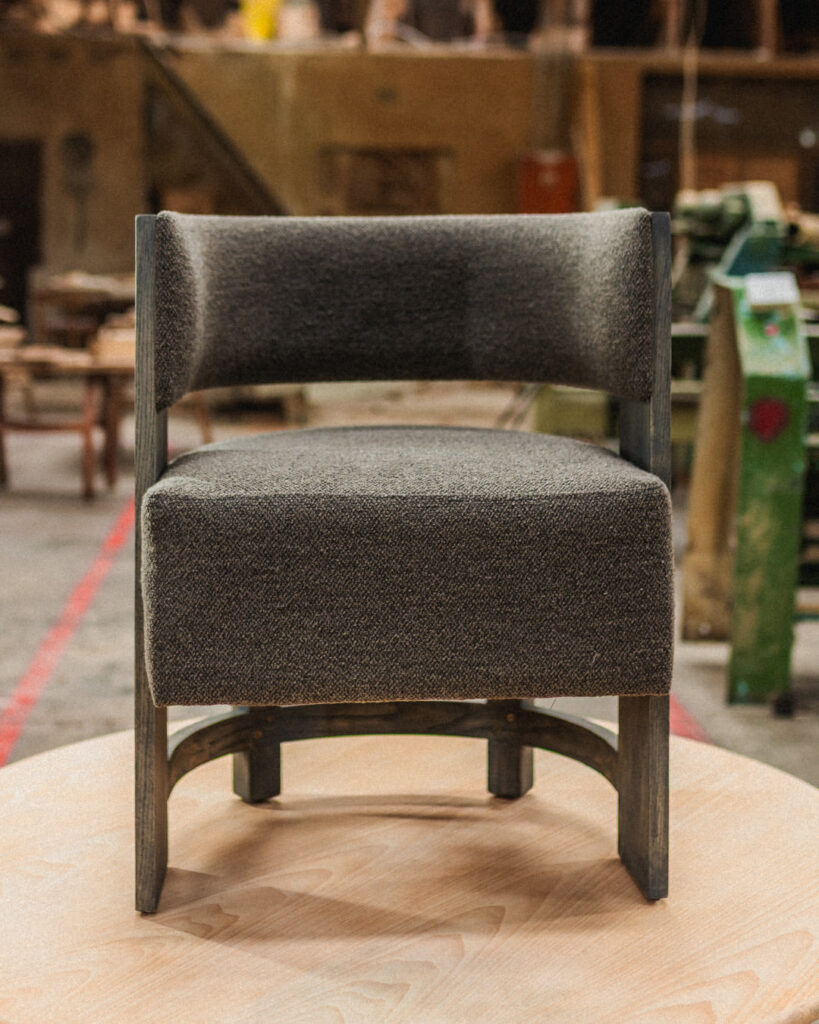
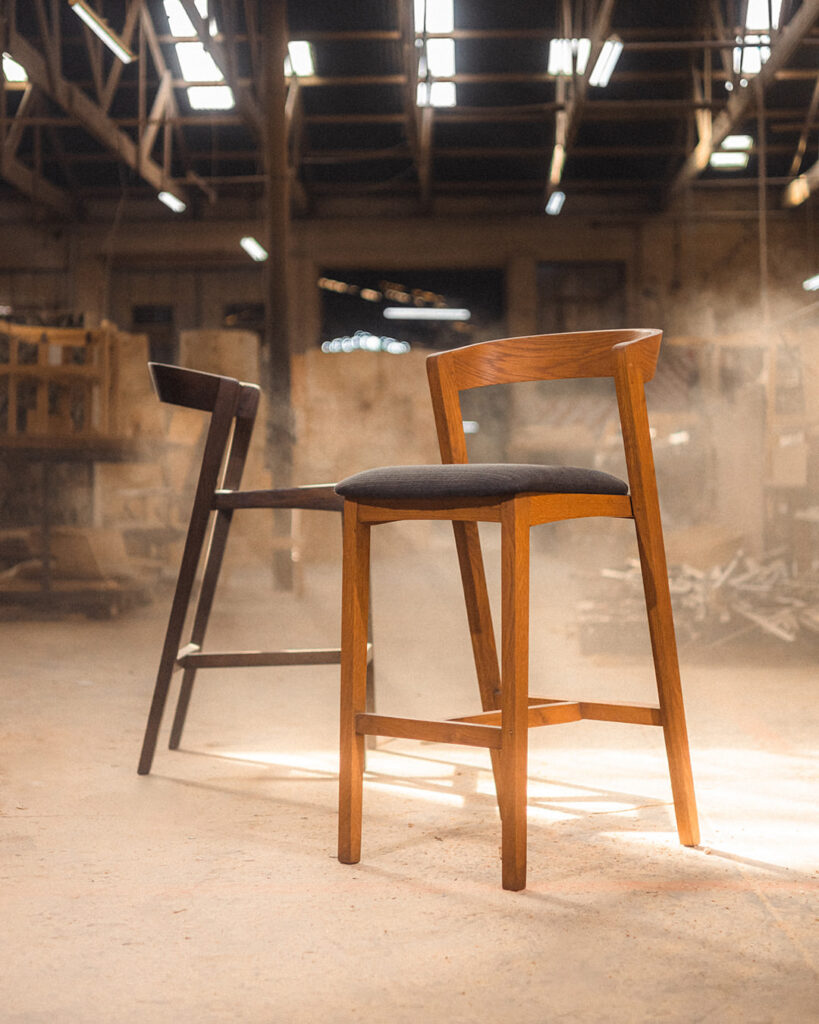
Customers can select from a wide range of wood finishes, from blond tones to exotic timbers and various stained finishes. Upholstery fabric options are described as virtually unlimited, with customers able to supply their own fabric on a CMT basis.
This level of choice supports the company’s focus on specialised applications.
It also demonstrates how customisation can create additional value without abandoning a core manufacturing system. The underlying construction and production expertise remain consistent while customers can adapt the finished product to their environment.
The Bigger Lesson Behind Woodlam
Woodlam’s journey is built on the intersection of design, engineering, craftsmanship and customer requirements.
Its long-standing focus on hospitality and commercial furniture has allowed the company to develop around a specific set of needs. Its moulded plywood manufacturing gives it technical capabilities, while CNC machining provides precision. Traditional craftsmanship remains part of the process, supported by modern technology.
Under Søren Lassen’s leadership, the business has also developed a distinctly South African interpretation of techniques rooted in his Danish background.
For aspiring entrepreneurs, the biggest lesson is that lasting differentiation can come from doing a specialised job exceptionally well.
Woodlam does not position strength and durability as secondary considerations. They sit alongside aesthetics and innovative design at the heart of the product philosophy.
That is perhaps the clearest lesson from the brand: when a business understands exactly what its customers need, invests deeply in the capabilities required to deliver it and maintains consistency over time, expertise itself can become one of its strongest competitive advantages.