How Zamata Cosmetics Turned a Haircare Frustration Into a Brand Built for Textured Hair

How Zamata Cosmetics Turned a Haircare Frustration Into a Brand Built for Textured Hair. Some businesses begin with a market opportunity. Zamata Cosmetics began with a question. After years of searching for hair products that worked for her textured hair, founder Hloni became frustrated with products that did not deliver. The turning point came when her young son told her, “Mummy, stop complaining and just make your own?” She did.
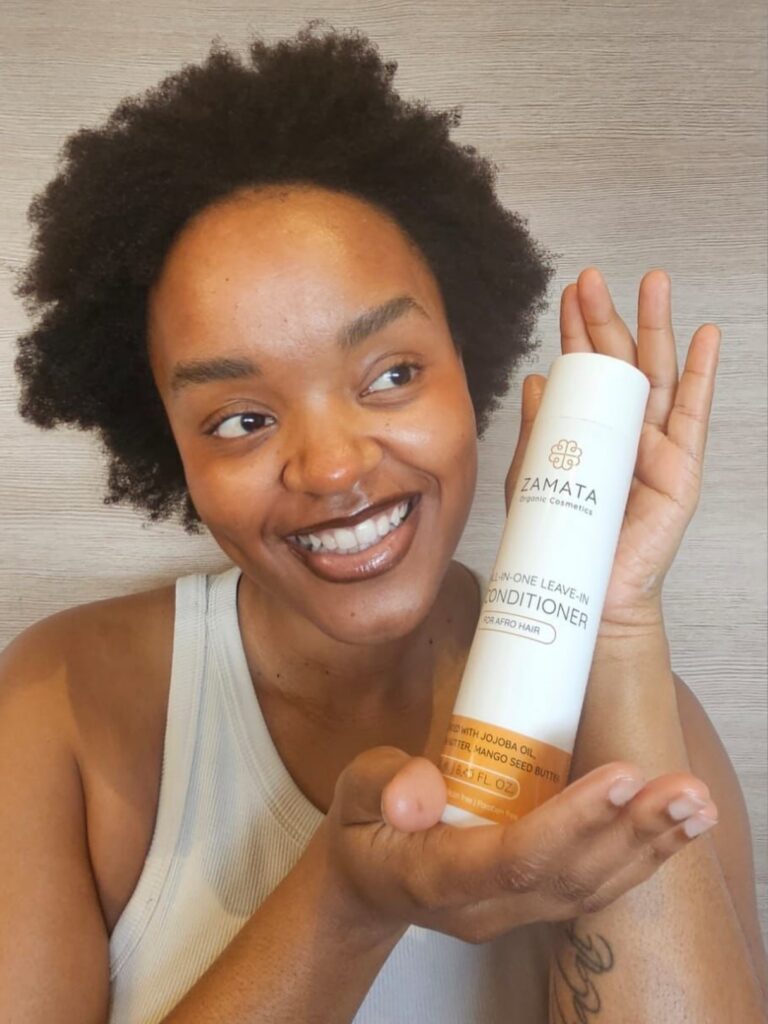
That moment became the starting point for Zamata Cosmetics, a haircare brand creating NCS certified organic and 100% vegan products specifically for curly, coily and Afro-textured hair. Its formulas are rooted in African botanicals and crafted in Germany, with the brand focusing on moisture needs, porosity patterns and the characteristics of textured hair.
For entrepreneurs, Zamata’s story offers an important lesson: a genuine problem can become the foundation for a business when the solution is built around understanding the people experiencing it.
Start With a Problem You Understand
Zamata’s origin story is unusually direct. The founder was not looking for a business idea. She was trying to solve a personal problem.
Years of frustration with hair products that failed to meet her needs eventually led to a different approach. Instead of continuing to search for an answer, she decided to create one.
That distinction matters. Entrepreneurs can spend considerable time looking for gaps in a market without recognising that their own experiences may reveal a problem worth solving.
Zamata was built around a clearly defined customer need: haircare created specifically for textured hair rather than products adapted from formulas designed with other hair types in mind.
The brand states that it does not adapt its formulas. It builds them from scratch for curly, coily and Afro-textured hair.

Make the Product Strategy Specific
Zamata’s positioning goes beyond simply describing itself as a natural haircare brand. It identifies specific characteristics of textured hair, including moisture needs and porosity patterns.
That specificity gives the brand a clearer proposition.
At the centre of its formulas is moringa, an African botanical that Zamata describes as rich in vitamins, amino acids and antioxidants. The ingredient is positioned around nourishing the scalp and hair strand from root to tip.
For an entrepreneur, the lesson is to avoid vague product positioning. Saying a product is made for everyone can make it difficult for anyone to understand why they specifically need it.
A more focused approach starts with the customer’s problem and builds the product around it.
Turn Heritage Into a Product Foundation
African botanicals are central to Zamata’s identity. Moringa is not presented simply as an ingredient added to a formula. It forms part of the brand’s connection to African nature.
The brand’s positioning, “Rooted in African Nature. Crafted in Germany,” brings two elements together: African botanical inspiration and German formulation.
This gives Zamata a distinct foundation for its storytelling. Instead of treating heritage as something used only in marketing, the brand connects it to what goes into its products.
That offers a practical lesson for founders: if a cultural or geographical connection is important to your brand, look for ways it can authentically influence the product itself.
Let Standards Support the Promise
Zamata identifies NCS certification and its 100% vegan positioning as important parts of its offering. The brand also states that its formulas are free from sulphates, parabens and harmful ingredients.
These details give customers specific information about how the products are positioned rather than relying entirely on broad clean beauty language.
Certification can also provide an additional layer of credibility when it is relevant to the customer’s purchasing decision.
For entrepreneurs, the lesson is simple: when your brand makes a quality or standards-based promise, specific credentials and clearly stated product characteristics can communicate that promise more effectively than generic claims.
Build Around the Scalp, Not Just the Ends
Zamata’s approach also shifts attention towards the scalp. Its messaging states that healthy hair starts with the scalp and connects haircare with protection and length retention.
This creates a broader product philosophy. Rather than focusing only on visible hair length, the brand frames haircare as something that begins at the roots and involves both scalp and strand.
That perspective can help a business develop a stronger product story. Instead of selling an isolated benefit, entrepreneurs can explain how different elements of the customer’s routine connect to the problem being solved.

A Clear Identity Can Guide Growth
The information provided by Zamata centres on a consistent identity: textured hair, African botanicals, vegan formulas, organic certification and German craftsmanship.
That consistency matters as a brand develops. Expansion can introduce new products, campaigns and opportunities, but a recognisable foundation helps prevent the business from becoming difficult to understand.
Zamata’s journey began with one personal frustration and a suggestion from a child. Its response was not to create another general haircare product, but to build specifically for the hair type the founder felt was being underserved.
For aspiring entrepreneurs, that is perhaps the most practical lesson. Start with a real problem. Understand the customer closely. Build the product around that problem rather than forcing the problem to fit an existing product. Then give customers concrete reasons to understand what makes the solution different.