Hill House Interiors: How Jen Joubert Turned a Love of Nature Into a Homeware Brand
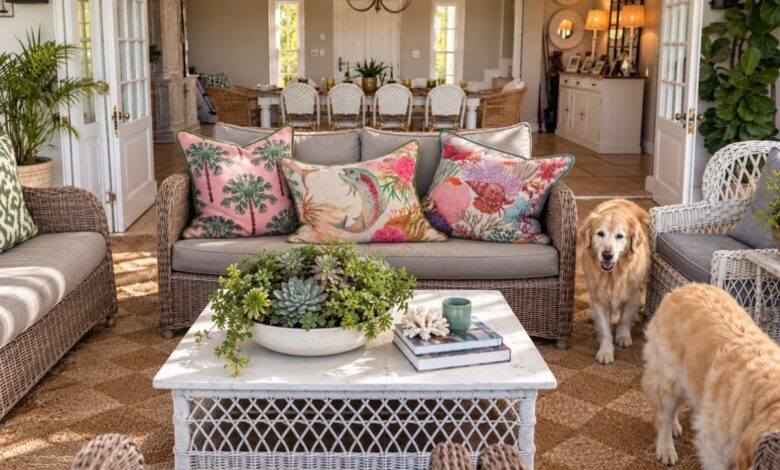
Hill House Interiors: How Jen Joubert Turned a Love of Nature Into a Homeware Brand. There is a particular kind of business that becomes difficult to separate from the person behind it. Hill House Interiors is one of those businesses. Creator at heart and interior decorator by trade, Jen Joubert lives with her family and two golden retrievers, Sally and Sophie, in the Stellenbosch Winelands. From her relaxed country space, she conceptualises and produces homeware shaped by a design philosophy that is refined without becoming overstated.
Her explanation is simple: “Everything I do and sell is a reflection of the things I love.”
That statement offers an important clue to the Hill House Interiors approach. Rather than beginning with a rigid commercial formula, the brand grows from Jen’s own relationship with interiors, nature, materials and the homes she helps create.
Personal taste becomes the foundation of the brand
One of the clearest strengths behind Hill House Interiors is the connection between the creator and the products.
Jen listens and observes before creating. Her role, as she describes it, is to help clients visualise who they are and provide what they want, including things they may not have the time or expertise to create themselves.
That makes interior decorating more than simply selecting attractive objects. It becomes an exercise in understanding people.
For entrepreneurs, this is a valuable distinction. A product or service can be aesthetically strong, but its real value increases when it responds to the individual needs and personality of the customer.
The lesson: Do not design only for your own taste. Learn to observe customers closely and understand how your expertise can help them express something they already value.
Botanicals became a defining creative language
At the heart of Hill House Interiors are botanicals.
Jen’s passion for plants extends beyond the garden. It appears throughout her design and décor range, creating a consistent visual connection between her surroundings and her work.
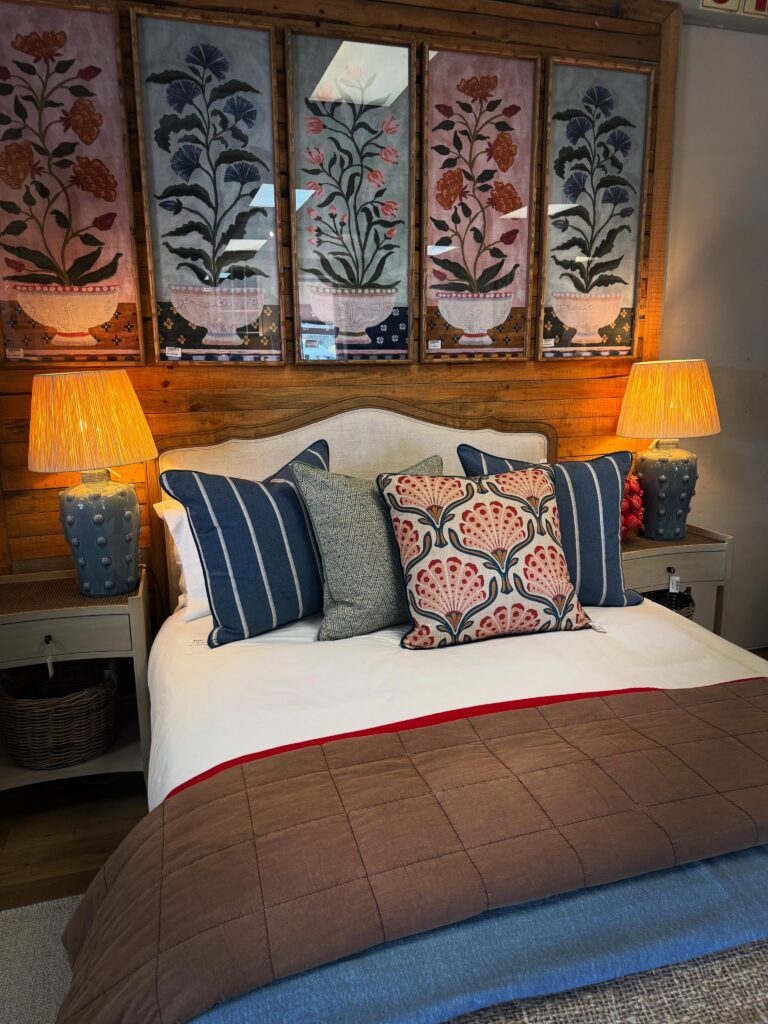
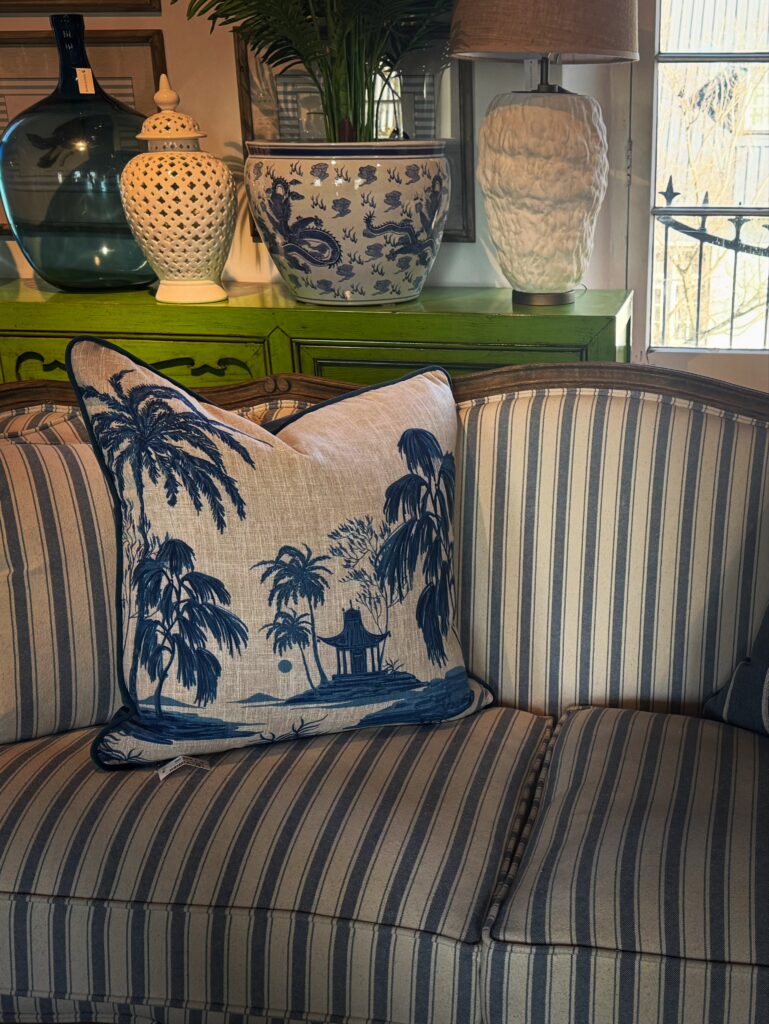
Her botanical influence can be seen in bespoke scatter cushions, sourced cabbage-ware ceramics and striking screen prints made up on canvas. Across these pieces, plants and natural forms help bring the outside into the home.
This gives the brand a recognisable creative language.
Rather than treating botanical patterns as an occasional decoration, Hill House Interiors makes them part of its broader identity. They connect the homeware, Jen’s garden and her approach to country-inspired interiors.
The lesson: A strong visual theme can help a creative business become recognisable. Find the motifs and ideas that genuinely represent your work, then use them consistently across your offering.
Turning a garden into a source of creative direction
Jen’s garden on her farm is more than a setting. It is part of the creative process.
When she is not designing and printing fabric or making scatter cushions, she can be found working in the garden. Her relationship with plants therefore feeds directly into the products she creates.
This connection between source and product makes the brand story particularly coherent.
The garden inspires the designs, while the designs bring botanical elements back into the home.
Jen describes gardening as something that “feeds my soul”, explaining why working with living organic entities feels natural alongside her interest in shapes, patterns and prints.
For entrepreneurs, there is an important lesson here about authenticity. The strongest brand stories often emerge from genuine activities and interests rather than being manufactured for marketing purposes.
The lesson: Pay attention to the activities that consistently inspire your work. They may contain the foundation of a compelling brand identity.
Natural materials strengthen the design philosophy
Plants are not the only source of inspiration.
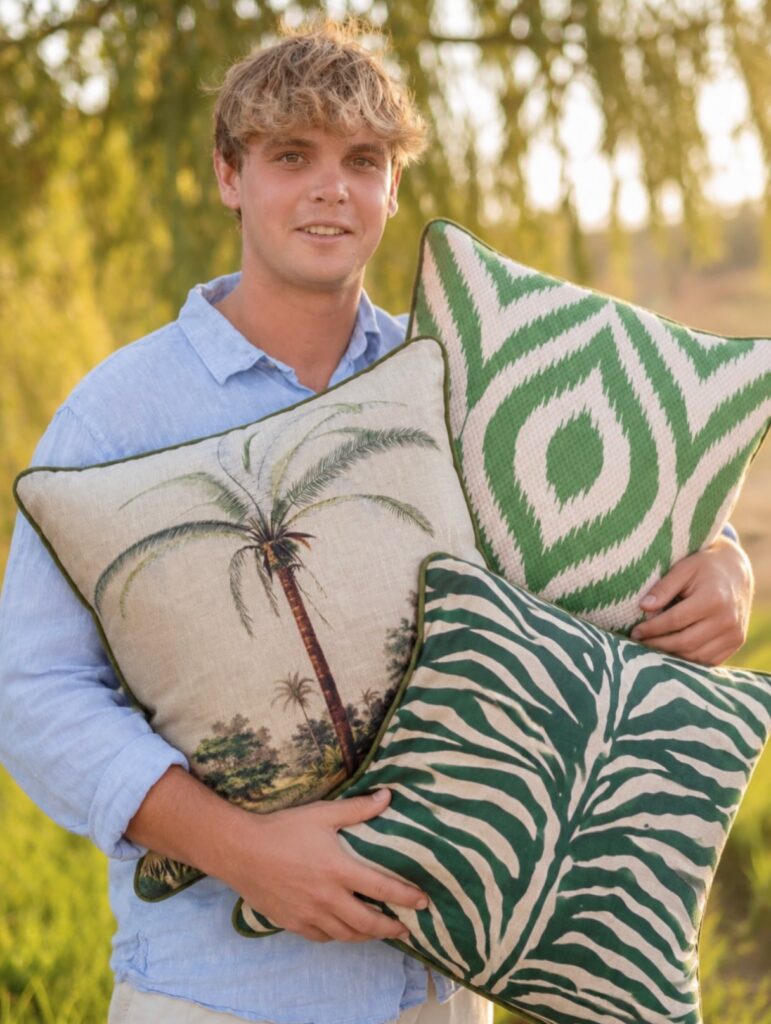
Hill House Interiors also works with natural raw materials such as linens and silks. These materials complement the botanical aesthetic and reinforce the brand’s connection to natural textures and understated elegance.
The combination matters because it creates a relationship between pattern, material and atmosphere.
The result is not simply a collection of botanical products. It is a broader design approach in which natural inspiration and refined materials work together.
The lesson: Think about how individual product choices contribute to a larger experience. Materials, patterns and textures can reinforce one another when they are guided by a consistent design philosophy.
Expanding the offering without losing the core identity
Hill House Interiors has expanded beyond its initial focus on interior decorating to include scatter cushions, tableware and a comprehensive plant collection.
The plant offering includes cut roses, proteas, potted succulents, fresh indoor plants and quality imported faux plants.
What is notable is that this expansion remains connected to the brand’s central interest in nature and interiors.
The business is not described as moving into unrelated categories. Instead, the offering grows around elements that already form part of Jen’s creative world.
That creates an important lesson for entrepreneurs considering expansion.
The lesson: Expansion can be more coherent when new products or services are closely connected to the strengths and identity you have already established.
Helping customers create spaces that feel like them
Jen’s approach places the client’s personality at the centre of interior decoration.
She listens and observes, then works to create an environment that reflects who the client is. Her expertise becomes a bridge between what clients want and what they may not have the time or knowledge to create themselves.
That is a valuable service proposition because it does not ask clients to become interior decorators themselves.
Instead, Hill House Interiors brings expertise to the process and helps customers turn an idea about their home into something tangible.
The lesson: Expertise becomes more valuable when it removes complexity for the customer. Identify what your audience struggles to create alone and consider how your skills can make that process easier.
The bigger lesson from Hill House Interiors
Hill House Interiors demonstrates how a personal creative philosophy can develop into a broader brand.
Jen Joubert’s love of plants, gardening, natural materials and understated elegance runs through her interior decorating work and her homeware and décor offering. The garden inspires the designer, while botanical patterns bring that inspiration indoors.
The expansion into scatter cushions, tableware and an extensive plant collection remains connected to the same world.
That consistency is perhaps the most important lesson for aspiring entrepreneurs.
A brand does not have to be built around a complicated concept. It can begin with a genuine point of view and grow by staying faithful to it.
For Jen, that point of view is rooted in the things she loves and in her ability to help people create environments that reflect who they are.
Hill House Interiors shows what can happen when personal taste, professional expertise and a clearly defined creative language meet.
The result is not simply homeware or interior decoration.
It is a way of bringing the natural world indoors, one botanical pattern, natural material and thoughtfully considered space at a time.