Bigger Vision: The Business Lessons Behind Zithandele Cleaning Services
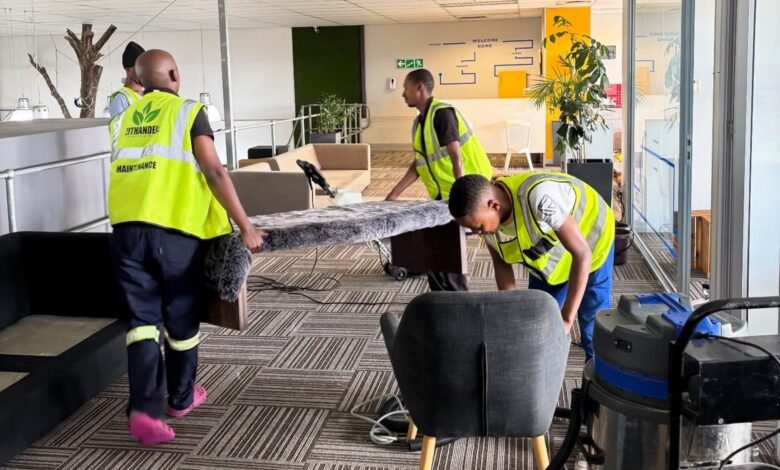
Bigger Vision: The Business Lessons Behind Zithandele Cleaning Services. When Zithandele Cleaning Services was founded in Cape Town in 2020, it entered an industry where reliability, efficiency and professional standards are central to winning and retaining clients. The company has since built its offering around commercial, industrial, residential and post-construction cleaning, while also providing facilities management services.
Its story is not simply about keeping buildings clean. Zithandele has developed a broader business proposition that combines service delivery, staff development, technology and an ambition to create opportunities in the communities where it operates.
For aspiring entrepreneurs, the company’s approach provides practical lessons about building a service business around clear values, investing in people and resources, and turning a current operation into a platform for future growth.
A Clear Market Created the Starting Point
Zithandele Cleaning Services operates across several areas of the cleaning market. Its services cover facilities management, commercial cleaning, industrial cleaning, post-construction cleaning and residential cleaning.
The company serves both private and public sector clients, giving it exposure to different cleaning requirements rather than restricting its offering to a single environment.
This breadth provides an important lesson for entrepreneurs. Identifying a market does not necessarily mean trying to serve everyone. It means understanding where a business has the capabilities to provide a useful service.
Zithandele has defined its role within the cleaning cycle and states that it remains active at different levels of that cycle. That creates a foundation for a service proposition built around practical operational needs.
For a new business, the lesson is to clearly establish what problem you solve, who needs that solution and what makes your approach valuable.
Quality, Efficiency and Support Drive the Proposition
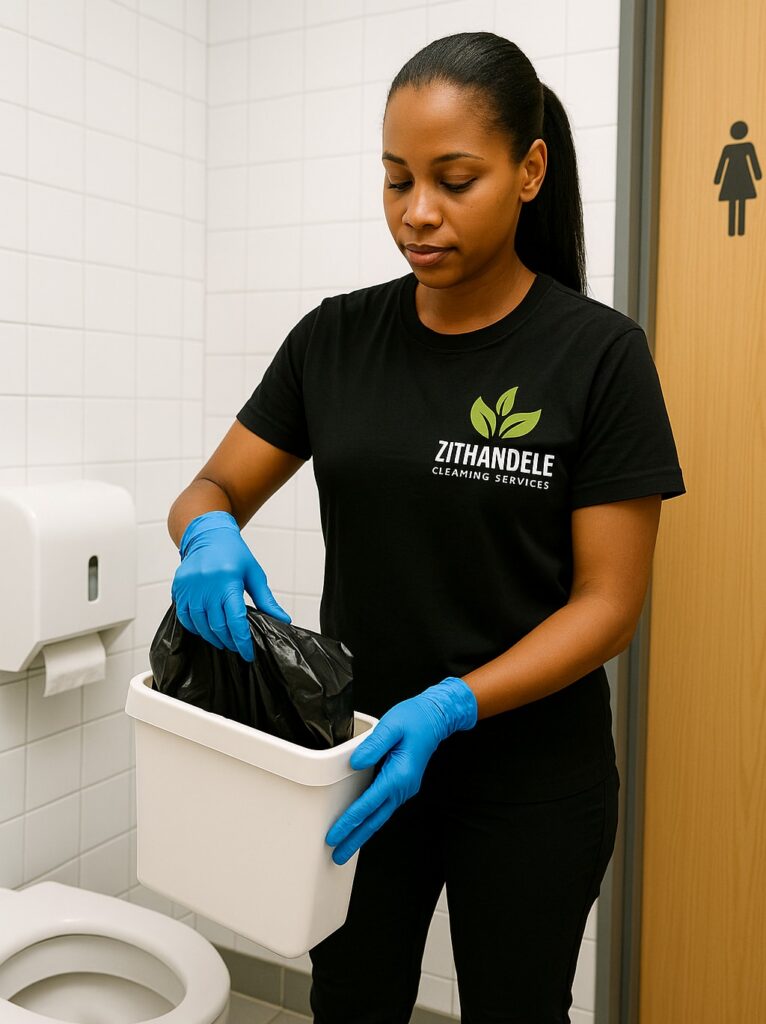
At the centre of Zithandele’s approach is a straightforward value proposition: quality, efficiency and support.
Those three principles provide a useful framework for a service company because customers are not simply purchasing a physical product. They are relying on the business to deliver consistently.
Zithandele says it maintains open lines of communication throughout projects to track progress and improve performance. This shows how communication can become part of the service itself.
For entrepreneurs, the takeaway is that a value proposition should influence everyday operations.
It is easy for a business to describe itself as efficient or customer focused. The harder task is translating those promises into processes that customers can experience.
Regular communication, project tracking and performance improvement give those values practical meaning.
Investing in People Strengthens the Business
One of the notable elements of Zithandele’s model is its emphasis on training.
The company conducts training sessions for companies and individuals who want to become specialists in cleaning handling procedures. It also says it continuously trains its own staff.
That creates an important connection between employee development and service quality.
In a service business, people are a major part of the customer experience. Investing in their skills can therefore strengthen the organisation’s ability to deliver its offering.
For entrepreneurs, this is a valuable lesson. Training should not necessarily be viewed only as a cost. It can be part of building operational capability.
Zithandele has also expanded its role beyond providing cleaning services by making training part of its offering. That demonstrates how expertise developed within a business can potentially become another avenue for value creation.
Technology Becomes Part of the Strategy
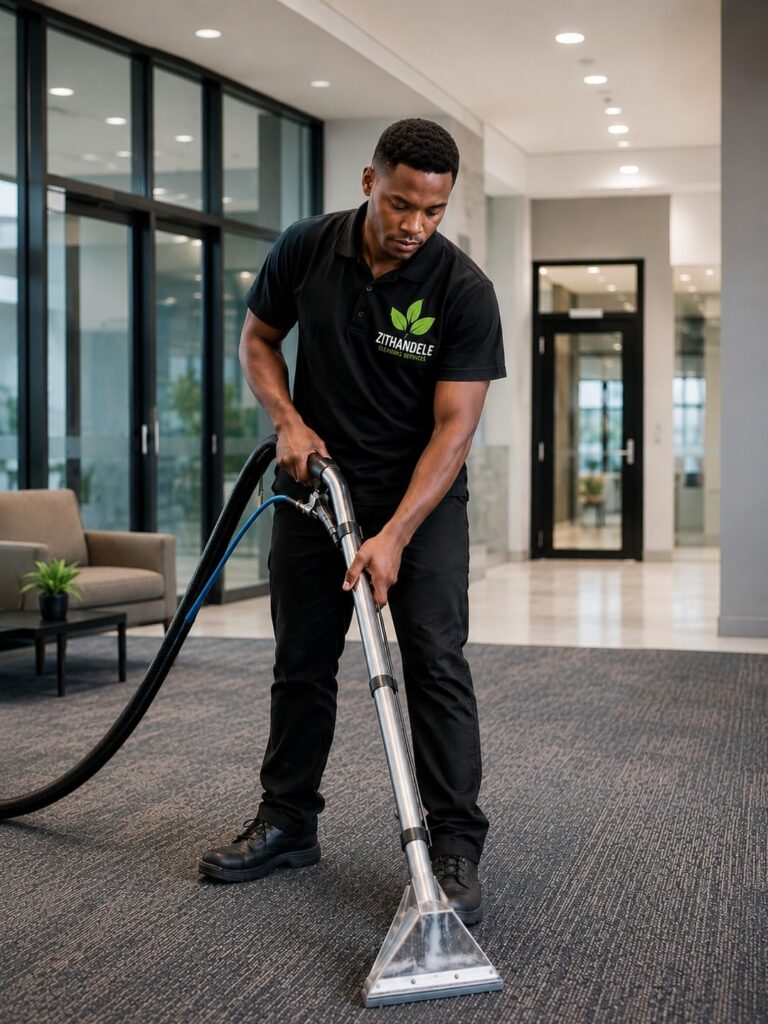
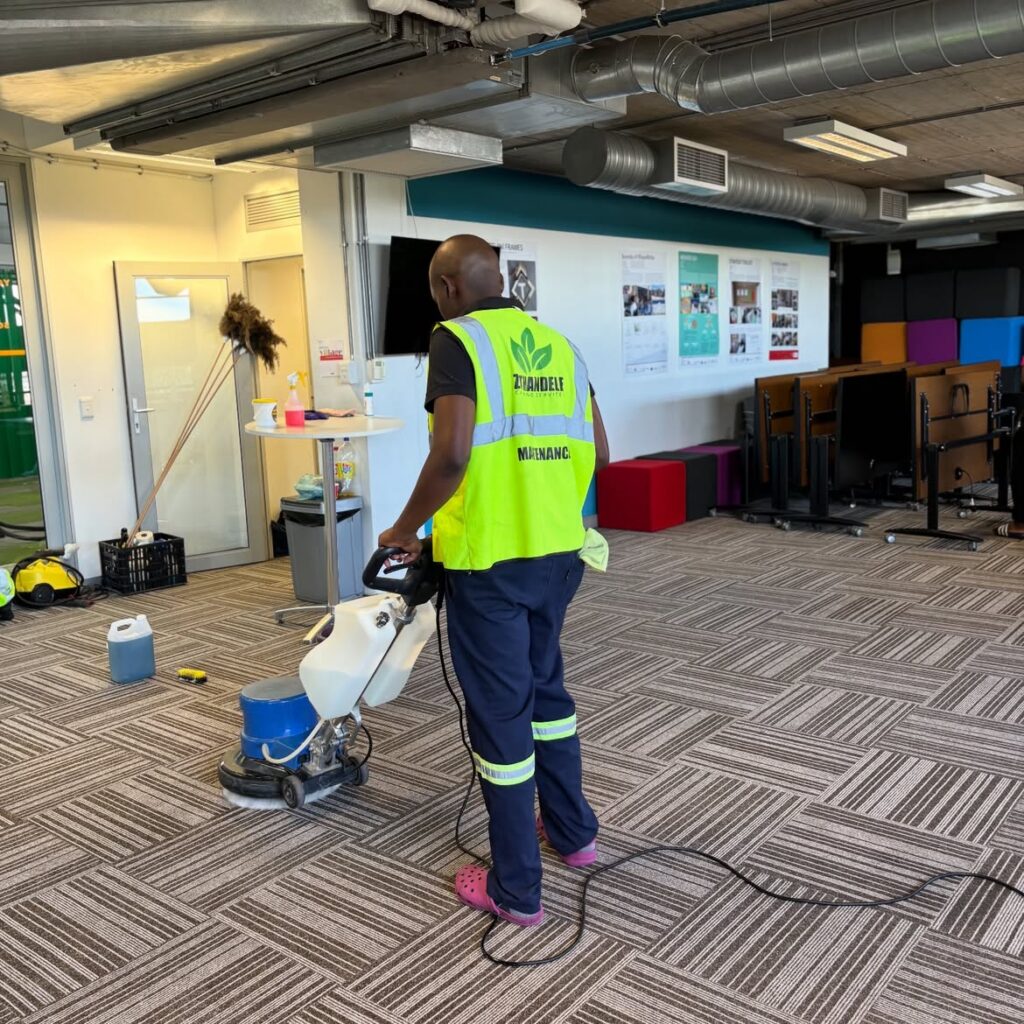
Cleaning may be a hands-on industry, but Zithandele has identified technology and equipment as important components of its operations.
The company says it uses high-quality industrial equipment and seeks to have technologically advanced resources. It links this investment to improving operations and minimising its environmental impact.
This approach demonstrates a broader entrepreneurial principle: technology should serve a business objective.
Buying equipment simply because it is modern does not automatically improve a company. The investment becomes meaningful when it contributes to efficiency, quality, safety, environmental performance or another clearly defined goal.
Zithandele’s approach is centred on using resources to improve how its services are delivered.
Environmental Responsibility Is Part of the Growth Vision
Zithandele’s environmental ambitions extend beyond its current operations.
The company says it wants to develop its own line of eco-friendly cleaning products, with the goal of making them available at retailers nationwide.
This is an important part of the company’s longer-term vision and should be distinguished from its current cleaning services.
For entrepreneurs, the lesson is that future ambitions can provide direction without becoming disconnected from the existing business.
Zithandele’s proposed product line would build on knowledge from the cleaning industry while potentially creating a different route to market.
The practical lesson is to identify opportunities that are connected to what a business already understands. Expansion is more meaningful when it builds on existing capabilities rather than simply adding unrelated products or services.
Growth With a Community Purpose
Zithandele’s ambition extends beyond becoming a larger cleaning company.
The business aims to become one of the leading cleaning service providers in Cape Town and beyond. It also aspires to expand into other provinces and create job opportunities for unemployed South Africans.
This gives the company’s growth strategy a clear social dimension.
For entrepreneurs, the lesson is that commercial objectives and community impact can exist alongside one another. A business can pursue growth while considering how that growth may create opportunities for employees and the communities where it operates.
However, the strongest approach is to connect social ambitions to the actual business model. In Zithandele’s case, employment opportunities are linked to the expansion of its cleaning operations.
Building Long-Term Client Relationships
Zithandele places considerable emphasis on customer service and long-term relationships.
The company says it aims to establish lasting relationships with clients while maintaining a high professional standard in its work.
For a service business, this is particularly important. Winning a customer is only one part of the challenge. Delivering consistently can determine whether that relationship continues.
Zithandele’s emphasis on communication, project monitoring and performance improvement supports this relationship-focused approach.
Entrepreneurs can apply the same principle by treating customer retention as an operational responsibility rather than simply a marketing objective.
The Bigger Lesson Behind Zithandele
Zithandele Cleaning Services began in 2020 and has built its business around a clearly defined service offering, professional standards, staff training, operational investment and customer support.
Its future ambitions are equally clear: expand beyond Cape Town, create employment opportunities and potentially develop an eco-friendly cleaning product range for retailers nationwide.
The most useful lesson for aspiring entrepreneurs is the importance of building from a solid foundation.
Start with a service customers genuinely need. Define the standards that will guide delivery. Invest in people and equipment. Communicate consistently. Then identify expansion opportunities that naturally connect with the capabilities already developed.
Zithandele’s story shows that a cleaning company can think beyond individual contracts and daily operations. With a clear value proposition and a long-term vision, the business can position its growth around customers, employees, communities and the environment.