From Fashion Designer to Founder: The Story and Business Lessons Behind Lucia

From Fashion Designer to Founder: The Story and Business Lessons Behind Lucia. Before Lucia became a clothing brand, it was a dream. Lucia had long imagined creating a label that felt unique, timeless and feminine. Her attraction to soft but bold colour palettes, beautiful fabrics and classic details began at a young age, eventually developing into an appreciation for design that feels effortless rather than disposable.
In 2017, she turned that ambition into reality and launched Lucia.
The journey that followed was shaped by formal fashion training, years of industry experience, international inspiration and a deliberate decision to build a South African brand around quality and limited production. Today, Lucia is designed and produced in South Africa in partnership with a local team, using carefully selected fabrics sourced from leading European textile suppliers.
The brand’s journey offers practical lessons for entrepreneurs about preparation, trusting a creative vision, building expertise before taking the leap and making deliberate choices about production.
Experience Came Before the Leap
Lucia’s entrepreneurial journey did not begin with the launch of her own label.
After graduating from the Durban University of Technology with a National Diploma in Fashion Design, she joined an international surf-wear brand. She spent five years there, developing commercially successful collections and leading the ladieswear division.
That experience gave her exposure to multiple parts of the fashion industry, including product development and sourcing. It also helped her understand what women wanted to wear and what made them feel beautiful.
That period provides one of the clearest lessons from Lucia’s story.
Entrepreneurship does not always have to begin with immediately starting a business. Industry experience can provide valuable knowledge that later becomes an advantage when building a company.
For aspiring entrepreneurs, the lesson is to treat professional experience as preparation. Skills developed while working for another organisation can become some of the most useful assets when eventually building something of your own.
Turning Creative Intuition Into a Brand
Lucia’s decision to launch her own label in 2017 was driven by a belief that she had something meaningful to offer.
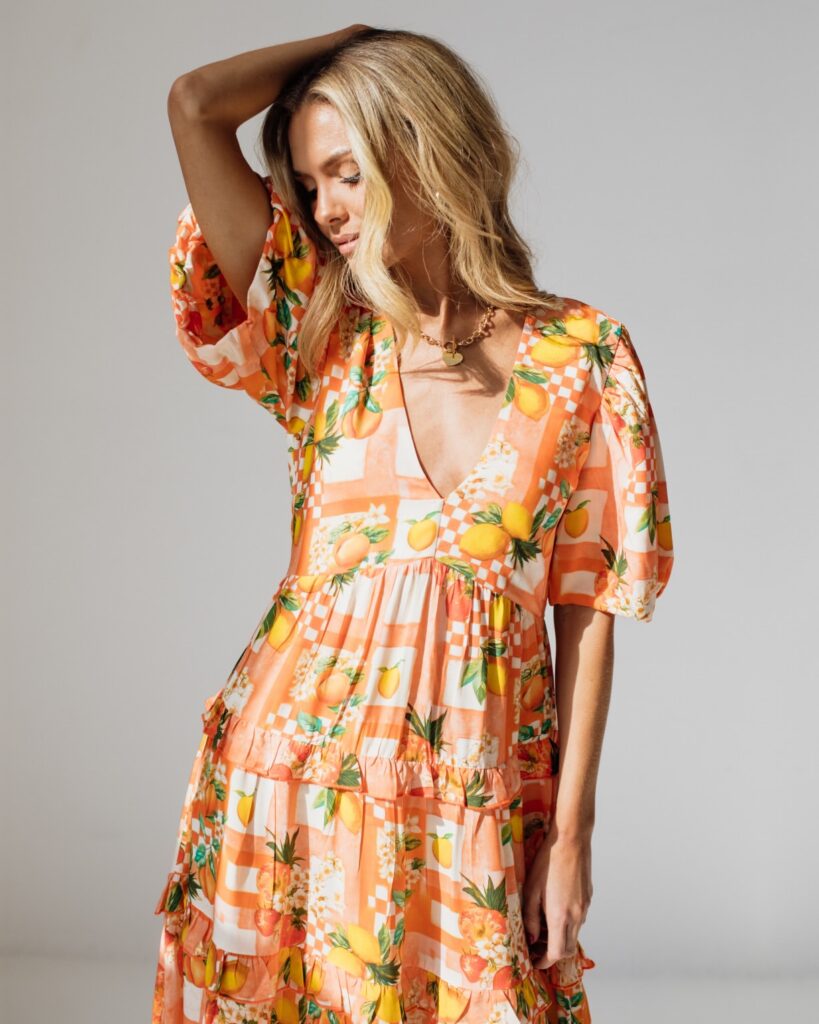
The brand was built around femininity, quality and thoughtfully designed pieces intended to be worn, loved and treasured for years.
That gave Lucia a clear creative direction from the beginning.
Rather than defining the label around short-lived trends, the founder focused on characteristics she had valued throughout her relationship with fashion: classic design, beautiful fabrics and effortless elegance.
For entrepreneurs, this demonstrates the importance of knowing what your brand should stand for before trying to communicate it to customers.
A business can change and develop over time, but a strong underlying philosophy can provide continuity.
Leaving the Corporate World Changed the Scale of the Vision
A significant turning point came in 2018 when Lucia left the corporate world to focus on her own brand full-time.
It was a major commitment to the business, giving her the opportunity to concentrate entirely on developing the label around her vision.
The move also highlights a useful distinction between having an idea and building a business.
Launching Lucia in 2017 established the brand. Leaving the corporate world in 2018 created the opportunity to dedicate herself fully to it.
For entrepreneurs, the lesson is not that leaving employment is always the right decision. Instead, Lucia’s journey shows the importance of understanding when a business requires greater focus and capacity.

Travel Became Part of the Creative Process
Lucia’s design inspiration does not come from one place.
Travel remains an important source of inspiration, with Italy holding a particularly special place for her because of her Italian heritage. She draws inspiration from Italy’s appreciation for quality, craftsmanship, femininity and effortless style.
Those influences are combined with the vibrancy and beauty of South Africa.
Other destinations also contribute to her creative perspective. The energy of New York, London’s stylish neighbourhoods and Japan’s refined approach to design all provide different sources of inspiration through colour, texture, architecture and lifestyle.
This offers an important lesson for creative entrepreneurs.
Inspiration does not necessarily have to come from competitors or direct industry research. Experiences, places and cultures can broaden how a founder sees their own category.
The important part is translating those influences into an original point of view rather than simply copying what already exists.
Combining European Fabrics With South African Production
One of Lucia’s defining business decisions is the combination of international materials and local manufacturing.
The brand is designed and produced in South Africa with a talented local team. Its collections are manufactured locally in limited quantities using carefully selected fabrics sourced from some of Europe’s leading textile suppliers.
This creates a deliberate connection between European textile quality and South African craftsmanship.
For entrepreneurs, the lesson is that sourcing and production do not have to be viewed as separate from brand positioning.
Where materials come from and where products are made can form part of the story when those decisions genuinely contribute to the product.
In Lucia’s case, the approach also allows the brand to celebrate both the founder’s heritage and local production.

Limited Quantities Create a Clear Position
Lucia has remained committed to limited production as the brand has developed.
Collection sizes have increased over the years, but exclusivity remains central to the brand. Collections are intentionally produced in small batches, creating pieces that are positioned as special and considered rather than mass produced.
This is an important strategic choice.
Instead of making volume the central objective, Lucia uses limited quantities as part of its identity.
For entrepreneurs, this demonstrates the value of making production decisions that reinforce positioning. A small-batch model can communicate scarcity and careful consideration when it is genuinely how a business operates.
The key is consistency. If exclusivity is part of the promise, production choices need to support that promise.
Give Products a Story
There is another thoughtful detail within Lucia’s collections.
Many styles are named after women, places and moments that have inspired the founder throughout her journey.
That turns product naming into another way of communicating the brand story.
For entrepreneurs, this is a useful reminder that storytelling does not have to be confined to advertising campaigns. It can be built into the product itself.
A name can give customers another way to connect with a piece and understand something about the inspiration behind it.
The Bigger Lesson Behind Lucia
Lucia’s journey from fashion student to founder demonstrates the value of combining creative conviction with practical industry knowledge.
Her National Diploma in Fashion Design provided a formal foundation. Five years in an international surf-wear company provided industry experience. Launching Lucia in 2017 transformed her ambition into a brand, while leaving the corporate world in 2018 allowed her to focus on that brand full-time.
Since then, her approach has remained centred on timeless femininity, quality, thoughtful design and limited production. European fabrics, South African manufacturing and inspiration from both her heritage and travels have helped shape the label’s identity.
For aspiring entrepreneurs, the lessons are clear. Build expertise before you need it. Know what your brand believes. Find inspiration beyond your immediate market. Make production choices that support your positioning. And give customers a reason to see meaning in the products they buy.