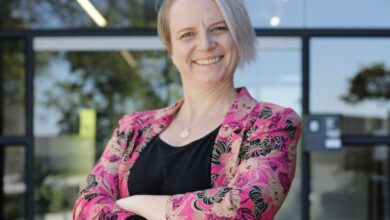
Digital Transformation For Inclusiveness: Interview With Asante Solutions Founder, Muhle Ndwalane

Digital Transformation For Inclusiveness: Interview With Asante Solutions Founder, Muhle Ndwalane. Asante Solutions has quickly become one of KwaZulu Natal’s rising forces in digital innovation, earning recognition at the recent KZN Digital Transformation Summit for its commitment to making technology more accessible to SMMEs. At the centre of this momentum is 27-year-old founder and digital transformation strategist Muhle Ndwalane, whose vision for practical and affordable tech is reshaping how small businesses operate. This year, Asante Solutions captured second place in the Digital Startup Competition, celebrated for its flagship platform Asante PowerCRM. Designed to give emerging enterprises the kind of CRM and automation tools usually reserved for larger companies, PowerCRM is fast becoming a breakthrough solution for entrepreneurs looking to scale without the usual cost and complexity barriers. With Startup Mag’s focus on championing innovators driving South Africa’s digital future, we are excited to sit down with Muhle Ndwalane for an exclusive interview. Our conversation will explore how Asante Solutions is helping bridge the digital divide, enabling SMMEs to unlock new efficiencies, competitiveness, and growth opportunities. Read all about it below!
Congratulations on securing second place at the KZN Digital Transformation Summit. What does this recognition mean for you and for Asante Solutions?
Thank you. For me personally, this recognition is a validation that the problems I’ve experienced and obsessed over for years on how we as SMEs manage sales, customers, and growth are real, and that our solution is relevant in making an impact in our South African Economy.
For Asante Solutions, it’s a powerful signal that we’re not just “another CRM”; we’re building an African-born platform that speaks directly to the realities of SMEs in our local market and across the continent. Coming second in a provincial digital startup competition gives our team confidence, opens doors for partnerships, and shows our current and future clients that Asante PowerCRM is a serious player in the digital transformation space.
What aspects of Asante PowerCRM do you believe most impressed the judges and helped you stand out in the Digital Startup Competition?
I believe three things stood out:
- Simplicity with depth – We’ve taken what is usually a complex, enterprise-level concept – CRM and marketing automation and packaged it in a way that a SMEs can understand and start using in days, not months.
- End-to-end value – We don’t just give you software. We provide onboarding, training, templates, and practical workflows tailored to African SME realities, from WhatsApp-first communication to lean sales teams and marketing automation, which get the business winning instantly.
- Execution track record – We could demonstrate real deployments with real clients, not just a pitch deck. That combination of vision plus proof of work is what I think really resonated with the judges.
Asante PowerCRM is designed specifically for SMEs. What challenges do smaller businesses typically face that this platform solves?
SME and Emerging business usually face four recurring challenges:
- No central system – Customer data lives in Excel sheets, WhatsApp chats, and personal phones. When someone leaves the company, the relationships leave with them.
- Inconsistent follow-up – Leads are generated but not tracked. There’s no clear pipeline, so opportunities slip through the cracks.
- Limited visibility – Owners don’t have a clear picture of what’s happening in sales, marketing, and service. Decisions are made on gut feeling instead of data.
- Tool overload – They sign up for multiple disconnected tools that are either underused or too complex.
Asante PowerCRM brings everything into one place: leads, customers, campaigns, tasks, communication and gives the owner a single dashboard to see how the business is actually performing.
You’ve emphasised the importance of making advanced digital tools affordable and accessible. How did you approach balancing powerful features with ease of use and cost-effectiveness?
We started by asking: What does an SME actually need to grow? Not “nice to have” features, just the essentials that move the needle.
From there, our approach was:
- Focus on core journeys – Lead capture, sales pipeline management, customer communication, and basic automation. We perfected these before adding anything fancy.
- Build once, reuse many times – We create reusable industry templates, so instead of building custom setups for each client, we configure from proven blueprints. That keeps setup time and costs low.
- Local pricing logic – Our packages are structured for African markets, not converted from US pricing. We’re intentional about making sure a growing SME can afford to use us long-term, not just as a short experiment.
Ease of use is a design decision; affordability is a business decision. We were deliberate about both.
KwaZulu-Natal has ambitious digital transformation goals. How does Asante PowerCRM align with the province’s broader digital development vision?
KZN’s digital ambitions include building a competitive provincial economy, supporting SMME growth, and enabling more inclusive participation in the digital economy.
Asante PowerCRM aligns with that vision by:
- Digitising SMME operations – We give SMEs the same kind of tools large corporates use, but in a way that’s accessible and context-aware.
- Enabling formalisation and scale – When businesses manage their customers, data, and cashflows better, they become more bankable, investable, and ready to participate in formal value chains.
- Supporting jobs and skills – As more businesses adopt tools like ours, new roles emerge CRM managers, digital marketers, data analysts creating employment opportunities in the province.
In short, we’re helping to operationalise digital transformation at the very base of the economy, where most jobs actually sit.
Premier Thami Ntuli spoke about digital transformation being a ‘developmental necessity.’ What message from his address resonated with you most?
What resonated with me most was the idea that digital transformation is no longer optional especially for a province like KZN where economic inclusion is a priority. It’s not just about technology; it’s about giving people and businesses a fair chance to participate in the modern economy.
When he framed digital transformation as a developmental necessity, it validated what we see on the ground daily: businesses that embrace systems and data grow more resilient, and those that don’t are increasingly left behind.
You’ve mentioned that Africa’s biggest challenge is not just access to tools, but equipping people to use them effectively. How does Asante Solutions support training and capacity-building for SMEs?
We’ve built training into our model, not as an afterthought. We support SMEs through:
- Guided onboarding – We don’t just “hand over” the system. We walk through their actual workflows, how they sell, follow up, and deliver and configure the CRM around that.
- Role-based training – We train owners, sales reps, marketers and admins differently, so each person knows what they need to do in the system daily or weekly.
- Playbooks and templates – We provide email sequences, pipeline stages, follow-up scripts, and reporting templates so teams aren’t starting from zero.
- Ongoing support – As businesses grow or change, we help them adjust their pipelines, automation, and campaigns so the system evolves with them.
Capacity-building is not a workshop; it’s a continuous partnership.
Asante PowerCRM is now integrating AI. What new capabilities will this unlock for small businesses?
AI gives SMEs the kind of superpowers usually reserved for large enterprises. Our new AI Agent Studio brings this to life through intelligent automation, Voice AI, and Conversational AI.
1. Smart Insights That Think For You
The CRM can now analyse patterns and flag at-risk deals, highlight winning campaigns, and guide teams on where to focus—acting like a digital sales coach.
2. AI-Assisted Content and Communication
From WhatsApp messages to email follow-ups, AI helps draft personalised, professional content in seconds, keeping customer engagement fast and consistent.
3. Workflow Recommendations & Intelligent Automation
AI observes how the business operates and suggests automations, reminders, and pipeline improvements that increase efficiency and boost conversion.
All of this is reinforced by the AI Agent Studio, which introduces:
- Voice AI – 24/7 call agents that answer enquiries, book appointments, and capture leads automatically.
- Conversational AI – intelligent WhatsApp and webchat assistants that respond instantly, qualify leads, and update the CRM in real time.
Together, these tools allow even a small team to operate with the speed, professionalism, and capacity of a much larger business. AI for us isn’t a buzzword, it’s practical efficiency for everyday SMEs.
Many SMEs struggle with productivity, consistency, and managing customer relationships. How does your platform directly address these operational needs?
We design everything around three outcomes:
- Productivity – Tasks, reminders, and follow-ups are centralised. Team members know exactly what to do today to move the business forward.
- Consistency – Automation ensures that every lead gets a response, every quote is followed up, and every client receives the same quality of communication regardless of how busy the team is.
- Relationship management – Every interaction with a client calls, emails, meetings, invoices, notes is linked to a single profile. That context makes it easier to serve clients well and spot opportunities for upselling or retention.
The result is less chaos, fewer missed opportunities, and more predictable growth.
The press release mentions that high data costs, limited devices, and digital literacy gaps still hold many communities back. How do these barriers affect SMMEs in your experience?
These barriers show up in very practical ways:
- Owners are hesitant to adopt new tools because they worry about data usage or needing the “latest” devices.
- Staff may feel intimidated by software, fearing they’ll “break something,” so systems end up underused.
- Businesses default back to manual methods WhatsApp, notebooks, Excel because they feel safer, even if they’re inefficient.
That’s why we emphasise mobile-first design, low-friction onboarding, and ongoing support. We try to meet businesses where they are and gradually move them up the digital maturity curve.
What role do you believe government should play in closing the digital divide, and how can innovators like Asante contribute?
Government has a crucial role in:
- Infrastructure and policy – Reducing data costs, improving connectivity, and creating an enabling environment for digital tools to thrive.
- Incentives and programmes – Supporting SMEs to adopt digital tools through grants, vouchers, or tax incentives tied to real adoption and impact.
- Skills development – Integrating digital literacy and business systems into education and SMME support programmes.
Innovators like Asante can contribute by bringing practical, scalable solutions to the table and working with government, corporates, and development partners to implement them. We’re very open to being part of broader provincial or national SME digitisation initiatives.
The Summit highlighted the need for coordinated partnerships. What kinds of collaborations is Asante Solutions currently seeking or developing?
We’re actively exploring partnerships in three main areas:
- Ecosystem partners – Chambers, incubators, accelerators, ESD Implementors and SMME programmes where Asante PowerCRM can be a standard tool offered to cohorts.
- Industry partners – Banks, insurers, and corporates that work with large SME supplier bases and want to strengthen those businesses through better systems.
- Implementation partners – Agencies and consultants who can deliver Asante PowerCRM as part of their broader service offering.
Our philosophy is simple: if you’re working to help SMEs grow and professionalise, we’d like to explore how our platform can strengthen what you’re doing.
What are some success stories or examples of SMEs that have already benefited from using Asante PowerCRM?
We’ve seen great results across different industries for example:
- Service-based businesses that went from tracking leads on spreadsheets to having a clear pipeline, resulting in higher conversion rates and faster follow-up times.
- Training and education clients who now manage enquiries, bookings, and communication from a central system, making reporting and stakeholder updates much easier.
- Professional services firms that use the platform to manage proposals, renewals, and client communication, improving retention and upsell opportunities.
The common thread is this: once teams can see their pipeline and automate their follow-ups, revenue stops being “random” and becomes something they can manage more actively.
Beyond CRM, you mentioned a vision to expand Asante PowerCRM into a full suite of tools. What future products or features are in the pipeline?
Our long-term vision is to evolve Asante PowerCRM into a full Asante PowerSuite a unified platform that helps SMEs manage every part of their business in one place.
We’re developing modules that extend far beyond CRM, including:
- HR – Tools for onboarding, leave management, performance tracking, and team compliance.
- ERP – Light, SME-friendly systems for inventory, operations, and supply chain management.
Finance – Seamless invoicing, payments, cashflow visibility, and collections linked directly to deals. - LMS (Learning Management System) – Training portals for internal teams, onboarding, and customer education.
- Service & Project Management – End-to-end delivery tools for agencies, training companies, and professional services.
- Lending / Loan Management – A specialised module for credit providers and financial businesses to manage applications, scoring workflows, approvals, repayments, and customer communication inside one platform.
All these modules will integrate seamlessly with CRM, giving SMEs a single ecosystem to run sales, finance, operations, HR, and lending efficiently and professionally.
Our mission remains the same: bring enterprise-level capability to African businesses in a way that’s practical, affordable, and built for how SMEs actually work.
As a young digital transformation strategist at 27, what drives your passion for building technology that empowers small businesses?
Honestly, I’m solving problems I lived through. When I started my business with no corporate experience, I ran everything through WhatsApp, spreadsheets, and trial-and-error. I know how hard it is to grow without proper systems.
Then, working with so many SMEs through our digital campaigns, I realised these challenges were everywhere, not just in my story.
What drives me is the belief that if we can give African entrepreneurs the right tools and training, we unlock not just individual success stories, but community-level impact jobs, skills, and generational change. That’s the impact I want Asante PowerCRM to create.
So my passion comes from both sides: my own early struggles and the real gaps I see in the businesses we serve every day.
It’s personal, and deeply practical.