Improving The Quality Of Life For Prosthetic Foot Users: Interview With Zanodumo Godlimpi

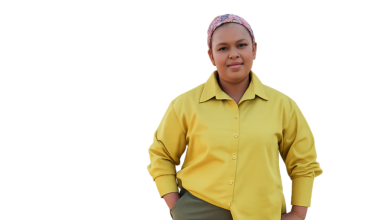
Improving The Quality Of Life For Prosthetic Foot Users: Interview With Zanodumo Godlimpi. Eastern Cape entrepreneur and inventor Zanodumo Godlimpi has spent more than seven years developing a solution aimed at improving mobility for amputees who rely on prosthetic feet. His work recently earned national recognition when he was named the 2025 EDHE Studentpreneur of the Year, alongside an additional award for Academic Research Commercialisation. As a part-time postgraduate student and staff member at Walter Sisulu University, Godlimpi created a cost effective pneumatic prosthetic foot designed to offer greater adaptability and easier repair, using locally sourced components and air pressure instead of electrical motors. His design was inspired by what he observed in public hospitals, where many patients struggled with conventional prosthetics. In this interview, Godlimpi reflects on the development of his award winning prototype, the challenges that shaped his innovation and his ambitions to expand prosthetic accessibility across South Africa. Check it out below!
Congratulations on being named the 2025 EDHE Studentpreneur of the Year. What does this achievement mean for you as an emerging innovator and entrepreneur?
This recognition is significantly validating and gives hope to other innovators in rural settings that what we do can be competitive on a national stage. It signals that the effort, risk, and perseverance invested in solving real-world problems are seen and valued beyond the laboratory setting. For me, as an emerging innovator, it provides a powerful platform that amplifies the visibility of both the innovation and the critical need it addresses. It also opens up doors to networks, mentorship, and potential partners that are key for transitioning from prototype to product. It also reinforces my belief that impactful solutions can emerge from our local contexts and universities.
You developed a pneumatic prosthetic foot that is both cost-effective and locally repairable. What gap in the market were you most intentional about addressing?
The most critical gap I targeted was the lack of availability of adaptive, responsive prosthetic technology in low-resource settings that enables people to walk more naturally on various terrains. While advanced, responsive prosthetic feet exist globally, they are prohibitively expensive, complex, and difficult to repair, making them impractical for implementation across much of Africa. The market is segmented into three categories: basic passive limbs (public healthcare) on one end, advanced passive limbs (private healthcare), and unattainable advanced active devices on the other (which are even challenging to fund with medical aid). I was intentional about creating a middle path, a device that offers meaningful functional improvement (like adaptive ankle motion) while being fundamentally designed for affordability, simplicity, and repairability within local communities.
Many amputees in South Africa come from low-income households. How does your innovation help bridge both the healthcare and affordability gap?
To bring context, in South Africa, the majority of people who are amputated rely on the public healthcare system, where they are prescribed prosthetic feet, subsidised by the government. The passive nature of these prosthetic feet limits users’ functional abilities, and there is likely uneven loading of the limbs when walking, which could lead to osteoarthritis in the long run. Due to the public healthcare system being the most accessible healthcare to our people, they often return to the public healthcare system for treatment. So, the cost of prosthetic intervention using a passive prosthetic limb is not only limited to the cost of manufacturing a limb, but also builds up over time. This innovation bridges the gap through design philosophy. Healthcare is improved by providing a device that promotes a more natural gait, which can reduce long-term secondary health issues like osteoarthritis and back pain. Affordability is engineered into the product: by using a pneumatic system instead of motors and microprocessors, we drastically lower costs. Crucially, using locally sourced, modular components means repairs can be done quickly and inexpensively at a local prosthetics clinic, eliminating the need for costly international shipping or specialised engineers. This makes ongoing maintenance sustainable for a low-income user.
You mentioned the lack of adoption of advanced prosthetic devices in African settings. What specific barriers did you design this device to overcome?
The key barriers were initial cost, complexity, and repairability.
Cost: High-tech devices often rely on expensive imported actuators and sensors. We chose pneumatics, which are widely available and more cost-effective.
Complexity: Electronic systems require advanced diagnostics and programming. Our pneumatic system is mechanically intuitive and easier to understand for local technicians.
Repairability: When a motorised device fails, it often needs a complete replacement module.
Our design is modular with standardised parts, so a single component can be swapped out. We also prioritised locally available seals, valves, and materials to cut down repair time and logistic dependencies.
Your prototype began with your own book allowance in 2018. What motivated you to commit your personal resources to this idea so early on?
The motivation was a sense of urgency and conviction. After speaking with amputees in the hospital and seeing the limitations of their devices first-hand, the problem felt immediate and solvable. Waiting for perfect conditions or external funding would have meant delay, and the need was present. Investing my book allowance was a tangible act of faith, a way to prove to myself, potential funders and collaborators that the core idea had merit. It transformed the concept from a conversation into a physical object we could test and improve.
How did your experience working and studying in a public hospital influence the direction and design of your prosthetic foot?
The experience was beneficial; it allowed me to gain firsthand experience of rehabilitation and apply what I had learned in class to practical situations. It also facilitated the project’s progression from a theoretical concept to a grounded reality. Listening to patients describe the feeling of their foot “pushing them backwards” on a slope, or the instability on uneven ground, provided the critical design requirements that no textbook could. It shifted the focus from purely technical performance to user experience and contextual usability. It also highlighted the systemic constraints of the public health system, which directly informed the goals of low cost and local repairability.
You received R485 000 in funding from the Technology and Innovation Agency. How did this funding help accelerate the development process?
The TIA funding served as a catalyst, enabling us to transition from a rudimentary proof of concept to a functional, engineered prototype. Specifically, it enabled:
The collaboration with the Centre for Rapid Prototyping and Manufacturing for proper CAD designs, simulation, and multiple physical iterations. We were able to gain access to better machining and materials, resulting in more robust and reliable parts. It also assisted when conducting the crucial step of testing the device with amputee participants in a safe, supervised clinical setting, which yielded invaluable performance and feedback data. Leveraging this data, we were able to begin the patent filing process, securing the innovation.
You have filed patents in South Africa, China, and Europe. What went into the decision to secure intellectual property protection internationally?
The decision was strategic. South Africa is our home market and the primary focus of the problem we’re solving. Europe represents a mature med-tech market with strong IP enforcement and potential for licensing partnerships or serving distinct market segments. China is a global manufacturing hub; securing IP there is crucial to protect the design from unauthorised reproduction and to enable potential future manufacturing partnerships. This triad of filings protects our freedom to operate, adds value for future investors, and lays the groundwork for a global strategy, even as we remain focused on addressing the African need first.
Your current prize money will go toward a 3D printer and travel for testing. How will these investments advance your next phase of development?
These are targeted investments for critical path activities:
A 3D Printer will bring rapid prototyping capability and design refinements. During the development process of this innovation, I have identified that the design process is the most expensive and critical stage. Building in-house capacity to carry out this activity is not just strategic but will also optimise the usage of our resources and may also serve as a different stream of income. We can design, print, and test a part within hours, not weeks. This dramatically speeds up the iteration cycle for improving the design, customising fit, and developing ancillary components. It’s a tool for agility and innovation.
The next phase requires extensive in-field testing with participants in their home environments, often in rural areas. This travel is essential to collect real-world data on durability, usability on varied terrain, and long-term user satisfaction. It moves the testing from the controlled lab to the context of actual use, which is the only way to validate the device’s actual impact.
You’ve mentioned a three-tier product strategy — from basic to AI-enhanced. What does this segmentation unlock for your future business model?
Segmentation will unlock sustainability and scale. A single, high-cost product would fail our mission of accessibility. A single, basic product might not generate enough margin to sustain research and development. The three-tier model will allow us to serve a broader market, generate cross-subsidisation, drive innovation, and build a brand.
Where do you anticipate the biggest commercial opportunities for this prosthetic technology within the next five years?
The biggest near-term opportunity is within public health procurement channels in South Africa and neighbouring countries. Partnering with government departments and NGOs to supply devices through public clinics and rehabilitation programs can create scale and impact. Simultaneously, the mid-tier product has strong potential in the emerging private rehabilitation market across Africa, where patients and insurers are seeking better value than imported high-tech devices. The international opportunity, while this may be long-term, lies in licensing the pneumatic technology or partnering in other emerging markets with similar cost constraints.
Competitions like EDHE Entrepreneurship Intervarsity played a major role in your journey. What value do these platforms bring to young innovators in South Africa?
They offer a vital link in an ecosystem. To young entrepreneurs, the distance between a college project and a business is huge. These competitions:
Validate and Pressure-Test: They make you explain your value proposition to a sceptical group.
They give Visibility by connecting you with media, investors, and mentors that you would otherwise not have access to.
Wave Confidence: It is a psychological boost that comes from winning or pitching.
Offer Non-Dilutive Financing: Prize finances are important seed capital to de-risk early development.
They put you in touch with other innovators, creating a support community and potential collaboration opportunities.
You’ve collaborated with the Centre for Rapid Prototyping and Manufacturing. How important is cross-institutional partnership to scaling hardware-based innovation?
It is indispensable. None of the single institutions possesses all the knowledge and devices. The collaboration with CRP&M opened new opportunities to us in terms of technology of production (such as 3D metal printing) and material knowledge that we did not have at WSU. This increased prototyping and component quality. In the case of scaling hardware, these collaborations are the sole means of obtaining specialised engineering capability, prototype production capabilities, and common ground, avoiding expensive errors and time-to-market.
Once your testing phase is complete, what are the next steps toward taking this product to market?
The immediate next steps are:
- Regulatory Approval: Filing a technical file with SAHPRA (South African Health Products Regulatory Authority) in order to have the device certified.
- Design Freeze/ Design to manuf.: Finalising the design on the basis of the test results and improving it on cost efficient, quality production.
- Partner Identification: Signing contracts with a contract manufacturer to produce and distribution/logistics partners (e.g., orthopedic workshops, healthcare NGOs).
- Pilot Production Run: Production of a small scale to carry out long field testing and supply chain refining.
- Business Formation: Formally establishing the spin-off company and establishing business, sales and support mechanisms.
Looking ahead, what kind of investors, partners, or collaborators would be ideal to help you launch and expand your prosthetics manufacturing company?
The ideal ecosystem would comprise:
Investors/Government funding: This will facilitate further research and development, paving the way for commercialisation in the near future.
Strategic Manufacturing Partner: Company with experience in the medical device manufacturing and assembly process, experience with quality systems, and experience in scaling production, ideally in South Africa
Distribution & Clinical Partners: Established orthopaedic centres, rehabilitation hospitals and NGOs that have trusted networks with amputees
Regulatory & Quality Assurance Experts: Advisors to efficiently navigate SAHPRA and other regulatory pathways.
Materials & Supply Chain Specialists: Partners to help localise and secure stable and affordable component streams.
I am actively looking for partners that share the dual vision of being commercially viable, while having a deep social impact.