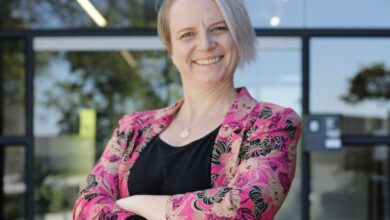
Why Mentorship is the Missing Link: Interview With Founder of Aions Ventures, Mitchan Adams

Why Mentorship is the Missing Link: Interview With Founder of Aions Ventures, Mitchan Adams. As South Africa continues to grapple with stubbornly high unemployment and a challenging economic climate, entrepreneurship is often positioned as a pathway forward. Yet the reality for many founders is far more complex, with most new ventures failing long before they find their footing. At the centre of this tension is a question that rarely gets enough attention: what truly helps entrepreneurs survive and scale in the early stages? In this interview, we speak to Mitchan Adams, Founder and CEO of Aions Ventures, about why mentorship has emerged as one of the most powerful, and often overlooked, tools in addressing business failure and unemployment in South Africa. Drawing from hands-on experience working with early-stage entrepreneurs across the country, Adams unpacks the role of strategy, mindset, access to networks, and lived experience in building sustainable businesses. From the limitations of funding without guidance to the importance of expanding mentorship beyond affluent business hubs, he offers grounded insights into what it really takes to turn ambition into long-term impact, especially in underserved communities. Check it out below!
What inspired you to highlight mentorship as a critical solution to South Africa’s unemployment crisis at this moment in time?
Large companies are focused on maintaining good profit margins, meaning their job pool will not grow but rather stagnate, whereas entrepreneurship, even just done to bring in income for yourself. However, entrepreneurship is very difficult and with stats showing 90% of new ventures failing within 5 years. This is a definite indication that guidance is needed to improve this statistic.
From your experience, why do so many small businesses fail despite strong entrepreneurial ambition?
Lack of strategy. Having measurable goals in place with hard deadlines in place and a clear route to achieving those milestones. Without doing this you will stay in survival mode, making you a hustler and not an entrepreneur. The business eventually fails when the entrepreneur runs out of energy and zeal.
You note that mentorship often determines whether a business survives or fails. Can you share examples where mentorship directly changed an entrepreneur’s outcome?
Entrepreneurs have a lot of passion driving their dream. They get lost in the idea and not the sustainability of running a business. Most Entrepreneurs I work with are like that and it’s a constant battle to get them to work on the business and not in the business. Either they listen or they don’t and, in most cases, where the entrepreneur does not listen, they bump their heads hard and run back to us begging for help from a point of staring death in the face. We have done this with quite a few companies and managed to turn the businesses around to a point where they are thriving.
Why is mentorship often more impactful than funding alone in the early stages of a business?
We underestimate how quickly money finds wings. In the case where “you don’t know what you don’t know” early-stage businesses will make many mistakes that will come at a financial cost. Within a short space of time, you will find yourself in need of more capital and getting more capital is leveraged off what you did with the initial capital. Mentorship helps you avoid these costly mistakes and ensures that you build good traction and a basis to access capital continuously.
What are the most common early-stage mistakes you see entrepreneurs make without proper guidance?
Getting into business with the wrong mindset. If you are doing it solely to make money, or to live a life of luxury, you are instore for a very rude awakening. Google took a long time to get to the point they are at. The stuff you see in movies is not a true reflection of startup life, in SA. SA is not the same as the United States. Understand the space properly and go in with the intention of building a solution to a problem, growing the business and the rest will be a bi-product.
How does limited access to business networks and exposure contribute to high failure rates, particularly in underserved communities?
Access and exposure are key to success. Stats say that 80% of companies that succeed have gone through some sort of incubation/support program. These programs push networking quite a bit, host frequent meetups and give you access to the top 1% in business. Most of these hubs are based in affluent areas such as Sandton and Cape Town CBD. We need more of a spread into the outskirts of the big cities and then further into the peri-urban areas. There are some people working towards this, but it needs more people that are committed to the cause to make this happen.
Can you explain how the Aions Venture Mentorship Programme is structured to address these challenges?
We have our hub in the Westrand of JHB which is more on the outskirts and we partner with other smaller hubs around JHB and CPT. We would love to establish more hubs in areas like DBN, Bloemfontein, Gqeberha, Kimberly etc.
Beyond business skills, how does mentorship help shape mindset, confidence, and long-term resilience?
Learning from the experience of someone else is such a springboard helping you to leapfrog years of pain if you had to make the same mistakes. Mentors are usually well networked and will help you meet the right people in a shorter space of time, and you get to work into that meeting already having favour granted to you by virtue of the mentor. In SA, Apartheid hindered freedom of movement creating environments of limited and restricted thinking and 30 years on this is still the case. Mentors usually have had careers giving them exposure to so many things and them sharing that thinking with someone that has been trapped in box has the potential to change entire communities.
What role should established entrepreneurs, corporates, and policymakers play in making mentorship more accessible nationwide?
I don’t think that we should place the responsibility on mentors. Infact many people do not even recognize that they are mentors. The responsibility should lie more with those that seek more. They should be the one’s reaching out to people they admire and ask questions. That is the simplest form of mentorship, a simple Q&A between 2 people. From there, a more formal relationship can be established.
What message would you like to share with aspiring entrepreneurs this International Mentoring Day?
Start with what you have, start a conversation don’t have preconceived expectations of outcomes and be open to free/different thinking. Take the chance. What’s your other option?