
ITC and Access Bank Launch Pan-African SME Growth Partnership
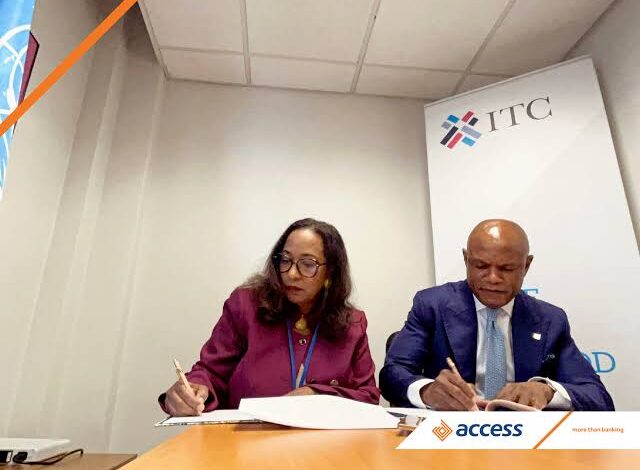
ITC and Access Bank Launch Pan-African SME Growth Partnership. The International Trade Centre (ITC) and Access Africa, the coordinating office for Access Bank Plc’s African subsidiaries, have partnered to improve access to finance, markets and skills training for small and medium-sized enterprises (SMEs) across 14 African countries.
The three-year partnership was formalised through a memorandum of understanding signed on the sidelines of the United Nations General Assembly in New York. The programme will begin with a pilot in Ghana from September 2026 to June 2027, focusing on a cohort of small businesses, with women-led enterprises prioritised.
The countries covered by the partnership are Angola, Botswana, Cameroon, the Democratic Republic of Congo, The Gambia, Ghana, Guinea, Kenya, Mozambique, Rwanda, Sierra Leone, South Africa, Tanzania and Zambia.
The initiative will focus on five priority areas: job creation through SMEs, access to finance with particular attention to women- and youth-owned businesses, SME business sustainability, capacity building including digital trade skills, and access to markets.
The market-access component will include support for intra-African trade under the African Continental Free Trade Area (AfCFTA).
The pilot will draw on ITC’s existing digital learning tools and training-of-trainers programmes, delivered in coordination with Access Africa Office staff. From 2027, the partnership aims to expand into additional countries and programmes, including advanced training on sustainability standards and digital marketplace tools.
Pamela Coke-Hamilton, executive director of the ITC, said the partnership would address financing challenges while providing businesses with knowledge, networks and market connections.
Seyi Kumapayi, executive director of African Subsidiaries at Access Bank, said finance alone does not enable every small business to scale, highlighting the combination of capital, market access and trade-ready skills.
The partnership also supports UN Sustainable Development Goals 5, 8 and 9, covering gender equality, decent work and economic growth, and industry, innovation and infrastructure.