How The Tiny Tots Shop Turned Frustration Into a Children’s Clothing Brand
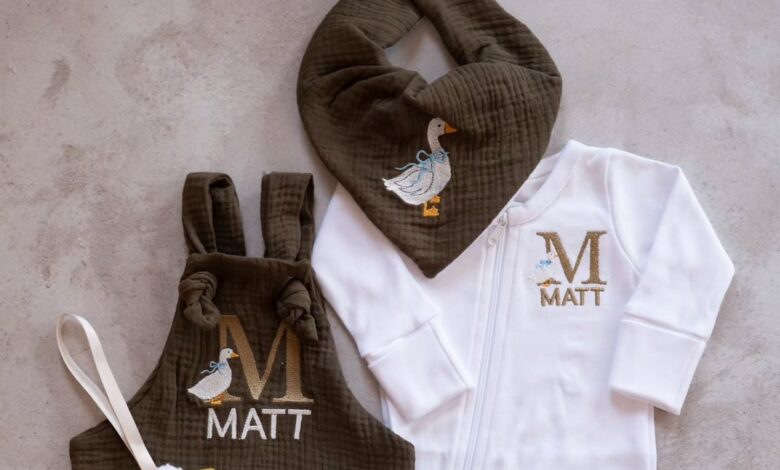
How The Tiny Tots Shop Turned Frustration Into a Children’s Clothing Brand. Sometimes a business idea begins with a carefully researched opportunity. Sometimes it starts with frustration. For Lienka, owner and founder of The Tiny Tots Shop, the starting point came while she was pregnant with her son in 2020. She was genuinely frustrated with what was available for boys and toddler clothing. Instead of simply accepting what was on the market, she decided to create something of her own.
The Tiny Tots Shop began as a side hustle alongside her full-time career as a dietitian.
That decision would eventually lead to another much bigger one.
At the end of 2024, when her second child turned one, Lienka chose to leave her employment as a dietitian and pursue The Tiny Tots Shop full time. Between those two moments, the business had grown from a modest range of a couple of items into a fully curated offering covering baby and toddler clothing needs.
Its journey offers practical lessons about identifying a gap, starting before everything is perfect, listening to customers and knowing when a side business has developed enough momentum to become a full-time pursuit.
A personal frustration became a business opportunity
The origins of The Tiny Tots Shop demonstrate how closely entrepreneurship can be connected to everyday experience.
While pregnant with her son, Lienka encountered a problem personally. She was dissatisfied with the clothing options available for boys and toddlers.
That frustration became the spark for a business.
This is an important distinction. The business did not begin with a broad ambition to enter the children’s clothing industry. It began with a specific experience and a desire to provide something different.
For aspiring entrepreneurs, this demonstrates the value of paying attention to problems encountered in ordinary life. A frustration can reveal a gap, particularly when the person experiencing it understands the customer perspective firsthand.
The lesson: When something repeatedly disappoints you as a customer, do not dismiss the experience. Ask what is missing, who else might experience the same problem and whether there is an opportunity to provide a better option.
Starting as a side hustle reduced the leap
The Tiny Tots Shop was initially built alongside Lienka’s full-time career as a dietitian.
That meant the business did not begin with the immediate pressure of becoming her sole source of income. It started as a side hustle while she continued working in her profession.
This stage was significant because it allowed the business to develop before Lienka made the decision to leave her employment.
The story also demonstrates that entrepreneurship does not always have to begin with an all-or-nothing decision. A side business can provide a way to test an idea, develop an offering and determine whether there is enough demand to justify a larger commitment.
The lesson: If circumstances allow, starting a business alongside existing employment can provide valuable time to develop the concept before making a full-time transition.
Growing from a modest range
The Tiny Tots Shop did not begin with its current breadth of products.
Lienka describes the early business as having a modest range consisting of just a couple of items. Over time, that developed into a fully curated range covering baby and toddler clothing needs.
That progression reveals an important approach to product development.
Rather than needing an extensive catalogue from the beginning, the business was able to grow its range over time. Expansion therefore became part of the journey rather than a requirement for getting started.
For entrepreneurs, this can be a valuable reminder that a business does not need to look fully developed on its first day. Starting with a focused offering can make it possible to learn and build from there.
The lesson: Begin with a manageable product range and allow your offering to develop as you gain a better understanding of what customers need.

Customer support became part of the growth story
Lienka directly credits the support of customers for helping The Tiny Tots Shop grow tremendously.
That acknowledgement reveals something important about the brand’s journey. Growth is not presented simply as the result of adding more products. It is connected to the people who supported the business along the way.
For a children’s clothing business, where parents and caregivers make purchasing decisions, understanding customer expectations is particularly important. The Tiny Tots Shop’s development from a small range to a broader curated offering reflects an expanding response to those needs.
The lesson: Treat customers as more than purchasers. Their support, preferences and responses can provide valuable direction as a business develops.
Staying alert to changing tastes
The Tiny Tots Shop says it prides itself on keeping ahead of market trends and what “seems beautiful” to the business.
That reveals another important part of its strategy. The brand is not treating its product range as something that can remain static indefinitely.
Children’s fashion changes, customer preferences change and what parents find appealing can change with them. Staying attentive to the market therefore becomes part of maintaining relevance.
The challenge for a business is to respond without losing its own sense of identity.
The lesson: Monitor your market continuously. Trends can create opportunities, but businesses should evaluate them through the lens of what fits their own customers and brand.
Knowing when a side hustle can become the main business
Perhaps the biggest turning point in The Tiny Tots Shop’s story came at the end of 2024.
After building the business while working as a dietitian, Lienka decided to leave her employment when her second child turned one and pursue the company full time.
That decision represents more than a career change. It marks the point at which the side hustle had become a business Lienka was prepared to make her primary focus.
It is also a reminder that entrepreneurship can be a gradual process. The decision to go full time came after the business had already moved beyond its original modest range.
The lesson: A full-time transition does not have to be the first step. For some entrepreneurs, it can be the result of testing, learning and growing a business until the opportunity becomes compelling enough to pursue fully.
The bigger lesson from The Tiny Tots Shop
The Tiny Tots Shop’s journey begins with one mother’s frustration and develops into a business that grew from a couple of products into a curated baby and toddler clothing range.
The turning points are clear: the original problem identified during pregnancy in 2020, the decision to start as a side hustle, the expansion of the product range, the support of customers and, finally, the decision at the end of 2024 to leave a career in dietetics and pursue the business full time.
What makes the story useful for aspiring entrepreneurs is that none of these steps required the business to have everything figured out from the beginning.
Lienka started with a problem she personally understood. She began small. She continued learning from the market. She expanded the range and eventually made the decision to commit to the business full time.
That creates a practical blueprint for anyone considering their own venture.
Find a genuine problem. Start with what you can manage. Pay attention to customers. Keep watching the market. Expand when the opportunity becomes clear.
The Tiny Tots Shop shows how a side hustle can evolve when an entrepreneur stays close to the original problem while remaining willing to grow with the market.